
Introduction: The Paradigm Shift Toward Cognitive Flexibility#
Unprecedented volatility, complex environmental dynamics, and rapid technological integration characterize the contemporary organizational landscape. In this hyper-connected global context, the fundamental determinants of organizational survival and competitive advantage have shifted unequivocally. The organizations that will thrive in the coming decades will not necessarily be those endowed with the most expansive material resources, the most aggressive market capitalization, or the most entrenched legacy infrastructure. Rather, the future belongs to those entities that possess the highest degrees of systemic cognitive flexibility. This profound shift necessitates a radical, structural re-evaluation of leadership paradigms, moving away from rigid, legacy management models toward a unified, scientifically grounded framework for Neuro-Inclusive Leadership.
Neuro-inclusive leadership represents the rigorous synthesis of behavioral science, computational cognitive neuroscience, developmental psychology, and organizational architecture. It posits that integrating the fundamental biology of the human brain, specifically regarding the sophisticated management of cognitive load and the mitigation of allostatic load, with the sociocultural architecture of equity and autonomy creates an organizational system uniquely capable of highly optimized adaptation to uncertainty. The future of enterprise sustainability, disruptive innovation, and human capital management belongs to leadership architectures designed specifically to accommodate, support, and actively leverage the full spectrum of human cognition. This must be achieved not despite the inherent variability in human neurology, but precisely because of the extraordinary evolutionary advantages that variability confers.
Historically, organizational leadership and human resource frameworks have operated on an optimization model designed for predictable, slow-moving industrial environments. These frameworks structurally favor standardized cognitive profiles, implicitly demanding neurobiological conformity. However, the epistemology of cognitive science clearly demonstrates that the human mind is an adaptive mechanism that constantly evaluates incoming stimuli, contrasts them with prior knowledge, and dynamically modifies behavioral strategies. This adaptive capacity allows individuals to transcend rigid or automatic responses, yet it requires an environment that does not perpetually trigger systemic stress or force maladaptive behavioral masking. By rigorously examining the interdisciplinary synthesis of evolutionary biology, clinical psychiatry, artificial intelligence, and developmental psychology, this comprehensive report details the architectural requirements for fostering a highly adaptive, deeply neuro-inclusive organizational culture.
The Evolutionary and Epistemological Foundations of Adaptation#
To construct a robust architecture for the adaptive mind, it is conceptually necessary to ground the discourse in the scientific paradigm of adaptationism. Stated briefly, adaptationism is an analytical framework utilized across the biological and psychological sciences to evaluate the physical and behavioral characteristics of organisms by focusing on functionally complex features that have arisen exclusively through the pressures of natural selection. Despite some historical resistance, scientific literature shows a strong trend toward the increasing acceptance of adaptationism across diverse fields of psychology and behavioral science.
Over the past several decades, evolutionary analyses of behavior have shown a consistent trend toward integrating inclusive fitness and reproductive behavior into broader paradigms of psychological science, acknowledging that human cognition evolved primarily to solve highly complex, immediate environmental and social problems. The human brain did not evolve to process asynchronous digital communication across multiple time zones or to sit in highly stimulating, open-plan architectural spaces for extended periods. It evolved to navigate naturalistic uncertainty, engage in active learning, process sensorimotor control, and deploy causal reasoning in small, highly cooperative groups.
The Mismatch Theory in Corporate Architecture#
In the context of modern psychology and behavioral science, the concept of the adaptive mind emphasizes the specific mechanisms by which behaviors, thought processes, and emotional regulations help individuals solve problems, ranging from rapidly processing immediate sensory information to formulating long-term, abstract strategic plans under conditions of extreme ambiguity. The human brain is best conceptualized as a self-organizing system of energy and information, wherein awareness, imagination, and belief emerge from the continuous, high-stakes negotiation between ecological truth and social meaning.
When applied to organizational theory, this evolutionary perspective reveals a critical, systemic vulnerability in traditional management structures: they operate under a profound evolutionary mismatch. Legacy systems often demand behavioral uniformity, effectively suppressing the neurodivergent cognitive traits that originally evolved precisely to provide population-level adaptability and resilience. Cognitive diversity within a group enhances collective problem-solving by significantly expanding the aggregate cognitive toolkit available for evaluating novel, unprecedented challenges. Therefore, standardizing cognitive expectations not only alienates deeply talented neurodivergent individuals but also systematically degrades the organization’s overarching adaptive capacity and resilience.
Neural Concept Verification and Cognitive Plasticity#
The adaptive mind relies on highly dynamic, continuously updating neural mechanisms. Research emanating from the DFG Cluster of Excellence “The Adaptive Mind”, a consortium spanning multiple universities and research institutes, highlights that successful human cognition must successfully balance two competing imperatives: stability and adaptation. This delicate balance is achieved through sophisticated mechanisms, including active learning, active sensing, sensorimotor control, and intuitive physics.
Understanding these underlying mechanisms provides a vital blueprint for how organizations can design workflows that mimic natural cognitive verification processes. For instance, recent developments in artificial intelligence, such as the Neural Concept Verifier (NCV), seek to replicate this precise balance by combining concept-level representations to enable interpretable classification at scale. Just as cutting-edge AI systems require unified frameworks to reduce the interpretability-accuracy gap and mitigate shortcut learning, human cognitive networks require structured, highly interpretable environments to process complex organizational inputs without resorting to maladaptive heuristics or cognitive biases. The failure to provide this structure results in systemic cognitive failure, poor strategic foresight, and organizational rigidity.
The Neurobiology of the Adaptive Mind: Dopamine, Working Memory, and Load#
A robust, actionable framework for neuro-inclusive leadership must be predicated on a rigorous, highly specific understanding of the neurobiological factors that govern attention, working memory, and emotional regulation. Central to this understanding is the literal chemistry of the adaptive mind, predominantly orchestrated by the dopaminergic system and its profound influence on frontostriatal function.
Dopaminergic Modulation, Genetic Variance, and Cognitive Flexibility#
Cognitive flexibility, the critical ability to appropriately adjust behavior and thought processes in response to a changing environment, is heavily modulated by monoaminergic systems, particularly dopamine. Dopamine plays a central, gatekeeping role in working memory (WM) gating, a neurobiological mechanism that determines which environmental stimuli are permitted to enter working memory and which are filtered out as irrelevant noise.
Individuals exhibit profound natural variation in dopamine signaling, partially driven by genetic predispositions, such as single-nucleotide polymorphisms (SNPs) that affect dopamine receptors (e.g., the D2 receptor) and the catechol-O-methyltransferase (COMT) gene. These genetic and neurochemical differences do not represent deficits; rather, they manifest functionally as distinct, highly specialized cognitive profiles.
For example, based on specific dopaminergic baselines, some individuals may display significantly enhanced distractor-resistant maintenance, the ability to hold fierce, unwavering focus on a single complex task despite overwhelming external noise. However, this trait may come at the expense of rapid updating, the ability to pivot attention to new incoming information quickly. Conversely, other individuals, often those presenting with traits associated with ADHD, may excel at rapid updating, making them highly adept in fast-paced, rapidly shifting, crisis-driven environments. Still, they may consequently struggle with long-term distractor-resistant maintenance.
Furthermore, neuropharmacological findings indicate that these baselines can interact with other physiological factors; for instance, variations in BMI have been associated with distinct working memory updating patterns, suggesting that physical health, metabolic state, and cognitive strategies are deeply interconnected within the brain’s unified framework.
Neuro-inclusive leadership recognizes that neither cognitive profile is inherently superior. Their efficacy is entirely context-dependent. Traditional organizational structures often penalize the deep-focus profile in dynamic, meeting-heavy roles, while simultaneously penalizing the rapid-updating profile in roles requiring deep, sustained, solitary focus. Architecting true neuro-inclusion requires mapping job demands precisely to these inherent cognitive predispositions, leveraging the unique neurochemical strengths of neurodivergent individuals rather than forcing a damaging compliance to an arbitrary neurotypical mean.
Cognitive Load, Sensory Friction, and Environmental Architecture#
To design capable, high-functioning environments, leadership must address two intersecting neurobiological constraints: cognitive load and allostatic load.
Cognitive load refers to the total amount of working memory resources consumed in the execution of a task and the processing of the environment. The invisible architecture of organizational culture, as well as literal physical workspace design, significantly impacts this metric. Visually noisy, cluttered spaces, open-plan offices with high acoustic interference, and fragmented digital communication platforms demand continuous, subconscious attentional filtering. This filtering consumes massive amounts of working memory capacity, leading to rapid, systemic mental fatigue.
Conversely, orderly, thoughtfully designed spaces that respect human sensory thresholds reduce cognitive strain, thereby freeing up vast reserves of mental energy for creative thought, complex problem-solving, and emotional regulation. The reduction of sensory friction is not merely a localized accommodation for an autistic employee; it is a systemic optimization that benefits the entire workforce by lowering the baseline cognitive load, thereby elevating the organization’s aggregate intelligence quotient.
Allostatic Load and the Mathematical Dynamics of Stress#
While cognitive load concerns immediate working memory capacity, allostatic load refers to the cumulative, long-term physiological “wear and tear” on the body and brain resulting from chronic exposure to fluctuating or heightened neural and neuroendocrine stress responses.
When an individual operates in a corporate environment that requires constant “masking”, the exhausting psychological labor of suppressing natural cognitive, communicative, or behavioral traits to conform to rigid neurotypical standards, the allostatic load increases exponentially. Elevated allostatic load is heavily correlated with a profound reduction in the health locus of control, leading directly to clinical symptoms of depression, severe anxiety, and systemic stress disorders. Long-term exposure to high allostatic load has even been shown to affect hippocampal structure and function, leading to deficits in hippocampal-dependent learning and a tendency to prioritize short-term survival consequences over long-term strategic thinking, a disastrous outcome for any corporate executive.
The theoretical conceptualization of the relationship between environmental stressors, cognitive demands, and systemic resilience can be expressed through a dynamic differential model of allostatic load over time:

Where:
- AL represents the Allostatic Load on the individual’s nervous system.
- S(t) represents the socio-environmental stressor coefficient at time t (e.g., lack of psychological safety, intense sensory friction, forced masking).
- C_L(t) represents the extraneous cognitive load demanded by poorly optimized physical or digital architecture.
- R_c(t) represents the restorative capacity or resilience of the individual, which is heavily mediated by environmental autonomy and recovery periods.
- Alpha, beta, and gamma are genetically and epigenetically determined sensitivity parameters unique to the individual’s neurobiology.
Neuro-inclusive leadership functions as the ultimate regulatory mechanism within this equation. The neuro-inclusive leader actively minimizes S(t) and C_L(t) through environmental design and precise communication, while maximizing R_c(t) by granting high degrees of autonomy and psychological safety. By doing so, they stabilize healthy dynamics within the cognitive-affective landscape of their workforce.
Redefining Mental Health: Sustaining Adaptive Trajectories#
This rigorous biological perspective forces a complete reframing of mental well-being in the workplace. Mental health can no longer be defined merely as the absence of features of psychopathology; rather, it must be redefined as the systemic ability to sustain adaptive trajectories under severe perturbation.
When a system (the individual or the team) faces a perturbation, such as a sudden workplace crisis, a massive shift in market dynamics, or a global pandemic, an adaptive mind recovers its resilience and continually recalibrates its predictive models. Psychopathology, burnout, and extreme executive dysfunction are thus reconceptualized as a fundamental loss of regulatory capacity, manifesting as rigid, maladaptive behavioral trajectories that cannot adjust to new data.
The clinical and organizational aim shifts radically from “feature reduction” (e.g., attempting to eliminate an employee’s anxiety through superficial wellness seminars) to stabilizing healthy dynamics within the individual’s cognitive-affective landscape through structural intervention. Advanced methodologies, such as utilizing generative AI to simulate perturbations and counterfactuals, allow organizations to design N-of-1 longitudinal interventions. These individualized, highly targeted approaches treat employee well-being as a control engineering problem defined over latent manifolds inferred from real-time behavioral data, ensuring that the environment itself acts as a regulator, rather than a stressor.
The Architecture of Culture: Designing Capable Environments#
Culture is far more than a collection of shared values plastered on a corporate intranet; it is an invisible architecture, a foundational cognitive toolkit that provides the mental blueprints for making sense of reality. Cultural design sculpts the very contours of personal well-being, deeply influencing mood, interpersonal connection, and the overarching sense of purpose. To architect genuinely neuro-inclusive cultures, organizations must move beyond superficial awareness campaigns and aggressively implement “Capable Environments”.
Environmental Audits and the Eradication of Friction#
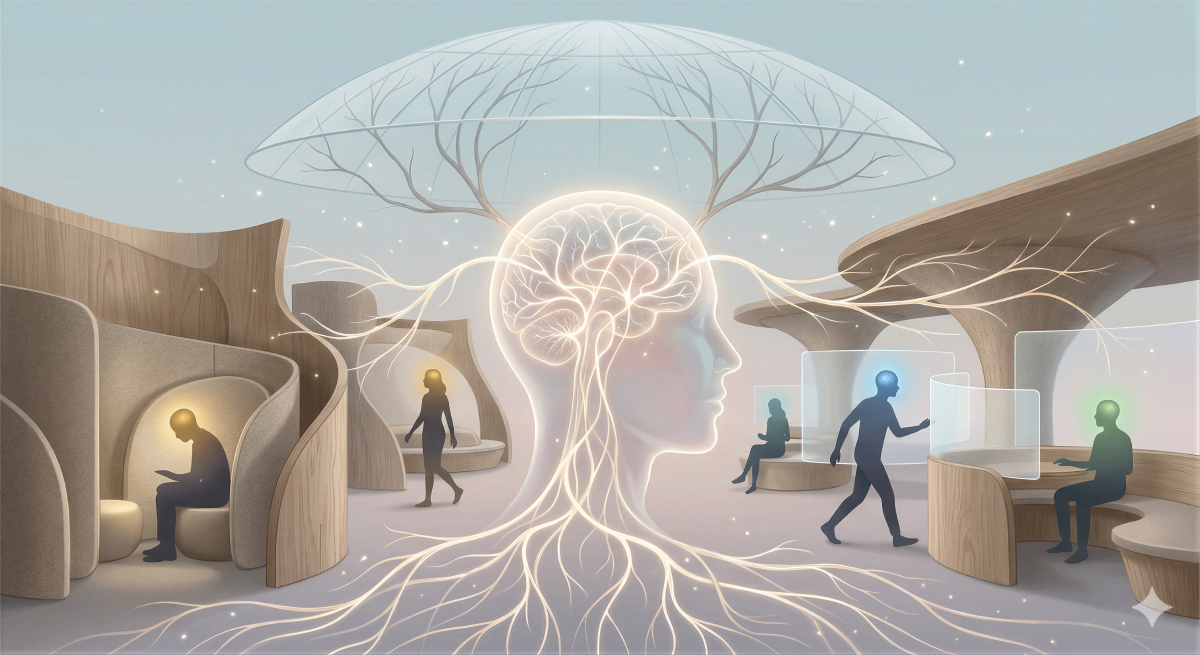
The physical and digital workspaces are the most immediate, tangible manifestations of an organization’s cultural architecture. Capable environments are established through rigorous Environmental Audits, which involve the deep psychological and physiological assessment of workspaces to identify, quantify, and drastically reduce sensory friction.
To effectively eradicate this friction and build Capable Environments, leadership must address three core domains:
- Physical Space
- Primary Sources of Sensory Friction: Open-plan acoustic noise, harsh fluorescent lighting, high-traffic visual interruptions, and a lack of spatial predictability.
- Neuro-Inclusive Architectural Interventions: The installation of acoustic dampening materials, the use of variable and individualized natural light controls, the creation of designated deep-work/low-stimulus zones, and the implementation of highly predictable and logically organized spatial layouts.
- Digital Space
- Primary Sources of Sensory Friction: Asynchronous notification overload, fragmented communication platforms, visual clutter, and non-intuitive user interfaces (UI).
- Neuro-Inclusive Architectural Interventions: The provision of executive-function scaffolds, the use of AI-prompt templates for standardized communication, the deployment of consolidated centralized dashboards, and the strict enforcement of mandated notification blackout periods to allow for deep work.
- Cultural Space
- Primary Sources of Sensory Friction: Implicit or unwritten social expectations, mandatory unstructured socialization events, and implicit penalties for direct or literal communication styles.
- Neuro-Inclusive Architectural Interventions: The establishment of protected peer containers, the practice of explicit precision contracting, the active normalization and celebration of diverse communication styles, and the elimination of “culture fit” as a hiring metric in favor of “culture add.”
Orderly, thoughtfully designed spaces reduce the cognitive strain of simply existing in the environment, thereby freeing up mental energy for high-level creative thought and complex problem-solving.
The Illusion of “One Size Fits All” HR Practices#
The architecture of culture must be deeply rooted in the twin pillars of equity and autonomy. Extensive research in organizational behavior demonstrates conclusively that satisfaction with Human Resource practices and subsequent commitment to the organization vary widely; a “one size does not fit all” approach is inherently flawed. A supportive organizational environment must enable employees to balance their distinct personal cognitive limits with professional demands.
Autonomy over one’s cognitive and physical environment is the primary mitigator of allostatic load. When individuals possess absolute agency over their sensory inputs, communication modalities, and work rhythms, their physiological stress responses are significantly and measurably dampened.
The Protected Peer Container and Psychological Safety#
Furthermore, high-performing neurodivergent leaders and highly specialized employees require spaces where they can operate without the immense, draining labor of masking. The implementation of “Protected Peer Containers”, private, carefully curated spaces where individuals can be direct, authentic, and completely understood without judgment, provides unparalleled psychological safety.
Hierarchical linear modeling (HLM) techniques and multilevel regression analyses have empirically demonstrated that inclusive leadership mediates the relationship between psychological safety and employee involvement in creative tasks. When individuals feel structurally safe from interpersonal risk and social penalty, their willingness to engage in divergent thinking, take creative risks, and deploy their cognitive flexibility increases dramatically.
Language as the Living Architecture of Cognition#
The role of language within this cultural architecture cannot be overstated. Language is far more than a mere communication tool; it is the living architecture of culture, cognition, and community. Its intricate structure enables profound expression, while its adaptability ensures resilience across generations. In the modern, highly complex workplace, linguistic inclusivity is a foundational requirement.
The specific phrasing utilized in corporate policies, performance feedback, and daily communication dictates whether a neurodivergent individual feels structurally supported or subtly, systematically alienated. For instance, the use of excessive corporate jargon, ambiguous metaphors, and indirect requests creates massive cognitive hurdles for individuals who rely on literal, precise linguistic processing.
Interestingly, bilingual individuals, or those who frequently navigate multiple cultural and linguistic systems, often demonstrate significantly greater cognitive flexibility and cross-cultural empathy, skills that are increasingly valued in a globalized workforce. Exposing organizational networks to diverse cultural systems and entirely different ways of thinking increases the enterprise’s aggregate cognitive flexibility, which is essential for solving complex global challenges, such as implementing global sustainability protocols. By deliberately curating a corporate language that emphasizes absolute clarity, precision, and strengths-based terminology over ambiguity and neurotypical social signaling, organizations foster a highly adaptive, globally competent linguistic architecture.
Operationalizing the Framework: Mechanisms for the Adaptive Mind#
Transitioning from highly theoretical models of neuro-inclusion to practical, daily operationalization requires moving past the “what” and diving deeply into the science-backed “how” of behavioral modification. This necessitates equipping managers, executives, and clinicians with evidence-based, highly specific roadmaps for systemic change, successfully transitioning organizations from a state of perpetual, reactive “fire-fighting” to proactive, systemic institutional memory building.
Precision Contracting and the Elimination of Ambiguity#
A foundational cornerstone of operational neuro-inclusive leadership is “Precision Contracting”. Traditional, legacy management relies perilously on implicit expectations, assumed social contracts, and the ability of employees to “read between the lines.” For individuals with varying cognitive profiles, particularly those on the autism spectrum or those with non-standard executive functioning, this ambiguity is not merely annoying; it creates intensely high levels of operational anxiety, decision paralysis, and cognitive friction.
Precision contracting completely replaces these implicit assumptions with explicit, clearly negotiated agreements regarding exact deliverables, acceptable communication protocols, timelines, and working conditions. This masterclass in management removes the guesswork, allowing the employee to focus their entire cognitive load on execution rather than interpretation.
The Neuroscience of Objective-Based Feedback#
Precision contracting must be inexorably coupled with objective-based feedback. The processing of behavioral outcomes is phenomenally significant for learning, adaptation, and the updating of internal predictive models. Neurophysiological studies of the Feedback-Related Negativity (FRN), an event-related brain potential closely correlated with reward prediction error in the anterior cingulate cortex, demonstrate that external environmental feedback is essential for bridging the discrepancy between intrinsic (subjective) perception and extrinsic reality.
In both highly cognitive and complex motor tasks, clear, objective, and timely feedback allows the adaptive mind to accurately calibrate its predictive models without triggering a threat response. If performance feedback is vague, emotionally charged, highly subjective, or based on neurotypical behavioral norms (e.g., “you need to show more enthusiasm in meetings”) rather than objective task outcomes, the FRN signal becomes noisy and disorganized, severely impeding learning.
Developmental trajectories observed in longitudinal studies indicate that contingent, highly structured feedback dynamically and rapidly shapes behavior. Neuro-inclusive leaders are trained to deliver feedback that focuses strictly on the objective architecture of the work. They provide clear, unambiguous data points that allow the employee’s internal cognitive models to successfully adapt and optimize without triggering defensive allostatic stress responses or identity threat.
Executive Function Scaffolds and Synthetic AI Cognition#
The immense data demands and rapid context-switching required by modern executive roles routinely exceed the natural limitations of human working memory, irrespective of whether an individual identifies as neurodivergent. However, for individuals with ADHD or other specific executive function variants, these demands can be uniquely paralyzing, leading to severe burnout despite high levels of raw intelligence.
Neuro-inclusive organizations counter this by providing “Executive-Function Scaffolds”, systemic structures designed specifically to externalize cognitive load so the brain does not have to hold everything in active memory.
The integration of artificial intelligence represents a profound, paradigm-shifting advancement in this area. Through curated, highly secure resource hubs, employees can access AI-prompt templates and structured digital workflows built specifically to align with diverse neural architectures. For example, AI can be heavily utilized to model generative counterfactuals, simulating various perturbation scenarios to help individuals optimize their strategic interventions without bearing the immense cognitive cost of mentally modeling complex, multi-variable environments in real-time.
Just as advanced clinical AI models can be fine-tuned using targeted N-of-1 perturbations to simulate optimal therapeutic interventions across modalities such as neuromodulation or psychotherapy, localized corporate AI tools can help employees structure their daily tasks. AI acts as an organizational layer, prioritizing inputs, initiating action sequences, and effectively functioning as a synthetic prefrontal cortex for planning, organization, and initiation.
Dismantling the Extroversion Myth and Leveraging the Ambivert Advantage#
Operationalizing this framework also strictly requires dismantling legacy archetypes of leadership that suppress cognitive diversity. The most pervasive and damaging of these is the myth of the extrovert ideal. Since the psychoanalyst Carl Jung formally introduced the concepts of extroversion and introversion in the 1920s, corporate structures and hiring algorithms have historically favored extroverted traits, such as aggressive charisma, rapid, outspoken speech, and a high degree of verbal processing.
Research indicates that extroverts are approximately 25 percent more likely to land top executive jobs, with recruiters who mistake loud confidence for competence. However, longitudinal data show that introverts consistently deliver far superior outcomes in complex, highly analytical, or unpredictable leadership scenarios, primarily because they are less prone to impulsive decision-making and more adept at assessing risk.
Furthermore, the neuro-inclusive model moves completely beyond this restrictive binary. Jung himself viewed these traits as inclusive rather than exclusive. Most of the human population falls into a third, highly adaptable category: the ambivert. Ambiverts, making up between half and two-thirds of the population, possess the unique capacity to slide fluidly along the extroversion-introversion spectrum depending entirely on contextual demands.
Scientists refer to this dynamic as the “ambivert advantage.” Data shows that ambivert salespeople generate significantly more revenue than their strictly extroverted counterparts. Ambiverts can be twice as productive because they possess the dual capacity to listen deeply and analytically, while also asserting themselves when the situation requires action. They make ideal co-workers, business owners, and leaders. By architecting systems that do not implicitly mandate constant extroverted performance, organizations allow ambiverts and introverts to deploy their natural cognitive strengths, fostering a robust leadership pipeline defined by true situational efficacy rather than perpetual, exhausting charisma.
Adaptive Consciousness Theory and the Irreducibility of Emotional Intelligence#
The continuous evaluation of incoming stimuli, contrasting them intricately with prior experience to adapt behavioral strategies, is the foundational premise of Adaptive Consciousness Theory. As global environmental dynamics become exponentially more complex, unpredictable, variable, and novel, the human mind is compelled to constantly reorganize its cognitive frameworks, refine problem-solving strategies, and vastly enhance its capacity for emotional regulation. In this context, the environment is not merely a static backdrop for corporate action; it is an active, evolutionary agent shaping the evolution of consciousness.
While AI integration provides critical, synthetic scaffolds for executive function and massive data processing, it inherently lacks the subjective, biological dimensionality of emotional intelligence. AI and computational machines can execute flawless analytical functions. Still, emotion remains a highly valuable, uniquely biological form of intelligence that shapes critical decisions far more profoundly than raw, uncontextualized data.
Emotional Intelligence (EI), defined rigorously as the ability to perceive, recognize, discriminate, and appropriately utilize emotional information to guide complex behavior, is indispensable for navigating nuanced group dynamics, resolving deep conflicts, and fostering systemic psychological safety. AI cannot experience the allostatic load of a team, nor can it provide genuine empathy.
In an increasingly automated, algorithmic world, the ultimate creative edge belongs exclusively to those who leverage emotional intelligence alongside cognitive flexibility. True mental flexibility enables rapid accommodation of new information and the impulse control needed to maintain deep composure during severe market perturbations. Developing these critical traits requires cultivating neuroplasticity, the brain’s physiological ability to reorganize itself by forming entirely new neural connections and pathways throughout the lifespan.
Strategies to actively enhance neuroplasticity and emotional intelligence, such as targeted cognitive training, exposure to diverse learning modalities, mindfulness, and the active, structural practice of empathy, are essential, non-negotiable components of neuro-inclusive leadership development. A leader with high adaptive consciousness recognizes instantly when a rigid corporate strategy is failing, and possesses the psychological resilience and growth mindset to pivot cleanly without succumbing to ego-driven sunk-cost fallacies.
The Cognitive Function of Mind Wandering#
Furthermore, specific cognitive states often stigmatized in productivity-obsessed, legacy cultures play a highly critical role in adaptive consciousness. Mind wandering, for instance, is frequently penalized as “inattention.” However, research identifies distinct cognitive profiles, such as the “Adaptive Mind Wanderer” (representing approximately 16.7% of certain demographic samples), characterized by high levels of highly functional planning and comforting mind wandering.
This internal cognitive state is not a defect; it is a powerful, evolved mechanism for prospective problem-solving, lateral thinking, and deep emotional regulation. Neuro-inclusive environments do not seek to aggressively eradicate mind wandering through constant digital surveillance or the imposition of artificial urgency. Rather, they provide the spatial and temporal autonomy necessary for this subconscious processing to occur, recognizing that it consistently yields massive creative and strategic dividends.
Systemic Leadership and Implementation Science#
A vision for neuro-inclusive leadership remains highly theoretical and ultimately useless without the precise mechanism of Implementation Science. Implementation Science is the discipline that successfully bridges the massive gap between theoretical behavioral psychology, Organizational Behavior Management (OBM), and practical, daily corporate execution.
Moving from Reactive Interventions to Proactive Architecture#
Many modern organizations exist in a highly destructive state of reactive “fire-fighting.” They respond to severe employee burnout, high turnover rates, HIQA/regulatory compliance failures, and interpersonal conflicts as isolated, individual incidents rather than diagnosing them correctly as systemic architectural flaws.
The adaptive framework absolutely requires leaders to diagnose structural organizational barriers and implement robust, unyielding governance to eliminate restrictive practices. By mastering implementation science, organizations build highly durable “institutional memory”, systemic processes, documentation, and cultural norms that easily survive the inevitable turnover of individual managers or executives. This prevents the dangerous “drift” in clinical and management practices often observed in highly complex services, ensuring that neuro-inclusive policies are permanently embedded in the organization’s genetic code, leading to sustainable, consistent support for all individuals.
Teal Organizations and the Power of Systemic Autonomy#
The structural manifestation of this high-level cognitive flexibility is most often found in the architecture of “Teal organizations.” Drawing heavily on evolutionary and ecological paradigms, Teal organizations leverage deeply decentralized management practices to foster workplace neurodiversity naturally.
These organizations operate on foundational principles of self-management, wholeness, and evolutionary purpose. By aggressively removing rigid, top-down hierarchies and unnecessary bureaucratic layers, Teal structures inherently reduce the systemic pressure to mask. This allows neurodivergent individuals to contribute massive value based purely on their intrinsic cognitive strengths, rather than evaluating them based on their ability to navigate highly political, Byzantine corporate structures.
The implementation of Teal management practices, or similar highly autonomous frameworks, constitutes a direct, empirical answer to the vital necessity for novel leadership approaches in complex situations. As contemporary research highlights, continually relying on inappropriate, legacy tools to address entirely new organizational paradigms actively stifles innovation. A highly supportive organizational environment that carefully balances professional objectives with deep respect for personal cognitive limits yields overwhelmingly positive outcomes, offering a unified framework for human resource professionals to deploy highly effective policies across the board.
Corporate Case Studies: ERGs and Institutional Advocacy#
Massive, forward-thinking global institutions are successfully pioneering the transition toward neuro-inclusive architecture. For example, highly structured Employee Resource Groups (ERGs) such as Deutsche Bank’s dbEnable illustrate the practical operationalization of these complex principles.
By actively implementing neuro-inclusive leadership training at the highest executive levels, engaging in innovative reverse-mentoring programs (in which neurodivergent employees mentor senior executives on cognitive diversity), and structurally enhancing digital accessibility in technology, these organizations rapidly transform corporate perceptions of neurodiversity. They move it decisively from an outdated, medicalized deficit model to a highly competitive, strengths-based model. These initiatives ensure that inclusive practices extend across the entire organization, actively proving that deep cognitive diversity is the primary engine driving innovation, creativity, and resilience in the workplace.
The Integration of Sensorimotor Models and Tool Use#
To fully grasp the incredible depth of the adaptive mind, it is highly instructive to view human learning and organizational behavior through the evolutionary lens of sensorimotor control and tool use. Human tool use is a quintessential, defining expression of the adaptive mind, requiring highly complex predictive models, causal reasoning, and seamless sensorimotor integration. The acquisition of complex skills, whether in advanced sports, robotic manipulation, or mastering a new coding language, elicits manifold, permanent changes in both the physical body and the neural architecture of the mind. It serves as the ultimate model system for behavioral adaptation.
In the modern knowledge-work workplace, the “tools” are vast digital platforms, highly complex analytical AI models, and sophisticated communication protocols. Just as the human brain literally extends its peripersonal space map to include a physical tool (such as a hammer or a surgical scalpel), a well-designed digital environment becomes a literal neural extension of the worker’s cognition.
If the digital or physical tool is poorly designed, characterized by high sensory friction, counter-intuitive UI, or ambiguous feedback loops, the brain is forced to expend massive amounts of metabolic energy simply attempting to calibrate its predictive models to the flawed tool. However, when digital and physical environments are aggressively optimized in accordance with the neurobiological principles of the adaptive mind, the cognitive friction completely dissolves. This allows the individual to enter a deep state of flow, seamlessly utilizing the environment to execute highly complex problem-solving and rapid causal reasoning.
Expanding the Global Context: Sustainability and Cross-Cultural Cognition#
The absolute imperative for cognitive flexibility extends far beyond the profitability or survival of an individual enterprise; it is strictly essential for addressing macroscopic, existential crises, such as global sustainability and climate change. The complex solutions to these multinational, multivariable challenges will never emerge from a single cultural model or a homogeneous, standardized cognitive profile. Rather, they will emerge exclusively from the thoughtful, highly structured integration of the world’s incredibly diverse cognitive toolkits.
Societal and cultural systems generally vary along a measurable continuum of “tightness” (characterized by strict social norms and a very low tolerance for deviance) to “looseness” (characterized by weak social norms and a highly fluid tolerance for deviance and experimentation). Tight systems are invaluable for flawless execution, the highly coordinated, strict rule-following nature required to implement large-scale international climate accords, manage nuclear facilities, or coordinate circular-economy logistics.
Conversely, loose systems are the primary engines for lateral thinking, rapid prototyping, and highly disruptive innovation. Neuro-inclusive leadership requires the advanced architectural capacity to map different teams, departments, and neurodivergent individuals precisely to these distinct operational modes. A highly adaptive, global organization can intentionally operate a “loose,” highly autonomous culture in its R&D and strategic foresight divisions to foster maximum cognitive flexibility and rapid updating. Simultaneously, it can maintain a “tight,” highly structured culture in its compliance, safety, and logistical execution branches to ensure absolute reliability and distraction-resistant maintenance.
This complex balancing act requires leaders with extreme cognitive flexibility, individuals who are highly capable of code-switching between entirely different cultural architectures. They must possess a deep, nuanced understanding of the specific environmental demands that shape diverse cognitive pathways. Through the rigorous, unrelenting implementation of the adaptive framework, the modern enterprise completely transforms. It ceases to be a fragile hierarchy and becomes a highly resilient microcosm of evolutionary adaptation, fully capable of surviving the complexities of the 21st century.
Conclusion#
The core proposition that the future of enterprise belongs exclusively to leaders who design for the full, magnificent spectrum of human cognition, not despite its variances, but specifically because of them, is fundamentally, empirically supported by the deep intersection of evolutionary biology, computational neuroscience, and organizational psychology. “The Adaptive Mind” is not a mere management trend; it represents a comprehensive, irreversible paradigm shift. It mandates moving away from resource-heavy, highly rigid management structures that view humans as standardized machines, toward highly flexible, neuro-inclusive architectures that view the workforce as a dynamic, deeply interconnected cognitive ecosystem.
By rigorously analyzing the epistemological roots of evolutionary adaptationism and synthesizing them with the hard neurobiological mechanics of dopamine signaling, working memory gating, and feedback-related negativity, a clear, unambiguous mandate emerges. Organizations must immediately cease demanding neurobiological conformity. Instead, they must actively and systematically mitigate extraneous cognitive load and deeply destructive allostatic stress through the intelligent, evidence-based design of Capable Environments.
Through highly practical mechanisms such as comprehensive Environmental Audits, explicit Precision Contracting, and the advanced deployment of AI-driven Executive-Function Scaffolds, leadership can permanently transition from reactive management to proactive implementation science. This unified, neuro-inclusive framework recognizes that deep cognitive diversity, refined emotional intelligence, and highly adaptive consciousness are the primary, irreplaceable engines of innovation in an increasingly unpredictable world. Ultimately, architecting for neuro-inclusive leadership is not an exercise in corporate empathy or public relations; it is the fundamental evolutionary prerequisite for sustaining organizational resilience, driving unprecedented high-level performance, and successfully navigating the immense complexities of the modern global landscape.
References#
- Austin, Robert D., and Gary P. Pisano. “Neurodiversity as a Competitive Advantage.” Harvard Business Review 95, no. 3 (May-June 2017): 96-103.
- Krzeminska, Anna & Austin, Robert & Bruyere, Susanne & Hedley, Darren. (2019). The advantages and challenges of neurodiversity employment in organizations. Journal of Management & Organization. 25. 453-463. 10.1017/jmo.2019.58.
- Barel, M., & Javaid, A. (2026). Supporting Neurodiverse Junior Doctors: Challenges, Strategies, and Policy Implications for Inclusive Medical Training. Cureus, 18(3), e104746. https://doi.org/10.7759/cureus.104746
- Doyle, Nancy. (2020). Neurodiversity at work: A biopsychosocial model and the impact on working adults. British Medical Bulletin. 135. 10.1093/bmb/ldaa021.
- McDowall, Almuth & Doyle, Nancy & Kiseleva, Meg. (2023). Neurodiversity at Work 2023.
- Rachmad, Yoesoep. (2017). Adaptive Consciousness Theory.
- Fraccaroli, Franco & Zaniboni, Sara. (2024). Annual Review of Organizational Psychology and Organizational Behavior Challenges in the New Economy: A New Era for Work Design Keywords. Annual Review of Organizational Psychology and Organizational Behavior. 307-342. 10.1146/annurev-orgpsych-081722-.
- Giamos, D., Doucet, O., & Lapalme, M. È. What is Known About Development-Oriented Performance Management Practices? A Scoping Review. Human Resource Development Review. https://doi.org/10.1177_15344843241278405
- Church, A. H., & Waclawski, J. (2025). Perspectives on the future of talent, work, and organizations after the pandemic. In R. Mueller-Hanson, E. F. Sinar, & E. D. Pulakos (Eds.), Evolving the employee experience: An integrative perspective (pp. 263-296). Oxford University Press; Society for Industrial and Organizational Psychology. https://doi.org/10.1093/9780197780251.003.0014
- Cools, R. (2019). Chemistry of the Adaptive Mind: Lessons from Dopamine. Neuron, 104(1), 113-131. https://doi.org/10.1016/j.neuron.2019.09.035
- Herzog Nadine, Hartmann Hendrik, Janssen Lieneke Katharina, Kanyamibwa Arsene, Waltmann Maria, Kovacs Peter, Deserno Lorenz, Fallon Sean James, Villringer Arno, Horstmann Annette (2024) Impaired updating of working memory representations in individuals with high BMI: evidence for dopaminergic mechanisms eLife 13:RP93369 https://doi.org/10.7554/eLife.93369.1
- Korkki, S., Papenberg, G., Guitart-Masip, M., Salami, A., Karalija, N., Nyberg, L., & Bäckman, L. (2024). dopamine system and cognitive function across the adult life span. In G. J. Boyle, G. Northoff, A. K. Barbey, F. Fregni, M. Jahanshahi, A. Pascual-Leone, B. J. Sahakian (Eds.) Dopamine system and cognitive function across the adult life span (Vol. 0, pp. -). SAGE Publications Ltd, https://doi.org/10.4135/9781529616613.n8
- Cools, R., & Robbins, T. W. (2004). Chemistry of the adaptive mind. Philosophical Transactions. Series A, Mathematical, physical, and engineering sciences, 362(1825), 2871-2888. https://doi.org/10.1098/rsta.2004.1468
- D’Esposito, M., & Postle, B. R. (2015). The cognitive neuroscience of working memory. Annual review of psychology, 66, 115-142. https://doi.org/10.1146/annurev-psych-010814-015031
- Purg, N., Ozimič, A. S., & Repovš, G. (2022). The Cognitive Neuroscience of Working Memory and Language. In J. W. Schwieter & Z. (Edward) Wen (Eds.), The Cambridge Handbook of Working Memory and Language (pp. 120-142). Chapter, Cambridge: Cambridge University Press.
- Frank, M. J., & Badre, D. (2015). How cognitive theory guides neuroscience. Cognition, 135, 14-20. https://doi.org/10.1016/j.cognition.2014.11.009
- Ott, T., & Nieder, A. (2019). Dopamine and Cognitive Control in Prefrontal Cortex. Trends in cognitive sciences, 23(3), 213-234. https://doi.org/10.1016/j.tics.2018.12.006
- Westbrook, A., & Braver, T. S. (2016). Dopamine Does Double Duty in Motivating Cognitive Effort. Neuron, 89(4), 695-710. https://doi.org/10.1016/j.neuron.2015.12.029
- Westbrook, A., & Frank, M. (2018). Dopamine and Proximity in Motivation and Cognitive Control. Current opinion in behavioral sciences, 22, 28-34. https://doi.org/10.1016/j.cobeha.2017.12.011
- McEwen, B. S. (2017). Neurobiological and systemic effects of chronic stress. Chronic stress, 1, 2470547017692328.
- McEwen, B. S., & Akil, H. (2020). Revisiting the Stress Concept: Implications for Affective Disorders. The Journal of Neuroscience: The Official Journal of the Society for Neuroscience, 40(1), 12-21. https://doi.org/10.1523/JNEUROSCI.0733-19.2019
- Sonnentag, Sabine & Frese, Michael. (2012). Stress in Organizations. 10.1002/9781118133880.hop212021.
- Guidi, J., Lucente, M., Sonino, N., & Fava, G. A. (2021). Allostatic Load and Its Impact on Health: A Systematic Review. Psychotherapy and psychosomatics, 90(1), 11-27. https://doi.org/10.1159/000510696
- McDermott, C. E., Salowe, R. J., & Rosa, I. D. (2024). Stress, Allostatic Load, and Neuroinflammation: Implications for Racial and Socioeconomic Health Disparities in Glaucoma. International Journal of Molecular Sciences, 25(3). https://doi.org/10.3390/ijms25031653
- Beauchaine, T. P., Neuhaus, E., Zalewski, M., Crowell, S. E., & Potapova, N. (2011). The effects of allostatic load on neural systems subserving motivation, mood regulation, and social affiliation. Development and psychopathology, 23(4), 975-999. https://doi.org/10.1017/S0954579411000459
- McEwen, Bruce. (2000). Allostasis and Allostatic Load: Implications for Neuropsychopharmacology. Neuropsychopharmacology: official publication of the American College of Neuropsychopharmacology. 22. 108-24. 10.1016/S0893-133X(99)00129-3.
- Schnorpfeil, P., Noll, A., Schulze, R., Ehlert, U., Frey, K., & Fischer, J. E. (2003). Allostatic load and work conditions. Social science & medicine (1982), 57(4), 647-656. https://doi.org/10.1016/s0277-9536(02)00407-0
- Abdul Hamed, Sapiah & Ramzi, Mohd & mohd hussain, mohd ramzi & Md, Haza & Sazlin, Syikh & Sabri, Shah & Rusli, Nazrul. (2023). The Impacts of Physical Workplace Environment (PWE) on Employees Productivity. 10.55057/ijbtm.2023.5.4.33.
- Edmondson, Amy & Bransby, Derrick. (2022). Psychological Safety Comes of Age: Observed Themes in an Established Literature. Annual Review of Organizational Psychology and Organizational Behavior. 10. 10.1146/annurev-orgpsych-120920-055217.
- Nishii, L. H., & Mayer, D. M. (2009). Do inclusive leaders help to reduce turnover in diverse groups? The moderating role of leader-member exchange in the diversity to turnover relationship. The Journal of Applied Psychology, 94(6), 1412-1426. https://doi.org/10.1037/a0017190
- Yasin, Raheel & Jan, Ghulam & Huseynova, Aydan. (2023). Inclusive leadership and turnover intention: the role of follower-leader goal congruence and organizational commitment. Management Decision. 61. 10.1108/MD-07-2021-0925.
- Wut, Tai-Ming & Lee, Stephanie-Wing & Xu, Jing. (2022). Role of Organizational Resilience and Psychological Resilience in the Workplace-Internal Stakeholder Perspective. International Journal of Environmental Research and Public Health. 19. 11799. 10.3390/ijerph191811799.
- Kujawa, A., Smith, E., Luhmann, C., & Hajcak, G. (2013). The feedback negativity reflects favorable compared to nonfavorable outcomes based on global, not local, alternatives. Psychophysiology, 50(2), 134-138. https://doi.org/10.1111/psyp.12002
- Hajcak, Greg & Moser, Jason & Holroyd, Clay & Simons, Robert. (2006). The feedback-related negativity reflects the binary evaluation of good versus bad outcomes. Biological psychology. 71. 148-54. 10.1016/j.biopsycho.2005.04.001.
- Burnside, R., Fischer, A. G., & Ullsperger, M. (2019). The feedback-related negativity indexes prediction error in active but not observational learning. Psychophysiology, 56(9), e13389. https://doi.org/10.1111/psyp.13389
- Luft C. D. (2014). Learning from feedback: the neural mechanisms of feedback processing facilitating better performance. Behavioural brain research, 261, 356-368. https://doi.org/10.1016/j.bbr.2013.12.043
- Abbosh, A., Al-Anbuky, A., Xue, F., & Mahmoud, S. S. (2025). Perspective on the Role of AI in Shaping Human Cognitive Development. Information, 16(11), 1011. https://doi.org/10.3390/info16111011
- Darbar, Rekha & Ameta, Gunbala. (2026). The Role of Artificial Intelligence in Studying Human Behaviour. International Journal of Recent Development in Engineering and Technology. 15. 1210-1215. 10.54380/IJRDET0126_195.
- Dahò, M., & Caci, B. (2025). Exploring AI-assisted design of executive function rehabilitation programs for individuals with ADHD: A mixed-methods evaluation of prompts and ChatGPT outputs. BMC Psychology, 14, 25. https://doi.org/10.1186/s40359-025-03729-2
- Toplak, M. E., Bucciarelli, S. M., Jain, U., & Tannock, R. (2009). Executive functions: performance-based measures and the behavior rating inventory of executive function (BRIEF) in adolescents with attention deficit/hyperactivity disorder (ADHD). Child neuropsychology: a journal on normal and abnormal development in childhood and adolescence, 15(1), 53-72. https://doi.org/10.1080/09297040802070929
- Chan, Todd & Wang, Iris & Ybarra, Oscar. (2018). Leading and Managing the Workplace: The Role of Executive Functions. Academy of Management Perspectives. 35. 10.5465/amp.2017.0215.
- Vaidya, A. R., & Badre, D. (2022). Cognitive control and AI: Toward a unified framework. Trends in Cognitive Sciences, 26(3), 214-228
- Badre D. (2025). Cognitive Control. Annual review of psychology, 76(1), 167-195. https://doi.org/10.1146/annurev-psych-022024-103901
- Fui-Hoon Nah, F., Zheng, R., Cai, J., Siau, K., & Chen, L. (2023). Generative AI and ChatGPT: Applications, challenges, and AI-human collaboration. Journal of information technology case and application research, 25(3), 277-304.
- Liu, Z., & Yin, X. (2025). A Review of Cognitive Control: Advancement, Definition, Framework, and Prospect. Actuators, 14(1). https://doi.org/10.3390/act14010032
- Wyrzykowska, Barbara. (2019). Teal Organizations: Literature Review and Future Research Directions. Central European Management Journal. 27. 124-141. 10.7206/cemj.2658-0845.12.
- Lee, Michael & Edmondson, Amy. (2017). Self-managing organizations: Exploring the limits of less-hierarchical organizing. Research in Organizational Behavior. 37. 10.1016/j.riob.2017.10.002.
- Damschroder, L. J., Reardon, C. M., Widerquist, M. A. O., & Lowery, J. (2022). The updated Consolidated Framework for Implementation Research based on user feedback. Implementation science: IS, 17(1), 75. https://doi.org/10.1186/s13012-022-01245-0
- Birken, S. A., & Nilsen, P. (2018). Implementation science as an organizational process. Health care management review, 43(3), 181. https://doi.org/10.1097/HMR.0000000000000212
- Gelfand, M. J., & Jackson, J. C. (2016). From one mind to many: the emerging science of cultural norms. Current opinion in psychology, 8, 175-181. https://doi.org/10.1016/j.copsyc.2015.11.002