Introduction#
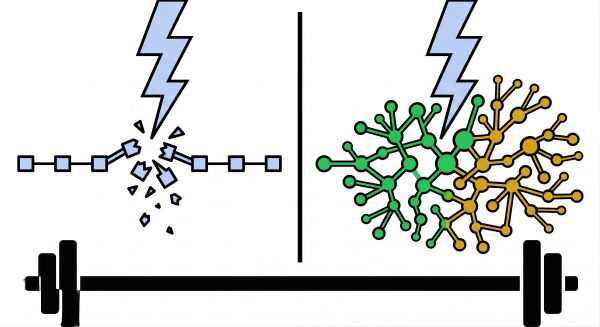
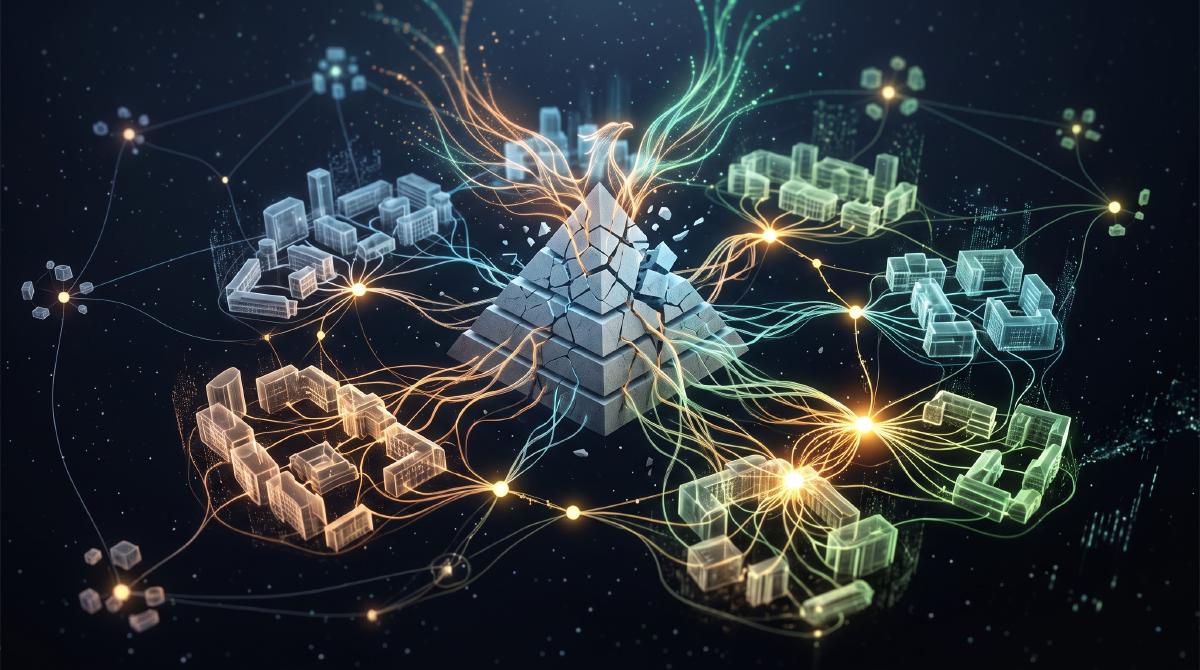
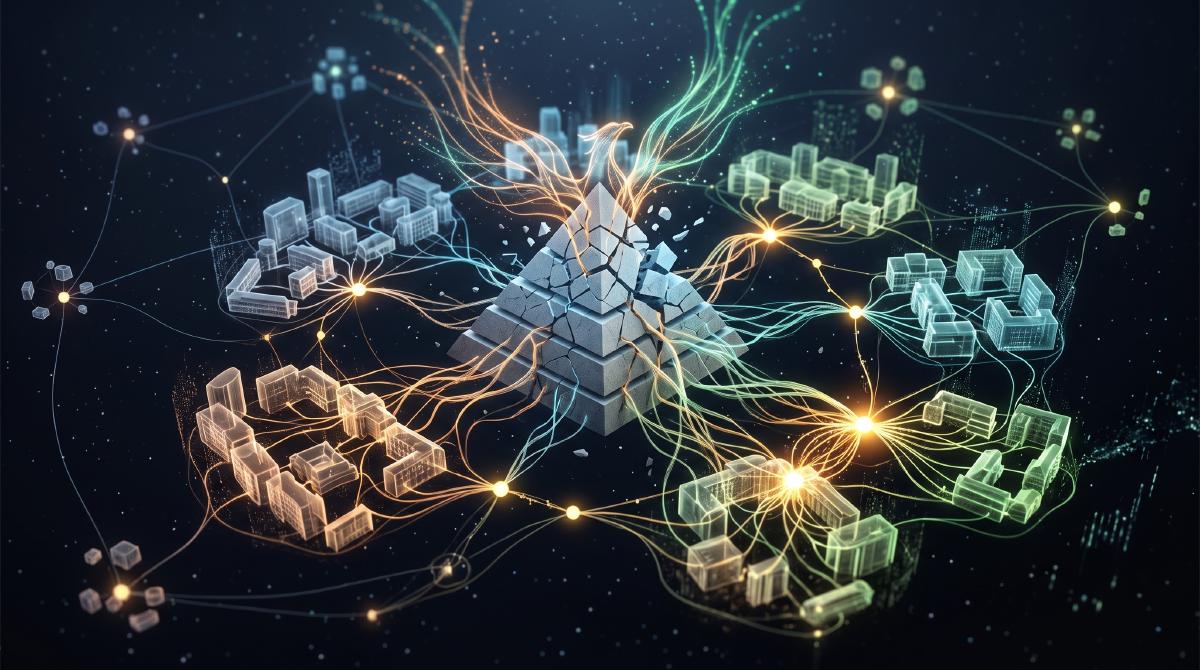
Contemporary higher education institutions operate within an environment characterized by escalating volatility, shifting demographic and financial paradigms, and rapid technological disruption. Historically, university governance has relied upon Weberian hierarchical models, formal organizational charts, and rigid departmental silos that prioritize standardization over adaptability. However, the accelerating pace of external change has exposed these architectures as inherently brittle. Under severe systemic stress, these strictly hierarchical structures often fracture, isolating information and yielding to bureaucratic stagnation and collaborative paralysis that stifle cross-disciplinary adaptation.
To navigate this era of continuous disruption, academic administrators must transcend traditional notions of institutional resilience. While resilience implies a system’s capacity to withstand exogenous shocks and return to its original equilibrium, a more advanced systemic imperative is cultivating “antifragility.” Coined by epistemologist Nassim Nicholas Taleb, antifragility describes entities that do not merely survive stressors, volatility, and disorder, but actively learn, adapt, and grow stronger as a direct result. In higher education, an antifragile institution engineers systems that use disruptions as catalysts for structural evolution, pedagogical innovation, and optimized operational effectiveness.
Transitioning an academic institution from a brittle hierarchy to an antifragile ecosystem necessitates an epistemological shift toward mapping the “informal organization.” This requires a deep understanding of how work actually happens, which often diverges sharply from formal chains of command. Organizational Network Analysis (ONA) provides the empirical and mathematical framework required to drive this transformation. Rooted in graph theory, sociometry, and organizational behavior, ONA measures and maps the hidden, informal networks of communication, advice, and trust, providing empirical visibility into the true operational dynamics of the university.
By deploying ONA, academic leaders can visualize obscured communication pathways, identify critical knowledge brokers, dismantle entrenched silos, and systematically architect agile academic networks. This article presents a comprehensive analytical blueprint for using ONA to drive this institutional transformation. It synthesizes foundational theories of loosely coupled systems and structural holes alongside the mathematical underpinnings of advanced statistical models, including Quadratic Assignment Procedures (QAP), Exponential Random Graph Models (ERGM), and Stochastic Actor-Oriented Models (SAOM). Furthermore, it examines institutional pathologies such as collaborative overload and knowledge drain, while outlining the ethical imperatives of data governance necessary to prevent digital surveillance. Ultimately, this framework equips provosts, superintendents, and academic administrators with a rigorous methodology to optimize interdisciplinary collaboration and engineer inherently antifragile academic institutions.
Theoretical Foundations of Academic Networks#
The theoretical foundations of academic networks rest on a multidisciplinary synthesis of organizational sociology, graph theory, and complex adaptive systems. Moving beyond rigid, Weberian hierarchies, modern higher education institutions are increasingly understood through relational paradigms that emphasize the informal flow of knowledge, trust, and resources. Foundational frameworks such as Karl Weick’s concept of “loosely coupled systems” explain the decentralized autonomy inherent in academic departments. At the same time, Ronald Burt’s theory of “structural holes” shows how strategic knowledge brokers bridge disconnected silos to drive interdisciplinary innovation. Coupled with theories of social capital, these paradigms provide the essential conceptual scaffolding required to understand the true operational dynamics of a university. By examining these theoretical underpinnings, academic leaders gain critical insights into the relational architectures that enable educational institutions to transcend mere resilience and achieve systemic antifragility.
Weick’s Loosely Coupled Systems#
Organizational theorist Karl Weick posited a foundational theory for understanding educational organizations, famously describing educational institutions as “loosely coupled systems.” In a loosely coupled system, different elements of the organization, such as academic departments, research centers, and administrative units, respond to one another while remaining separate and maintaining distinct identities.
Loose coupling offers certain evolutionary advantages: localized adaptations can occur without forcing the entire macro-system to change, and a breakdown or failure in one department does not immediately cascade to others, preserving systemic integrity. However, the precise topography of this loose coupling is often entirely invisible to university administrators. Without an empirical map dictating where the system is tightly coupled (highly interdependent) and where it is loosely coupled (isolated), leaders cannot effectively coordinate institution-wide strategic initiatives, such as interdisciplinary research programs or rapid digital transformations. ONA bridges this critical gap by providing mathematical visibility into the varying degrees of coupling across the university network.
The Imperative of Antifragility in Higher Education#
Integrating Weick’s organizational theory with Taleb’s concept of antifragility yields a powerful paradigm for university governance. While a purely resilient educational system absorbs a shock (such as a sudden transition to remote learning protocols or a sudden reduction in federal grant funding) and eventually returns to its prior equilibrium, an antifragile educational system uses the shock to permanently upgrade its pedagogical delivery, inter-departmental workflows, and resource allocation mechanisms.
Antifragility in academia relies heavily on distributed intelligence and localized autonomy, supported by robust, redundant communication networks. The system must include structural gaps to prevent institutional groupthink while maintaining enough bridging connections to diffuse novel solutions rapidly. Cultivating employee antifragility, where faculty and staff view uncertainty as an opportunity for innovative work behavior, depends heavily on the social support, workplace familiarity, and collaborative network embedded within the institution. Cultivating “self-knowledge” (understanding one’s professional identity and values) and “self-efficacy” (the belief in one’s capacity to adapt) among faculty and learners is paramount to generating this antifragile posture. Therefore, engineering an antifragile university is fundamentally an exercise in optimizing structural networks.
Structural Holes and Social Capital#
A key challenge in university administration is breaking down academic and administrative silos. Departments often function as insular networks characterized by high internal density but negligible external connectivity. In network sociology, the absence of ties between two densely connected clusters is defined as a “structural hole”.
Sociologist Ronald Burt developed the theory of structural holes, which posits that individuals who span gaps between disconnected groups gain distinct competitive and informational advantages, accumulating high volumes of “social capital.” Because information, opinions, and behaviors tend to be highly homogeneous within a dense cluster, an individual whose network spans multiple clusters is exposed to heterogeneous, alternative ways of thinking.
In a university setting, an academic whose collaboration network spans the structural hole between the Computer Science department and the Faculty of Humanities functions as a “broker”. These brokers control information flow between groups. They are statistically much more likely to generate good, novel ideas, as they can synthesize disparate concepts and recognize how a pedagogical practice or research methodology in one domain can create value in another. Conversely, Burt introduced the concept of “network constraint” to mathematically describe how connected an individual’s contacts are to one another. High constraint indicates a redundant network; a closed, echo-chamber clique surrounds the individual. Low constraint indicates an open network rich in structural holes. Extensive research shows a strong negative correlation between network constraint and an employee’s innovative capacity.
The Mechanics of Organizational Network Analysis#
Organizational Network Analysis shifts the unit of analysis from the individual employee or isolated department to the relationships (dyads) between these entities. In this framework, employees, departments, or entire institutions are represented mathematically as “nodes” (or vertices), while the relationships, communications, or transactions between them are represented as “edges” (or ties).
Modalities of Data Collection#
Constructing an accurate institutional network graph relies on two primary data-collection methodologies: active and passive.
Active ONA (Survey-Based): Active ONA relies on self-reported data gathered through network surveys or peer-nomination forms. Participants are asked specific relational questions, such as, “Who do you turn to for advice regarding research funding?” or “Whose approval is practically necessary before you can finalize a curriculum change?” This method is highly effective for mapping intangible, qualitative networks, such as trust networks, advice networks, and mentorship ties, which digital metadata cannot easily capture. However, it is inherently subject to recall bias, subjective interpretation, and survey fatigue among faculty members.
Passive ONA (Digital Exhaust): Passive ONA analyzes the “digital exhaust” generated by enterprise communication platforms. Modern universities use a range of digital tools, including institutional email servers, Microsoft Teams, Slack, and digital workflow systems. Passive ONA analyzes only the metadata these systems generate: sender, recipient, timestamp, and frequency of interaction. It strictly ignores communication content to preserve academic privacy. This method provides a real-time, continuous, and highly accurate map of transactional communication, cross-departmental connectivity, and overall collaboration hours. Platforms such as Worklytics, Orgvue, and Polinode specialize in aggregating and visualizing this enterprise data.
Core Mathematical Metrics#
Once the foundational data is collected, graph theory provides several key metrics to evaluate both the institution’s broader structural properties and the specific positional advantages of individual personnel. Rather than relying on complex mathematical matrices, administrators can understand these dynamics through several core concepts:
- Degree Centrality: This metric measures the absolute volume of a faculty member’s or administrator’s direct collaborative ties. It can be divided into incoming connections (such as requests received) and outgoing connections (such as requests sent). Strategically, it identifies individuals who are heavily relied upon and critical to daily operations, highlighting those at high risk for collaborative overload and professional burnout.
- Betweenness Centrality: This evaluates how frequently an individual acts as a bridge on the shortest path between other disconnected people. In an academic setting, this metric highlights the “knowledge brokers” who span structural holes between disparate departments. It is also highly effective for identifying potential operational bottlenecks and single points of failure within the university.
- Closeness Centrality: This concept calculates how close a person is to everyone else in the network, representing the speed at which they can reach all other individuals. It indicates how rapidly information can spread from a specific person to the rest of the campus network, making it a highly useful metric for identifying ideal champions to lead change-management initiatives.
- Eigenvector Centrality: Going beyond the simple volume of connections, this metric measures a person’s influence based on the influence of the people they are connected to. High scores indicate that an individual is connected to other highly connected individuals. This is invaluable for mapping informal power structures and finding hidden influencers who can sway institutional sentiment, even if they hold a lower formal rank in the organizational chart.
- Network Density: Moving from individual evaluation to macro-structural assessment, density measures the ratio of actual observed connections to the total possible connections within a specific group. This helps administrators diagnose whether a department is highly cohesive but potentially insular and resistant to outside ideas (high density), or fragmented and suffering from poor internal communication (low density).
By operationalizing these metrics, university administrators can shift from qualitative assumptions about departmental collaboration to rigorous, quantifiable baselines. This empirical approach lets leadership identify exactly where systemic interventions are needed to build a more agile, antifragile institution.
The Taxonomy of Human Nodes#
By analyzing the intersections of these mathematical metrics, ONA reveals specific network “personas” that define how individuals function within the academic ecosystem. Recognizing these topologies is critical for talent management and institutional design.
According to advanced network taxonomy models, several critical personas consistently emerge within knowledge-based organizations:
- The Super Node (High-Degree Connector): Characterized by high total degree centrality and high PageRank or Eigenvector centrality. They exhibit bidirectional flow at the center of a dense cluster. People seek them for advice and collaboration, making them essential but highly vulnerable to overload.
- The Bridge (Structural Hole Spanner): Characterized by moderate overall degree centrality but exceptionally high betweenness centrality, coupled with a low clustering coefficient. They connect two or more otherwise disconnected clusters. Their failure mode is the “single point of failure”; removing the Bridge partitions the network.
- The Vacuum Node (Knowledge Importer): Exhibits high external degree combined with high boundary betweenness. Its distinguishing pattern is managing edges that cross the organizational boundary, importing external knowledge (e.g., from industry partners or other universities) into the institution.
- The Expert Hub: Displays high in-degree specifically on knowledge-seeking edges, combined with high closeness centrality within their specific domain cluster. They receive asymmetric inbound flow, with many peers reaching in solely for highly specialized answers.
- The Orchestrator (Workflow Architect): Characterized by high out-degree on delegation edges, but interestingly, decreasing betweenness over time. A successful orchestrator builds workflows and systems that ultimately bypass themselves, making the institution less dependent on their direct involvement.
- The Gardener: Exhibits low personal centrality but triggers a high delta in overall network density over time in their vicinity. They act as network architects, creating edges between other nodes and fostering a fertile collaborative environment without inserting themselves into the center of the workflow.
Diagnosing and Dismantling Institutional Pathologies#
While engineering connections across structural holes is vital for institutional innovation, network connectivity is not an unalloyed good. An uncritical drive to “break down silos” and force universal collaboration can lead to catastrophic organizational dysfunction. Administrators must use ONA to diagnose and treat these pathologies.
Collaborative Overload and the 80% Threshold#
A surge in collaborative intensity characterizes the contemporary academic environment. Research by Rob Cross and colleagues indicates that over the past two decades, employees have spent more time on collaborative activities, meetings, emails, messaging, and committee work. In many organizations, these activities now consume up to 80% of the workweek, leaving little time for the deep, focused work required for complex academic research or strategic planning.
In a highly matrixed university environment, where faculty are expected to conduct primary research, teach, advise students, serve on multiple administrative committees, and engage in cross-departmental initiatives, the demand for collaboration frequently outstrips the supply of cognitive bandwidth. ONA frequently reveals a heavily skewed, Pareto-like distribution of collaborative demand. Often, a small fraction of the workforce (typically 10-15%) absorbs the vast majority of collaborative requests. These individuals, the Super Nodes and Expert Hubs, become victims of their own competence. Because they are highly capable and centrally located within the network, colleagues continually route inquiries and approval requests through them.
While high betweenness is theoretically associated with innovation and promotion, it also strongly predicts burnout. Data indicate that colleagues who regard individuals as the best information sources often report the lowest career satisfaction and engagement scores. When a central node becomes overwhelmed, it shifts from an information bridge to a critical administrative bottleneck. Decision-making latency increases exponentially, and the entire institutional network grinds to a halt. Furthermore, these top performers, buried under an avalanche of unmanaged collaborative requests, become high flight risks.
Interventions to cure collaborative overload include redistributing the collaborative load by increasing the visibility of peripheral nodes (lesser-known subject-matter experts) so they can absorb some of the demand. Structural defenses are also required. For instance, interventions such as eliminating all recurring meetings for a set period (a strategy Dropbox employed) force employees to reassess the necessity of those gatherings, often resulting in shorter, more productive engagements and reclaiming nearly a day a week of productive time. Furthermore, some organizations are establishing the role of “Chief Collaboration Officer” to treat collaboration as an enterprise resource that must be budgeted and managed.
Bureaucratic Sludge and Process Diagnostics#
The accumulation of unnecessary collaborative demands creates “organizational drag,” or “bureaucratic sludge.” Cybernetic control systems within large universities often respond to crises (such as a budget overrun or compliance failure) by adding more control mechanisms, typically in the form of additional approval layers and mandatory cross-functional meetings. This artificially increases administrative network density. However, excessive network density paralyzes execution, as consensus must be achieved among an unwieldy number of nodes before action can be taken.
Administrators must utilize ONA in conjunction with process mining to conduct a comprehensive “sludge audit.” Process mining extracts digital truth from transactional logs, utilizing algorithms like “Trace Alignment” to detect patterns of workflow deviation and mutation. While process mining identifies the procedural bottlenecks (the “what”), ONA identifies the human network gridlocks (the “who”). By analyzing collaboration hours and meeting metadata, ONA can pinpoint exactly where the human network is gridlocked, revealing whether a delay stems from a flawed process step or an overwhelmed individual bridging too many structural holes.
To effectively conduct this sludge audit, administrators must understand the comparative advantages and limitations of the primary diagnostic methodologies available to them:
- Organizational Network Analysis (ONA): Drawing its primary data from digital exhaust (metadata) and employee surveys, ONA’s core analytical strength lies in its ability to visualize informal human relationships, map influence, and uncover hidden bottlenecks. However, it is inherently limited by the need for clean identity mapping, and passive ONA methodologies completely overlook offline, face-to-face interactions.
- Process Mining: This methodology relies on system event logs and transaction timestamps. It excels at handling massive structural complexity and provides an objective, absolute view of digital workflows and their variants. Its primary limitation, however, is that it remains blind to the human and relational contexts that often drive workflow deviations in the first place.
- Value Stream Mapping (VSM): Utilizing observational audits and stakeholder consensus, VSM is highly effective at building team alignment and visualizing “white space” friction. These physical delays occur outside of digital systems. Despite these strengths, the methodology is highly subjective, time-consuming, and can overlook nuanced digital bottlenecks that automated systems detect easily.
By integrating these diagnostic tools, academic leaders can systematically identify and eliminate bureaucratic sludge, optimizing both the digital processes and the human networks that drive institutional success.
Managing Knowledge Drain Risk (KDR)#
Another critical pathology is Knowledge Drain Risk (KDR). KDR erodes an organization’s critical know-how through employee turnover, retirements, or internal movement. This risk is particularly acute in higher education, where tenure-track faculty and senior administrators hold vast repositories of “tacit knowledge.” Unlike explicit knowledge (formally documented in manuals, procedures, or databases), tacit knowledge is unwritten expertise, intuition, and informal relational capital that resides solely in employees’ minds.
When a veteran academic or administrative leader departs, their explicit knowledge remains, but their tacit knowledge, including their intricate network of interdisciplinary connections and external funding relationships, vanishes. Like the catastrophic knowledge drain NASA experienced after Apollo or Boeing after mass retirements, universities can suffer institutional amnesia. ONA mitigates KDR by identifying the specific individuals who act as critical knowledge hubs before they depart. By mapping the network, administrators can proactively pair these central nodes with peripheral nodes for mentorship, essentially converting vulnerable tacit network knowledge into distributed, explicit organizational capability.
Advanced Statistical Modeling in ONA#
To move beyond descriptive, visual mappings of network topologies, an antifragile educational system must employ advanced inferential statistics. Standard statistical methodologies (such as Ordinary Least Squares regression) fundamentally assume observations are independent. However, network data is inherently and profoundly interdependent; a tie between Actor A and Actor B is not independent of a tie between Actor B and Actor C. This violates standard regression assumptions and necessitates specialized mathematical models.
The Quadratic Assignment Procedure (QAP)#
When researchers need to compare two distinct networks involving the same set of actors (e.g., comparing a university’s formal hierarchical reporting network to its informal advice-seeking network, or comparing a network of physical geographical proximity to a network of research collaboration), they utilize the Quadratic Assignment Procedure (QAP).
QAP is a resampling-based, nonparametric method for testing the statistical significance of correlation or regression coefficients between multiple distance or adjacency matrices. Because the dyads in a network are not independent, standard errors are invalid. QAP circumvents this by repeatedly permuting the rows and columns of the dependent matrix while keeping the overall network structure (topology) intact.
By calculating the regression coefficient for thousands of these random permutations, QAP generates an empirical distribution of the coefficients under the null hypothesis (that the independent variable has no effect). This allows university administrators to determine causal relationships definitively. For example, a provost could use QAP regression to test whether the physical distance between faculty offices significantly predicts the formation of interdisciplinary research ties, independent of faculty members’ formal departmental affiliations.
Exponential Random Graph Models (ERGMs)#
To understand the underlying micro-level mechanisms that generate a university’s network structure, administrators can use Exponential Random Graph Models (ERGMs). Rather than relying on static snapshots, ERGMs are advanced predictive models that estimate the likelihood of a specific network structure forming based on two distinct sets of factors.
First, the models examine internal network dynamics, evaluating structural tendencies such as reciprocity (if I seek your advice, will you seek mine?) or transitivity (the tendency for two individuals who share a mutual contact to connect eventually). Second, they factor in external personal attributes, such as an individual’s tenure status, gender, or academic department, to see how these characteristics influence connection-making.
By applying ERGMs, administrators can rigorously test hypotheses regarding “homophily,” the sociological tendency for individuals to connect primarily with those who share similar traits or backgrounds. For instance, if an ERGM shows a highly significant tendency for faculty to form ties exclusively within their own academic discipline, the administration gains concrete statistical evidence of entrenched departmental silos. Leadership can then implement structural interventions, such as cross-disciplinary task forces, and run subsequent ERGMs to see whether the homophily tendency decreases over time, signaling a successful breakdown of those silos.
Because predicting the probability of every possible connection combination in a large university network requires immense computational bandwidth, researchers bypass traditional calculations and instead rely on advanced simulation algorithms to estimate these dynamics in networks spanning thousands of personnel.
Stochastic Actor-Oriented Models (SAOMs)#
While ERGMs are highly effective for cross-sectional data (analyzing a snapshot of the network at one discrete point in time), educational organizations are highly dynamic. To study how a university network evolves longitudinally, Stochastic Actor-Oriented Models (SAOMs) are required.
SAOMs model longitudinal network data by simulating a continuous-time Markov process in which individual actors make probabilistic choices to create, maintain, or dissolve ties based on a specified objective function, driving the network from one observed state to the next. Furthermore, SAOMs enable sophisticated study of the co-evolution of networks and individual behavior.
For example, a research superintendent could use a SAOM to disentangle selection effects from influence effects. If a faculty member begins publishing at a much higher rate, the SAOM can mathematically determine if the faculty member’s research output increased because they strategically joined a high-performing collaborative network (the selection effect), or if being embedded in that collaborative network elevated the individual’s research output through peer pressure and resource sharing (the influence effect). Understanding this causality is crucial for designing effective faculty mentorship, development programs, and interdisciplinary grant initiatives.
Empirical Case Studies in Organizational Networks#
ONA’s theoretical frameworks yield highly actionable insights when applied to complex organizational challenges. Analogous case studies in both higher education and large corporate enterprises demonstrate its efficacy.
Post-Merger Integration and Cultural Blending#
Mergers of academic institutions, colleges, or large departments are notoriously difficult and often fail due to cultural clashes and persistent legacy silos. In corporate M&A, organizations use ONA to map informal relationships across the two entities, identify gatekeepers, and understand collaboration bottlenecks. When two companies merge, the formal integration plan connects org charts. Still, ONA reveals which informal networks to bridge, which key connectors from each legacy organization to retain to prevent knowledge drain, and where hidden collaboration barriers exist; companies utilizing ONA during post-merger integration report 25% to 30% faster cultural blending. In a university context, such as merging a medical school with an engineering college to form a bio-engineering institute, ONA ensures true interdisciplinary collaboration rather than two separate entities merely sharing a building.
University Health Promotion Networks#
A compelling application of ONA within higher education involves mapping university structures dedicated to student health promotion. Collective action by a wide range of university stakeholders (e.g., student support services, athletic institutes, deans’ offices) is key for effective intervention delivery, as no single stakeholder controls the complex interplay of student health determinants.
In a documented study utilizing ONA to examine a university’s health-promoting structures, researchers mapped the communication and cooperation ties among 33 distinct organizational units. Using the Quadratic Assignment Procedure (QAP) to calculate inter-network correlations, the study visualized the precise positions and characteristics of network actors to identify key stakeholders and designate starting points for network development. The analysis revealed varying levels of integration, highlighting which departments effectively collaborated on student well-being and which remained isolated, providing an empirical basis for sustained network governance.
Ethical Governance, Privacy, and Data Security#
Deploying ONA within a higher education institution requires rigorous ethical guardrails. Academic environments are highly sensitive to issues of academic freedom, privacy, and employer surveillance. If faculty and staff perceive ONA as an invasive tool for micromanagement or punitive surveillance, it will trigger catastrophic cultural backlash, destroy institutional trust, and fundamentally compromise the integrity of the data collected. Data indicates that 86% of employees believe workplace monitoring will increase, and 73% feel that introducing such monitoring damages trust between workers and employers.
Virtue Ethics and Algorithmic Opacity#
From a virtue ethics perspective, algorithmic opacity and pervasive datafication pose serious challenges to organizational health. Continuous monitoring of employee behavior via predictive analytics and ONA can create a “vicious cycle” in which organizational members lose the ability to cultivate practical wisdom and professional virtues. When employees feel subjected to “unblinking eyes” and automated surveillance, they alter their behavior out of fear rather than authentic collaboration. Therefore, ONA must be governed by principles that protect human agency and dignity.
Mitigating Goodhart’s Law#
Goodhart’s Law states that when a measure becomes a target, it stops being a good measure. If university administration formally announces that “collaboration hours” or “betweenness centrality” will directly dictate tenure decisions or annual performance reviews, faculty will inevitably and artificially inflate their network metrics, sending unnecessary emails, scheduling superficial meetings, and creating false relational ties.
To prevent this distortion, ONA must never be weaponized for individual performance surveillance. The fundamental, ethical goal of ONA is to diagnose macro-level system dynamics, organizational friction, and structural misalignments. Dashboards accessible to management should display team-level network health metrics, not individual communication logs. It remains a diagnostic tool for organizational architecture, not an evaluation tool for individual compliance.
Privacy-by-Design and Metadata Governance#
ONA’s technological infrastructure must adhere to uncompromising privacy-by-design principles. When utilizing passive ONA via institutional digital communication platforms, the data extraction must be strictly limited to metadata.
Any system that parses email or message content, subject lines, or attachments crosses an inviolable ethical boundary from legitimate network analytics into Orwellian surveillance. By strictly analyzing the “digital exhaust” (who connects with whom, frequency, and time stamps), institutions can map structural topologies with high fidelity while remaining entirely blind to the substance of academic, political, or personal discourse.
Furthermore, ethical ONA implementation requires:
- Anonymization and Aggregation: Individual identities should be pseudonymized or anonymized during the analysis phase. Present results to senior leadership in aggregated form at the departmental, collegiate, or task-force level to identify macro-trends without exposing individual interaction logs.
- Transparency and Consent: Institutions must maintain absolute transparency regarding what data is being collected, the specific algorithms being applied, and the ultimate purpose of the analysis. Particularly in regions governed by the General Data Protection Regulation (GDPR) or similar frameworks, conducting a Data Protection Impact Assessment (DPIA) and establishing a clear legitimate interest (or obtaining explicit opt-in consent for active surveys) is a stringent legal prerequisite.
- Human-in-the-Loop Oversight: Algorithmic bias is a significant and prevalent risk. ONA results must be contextualized with qualitative interviews, traditional span-of-control analysis, and human oversight. For instance, a node that appears as an “isolate” (having very few ties) might not be a disengaged or failing employee; they may be a highly focused researcher engaged in deep work whose productivity relies entirely on minimizing collaborative distractions.
An Analytical Blueprint for University Administrators#
To move from theoretical network science and statistical modeling to actionable institutional policy, university leaders (provosts, deans, and superintendents) must implement Organizational Network Analysis in a phased, methodical way. The following blueprint translates ONA findings into antifragile organizational design.
Phase 1: Establish Strategic Parameters and Baseline Measurement#
Before deploying advanced software platforms, administrators must clearly define the driving strategic question. Is the institution attempting to merge two colleges? Are they trying to accelerate the commercialization of scientific research across departments? Are they diagnosing systemic faculty burnout?
Once the core objective is established, a baseline ONA uses a hybrid methodological approach: passive metadata extraction maps the high-volume transactional network, supplemented by targeted, active surveys to map the more nuanced trust and advice networks. Legal, Privacy, and HR representatives must be engaged early to secure necessary approvals and communicate proactively with the faculty senate to establish trust.
Phase 2: Identify Vulnerabilities and Hidden Assets#
The resulting sociograms and network matrices are statistically analyzed to identify critical structural anomalies and categorize human network personas:
- The Single Point of Failure: Identify “Bridge” nodes connecting distinct academic disciplines. Because their sudden departure would partition the network and trigger severe knowledge drain, administrators must deliberately build redundancy by tasking these bridges with formally mentoring junior faculty, thus forging parallel ties across the structural hole.
- The Isolated Experts: Identify peripheral nodes who possess critical domain expertise but lack the closeness centrality necessary to diffuse their knowledge broadly. Integrating these individuals into interdisciplinary task forces can unlock latent institutional value.
- The Overloaded Operators: Cross-reference collaboration hours with betweenness centrality to identify faculty and administrative staff at acute risk of collaborative overload and burnout.
Phase 3: Architecting Interventions for Antifragility#
An antifragile system requires controlled volatility, the breakdown of calcified structures, and continuous structural adaptation. Interventions based on ONA data should focus on actively re-wiring the institution:
- Redesigning Physical and Digital Environments: If QAP regression reveals that physical proximity dictates collaboration more than departmental alignment, administrators should strategically mix faculty offices across disciplines to manufacture serendipitous network ties and bridge structural holes systematically.
- Optimizing Committee Composition: Rather than populating university committees based solely on formal, hierarchical rank, administrators should utilize eigenvector centrality to identify informal influencers. These individuals have the social capital to drive consensus, overcome resistance to change, and accelerate adoption of new strategic plans across campus.
- Reforming Evaluation and Promotion Metrics: Current academic incentive structures, particularly the tenure process, often heavily favor deep, specialized research within a single discipline, inadvertently rewarding high network constraint and dense, closed networks. To build an antifragile academic system, universities must adjust incentive structures to explicitly reward spanning structural holes, recognizing cross-departmental collaboration and interdisciplinary grant acquisition as premier academic achievements. Compensating faculty for the “invisible labor” of acting as a central hub in the advice network aligns individual incentives with the systemic goal of antifragility.
Phase 4: Continuous Longitudinal Monitoring#
Treat the academic organization as a living, breathing ecosystem rather than a static chart. After implementing structural interventions, the administration must conduct longitudinal analyses using Stochastic Actor-Oriented Models to evaluate the network’s co-evolution. If a new cross-disciplinary research institute was established to break down silos, does the passive metadata over the subsequent 12 months show increasing cross-departmental density and reduced homophily? If the data show faculty retreating to their legacy networks, the intervention needs immediate adjustment. Continuous, ethical monitoring lets the university detect emergent silos before they calcify, keeping the structure agile and fluid.
Conclusion#
Traditional, hierarchical governance models in higher education are fundamentally inadequate for the velocity, volatility, and complexity of the modern socio-economic environment. By relying solely on rigid organizational charts and deeply entrenched departmental divisions, universities inadvertently foster systemic brittleness, calcify critical knowledge in isolated silos, and subject their most capable personnel to debilitating collaborative overload. To survive and flourish amid the cascading disruptions of the twenty-first century, educational institutions must engineer themselves for antifragility, designing agile structures that use disorder as a primary driver of continuous evolution and growth.
Organizational Network Analysis provides the definitive empirical framework for this profound transformation. By synthesizing passive digital exhaust and active survey data, academic administrators can illuminate the invisible architecture of trust, influence, and information flow that dictates institutional reality. By rigorously applying network metrics, such as betweenness centrality to identify critical brokers, and structural holes theory to catalyze interdisciplinary innovation, academic leaders can systematically rewire the university. When supported by advanced statistical models like the Quadratic Assignment Procedure, Exponential Random Graph Models, and Stochastic Actor-Oriented Models, and constrained by uncompromising ethical guidelines regarding privacy and data governance, ONA ceases to be a mere visualization tool. It becomes the foundational operating system for an agile, resilient, and inherently antifragile educational ecosystem, ensuring that the academy not only survives the future but actively shapes it.
References#
- Adebayo, Emmanuel & Shankar, R. Shiva. (2026). Strategic Planning and Its Influence on Institutional Performance in Higher Education.
- Ahmad, Noor & Ibrahim, Nabisah & Abdul Hamid, Ahmad Shukri. (2022). University Students’ Civic Engagement: The Influencing Factors. Malaysian Journal of Social Sciences and Humanities (MJSSH). 7. e001626. 10.47405/mjssh.v7i8.1626.
- Angwaomaodoko, Ejuchegahi. (2024). Exploring Civic Engagement through Student-Led Initiatives. International Research in Education. 12. 1. 10.5296/ire.v12i2.21934.
- Arslan, Faruk. (2016). Social Physics: How Good Ideas Spread-The Lessons from a New Science, by Alex Pentland. Journal of Information Privacy and Security. 12. 218-220. 10.1080/15536548.2016.1243849.
- Borgatti, Stephen & Mehra, Ajay & Brass, Daniel & Labianca, Giuseppe. (2009). Network Analysis in the Social Sciences. Science. 323. 892-895. 10.1126/science.1165821.
- Burt, R. S. (2003). The social structure of competition. Networks in the knowledge economy, 13(2), 57-91.
- Burt, Ronald. (2001). The Social Capital of Structural Holes. 10.1093/oso/9780199249145.003.0002.
- Callahan, Gene. (2014). Pentland, Alex, Social Physics: How Good Ideas Spread-the Lessons from a New Science, New York, NY: The Penguin Press, 2014. vii + 320 Pages. $27.95 (hardback). The Review of Austrian Economics. 29. 10.1007/s11138-014-0276-6.
- Ceoldo, Giacomo & Snijders, Tom & Wit, Ernst. (2023). Stochastic Actor-Oriented Model with Random Effects. 10.48550/arXiv.2304.07312.
- Cook, Ryan. (2026). Dynamic programming for calculating the triad census. Social Networks. 87. 77-91. 10.1016/j.socnet.2026.06.003.
- Cranmer, S. J., & Desmarais, B. A. (2011). Inferential Network Analysis with Exponential Random Graph Models. Political Analysis, 19(1), 66–86. doi:10.1093/pan/mpq037
- Cross, R. (2021). Beyond Collaboration Overload: How to Work Smarter, Get Ahead, and Restore Your Well-Being. Harvard Business Review Press.
- Cross, R., & Thomas, R. (2011). A smarter way to network. Harvard Business Review, 89(7-8), 149–167.
- Cross, R., Rebele, R., & Grant, A. (2016). Collaborative overload. Harvard Business Review, 94(1), 74–79.
- Cross, Rob & Parker, Andrew. (2004). The Hidden Power of Social Networks.
- Dauer, Jenny & Sorensen, Amanda & Wilson, Jena. (2021). Students’ Civic Engagement Self-Efficacy Varies Across Socioscientific Issues Contexts. Frontiers in Education. 6. 628784. 10.3389/feduc.2021.628784.
- de Miranda Grochocki, L. F., & Cabello, A. F. (2023). Research collaboration networks in maturing academic environments. Scientometrics, 128(4), 2535–2556. https://doi.org/10.1007/s11192-023-04671-z
- Dias, Thiago & Dias, Patrícia & Moita, Gray. (2013). ANALYSIS COLLABORATION NETWORKS OF SCIENTIFIC PUBLICATIONS. 10.5748/9788599693094-10CONTECSI/PS-261.
- Ganesan, Raja. (2025). Organizational Agility in Crisis Management: A Study of Business Continuity During Global Pandemics. International Journal of Economics and Business Management Research. 1. 18-26. 10.64137/31079423/IJEBMR-V1I1P103.
- Harris, J. K. (2014). An introduction to exponential random graph modeling. SAGE Publications, Inc., https://doi.org/10.4135/9781452270135
- Krackhardt, D., & Hanson, J. R. (1993). Informal networks: the company behind the chart. Harvard Business Review, 71(4), 104–111.
- Labun, Alona & Wittek, Rafael. (2014). Structural Holes. 10.1007/978-1-4614-6170-8_263.
- Laufer, Melissa & Kuper, Freia & Deacon, Bronwen & Sievering, Marvin & Schäfer, Len Ole. (2025). Strategic ambiguities: exploring the role of digitalisation strategies in university teachers’ engagement with educational technology. European Journal of Higher Education, 16. 62-80. 10.1080/21568235.2025.2486788.
- Lazega, Emmanuel & Burt, Ronald. (1995). Structural Holes: The Social Structure of Competition. Revue Française de Sociologie. 36. 779. 10.2307/3322456.
- Lekena, Liile & Bayaga, Anass. (2026). Network analysis of strategic planning’s influence on performance outcomes in South African universities. Discover Education. 5. 10.1007/s44217-025-00890-z.
- Li, You-hong & Zhan, Yinwei & Gao, Le & Wang, Tian-Yu & Mo, Hao-Ming & Nasri, Adel. (2025). Federated dynamic graph neural network for cross-modal organizational real-time community detection. Neurocomputing. 654. 131322. 10.1016/j.neucom.2025.131322.
- Liu, J., Nitiasih, P. K., Santosa, M. H., & Riastini, P. N. (2026). Network-based analysis of student self-governance networks and predictive role in civic participation outcomes. Scientific Reports, 16, 4141. https://doi.org/10.1038/s41598-025-34205-x
- Luo, Wei & Wang, Yaoli & Liu, Xi & Gao, Song. (2019). Cities as Spatial and Social Networks: Towards a Spatio-Socio-Semantic Analysis Framework. 10.1007/978-3-319-95351-9_3.
- Lv, Xin. (2023). Research on the manifestation of university network Civics teaching based on adaptive network. Applied Mathematics and Nonlinear Sciences. 9. 10.2478/amns.2023.2.00769.
- Manning, Kathleen. (2024). Organizational Theory in Higher Education. 10.4324/9781003349068.
- Mattie, H., Goyal, R., Gruttola, V. D., & Onnela, J. P. (2025). A review of network models for HIV spread. Journal of Acquired Immune Deficiency Syndromes (1999), 98(4), 309. https://doi.org/10.1097/QAI.0000000000003578
- Meisel, José & Montes, Felipe & Ramírez, Angie & Lemoine, Pablo & Valdivia, J. & Zarama, Roberto. (2021). Network analysis of collaboration in networked universities. Kybernetes. 51. 1341-1364. 10.1108/K-10-2020-0648.
- Mulla, Ebrahim. (2019). Antifragile: Things that Gain from Disorder. InnovAiT: Education and inspiration for general practice. 13. 127-127. 10.1177/1755738019885153.
- Ortiz Ruiz, Francisca & Tubaro, Paola & Molina, José Luis & Neal, Jennifer & Vacca, Raffaele & Diesner, Jana & adams, jimi & Birkett, Michelle & Godley, Jenny & Lovato, Juniper & Schoenhuth, Michael & Teves, Laura & Zimmer, Michael. (2026). Recommendations for conducting ethical network research. Network Science. 14. 10.1017/nws.2026.10034.
- Orton, James Douglas & Douglas, James & Weick, Karl. (1990). Loosely Coupled Systems: A Reconceptualization. Academy of Management Review. 15. 203-223. 10.2307/258154.
- Priß, Deborah & Prell, Christina & Lawrence, Daniel & Turnbull, Laura & Wainwright, John. (2025). The social behind the physical 1 Assessing tie formation processes of ancient route systems 2 3.
- Robins, G., Pattison, P., Kalish, Y., & Lusher, D. (2007). An introduction to exponential random graph (p) models for social networks. Social Networks, 29(2), 173–191
- Salbanya, B., Carrasco-Farré, C., & Nin, J. (2024). Structure matters: Assessing the statistical significance of network topologies. PLOS ONE, 19(10), e0309005. https://doi.org/10.1371/journal.pone.0309005
- Snijders, T. A., Van de Bunt, G. G., & Steglich, C. E. (2009). Introduction to stochastic actor-based models for network dynamics. Social Networks, 32(1), 44-60. https://doi.org/10.1016/j.socnet.2009.02.004
- SON, Youngha & Kim, In-sook & Lee, Sangseub. (2026). Structural Relationship among Organizational Culture, Organizational Effectiveness, Positive Psychological Capital, and Job Burnout in Public Institutions. The Journal of Future and Convergence Education. 4. 5-28. 10.61765/kafec.2026.4.2.5.
- Sparrowe, Raymond & Liden, Robert & Wayne, Sandy & Kraimer, Maria. (2001). Social Networks and the Performance of Individuals and Groups. In Press -Academy of Management Journal. 44. 10.2307/3069458.
- Tahirkheli, S. K. (2021). E-Leadership theory – A more than ever virtually connected world needs a virtually theorized leadership in a globally cross-cultural network space. Social Sciences & Humanities Open, 6(1), 100299. https://doi.org/10.1016/j.ssaho.2022.100299
- Taleb, N. N. (2012). Antifragile: Things that gain from disorder. Random House.
- Zhang, Y., & Xiao, X. (2022). A Dynamic Community Detection Method for Complex Networks Based on Deep Self-Coding Network. Computational Intelligence and Neuroscience, 2022, 7084084. https://doi.org/10.1155/2022/7084084
- Zhang, Youliang & Mok, Ko & Gao, Xueying & Zhang, Qi. (2024). Understanding the Chinese−Foreign cooperation in running schools: from the perspective of loose coupling theory. Journal of Asian Public Policy, 19. 489-508. 10.1080/17516234.2024.2395021.