

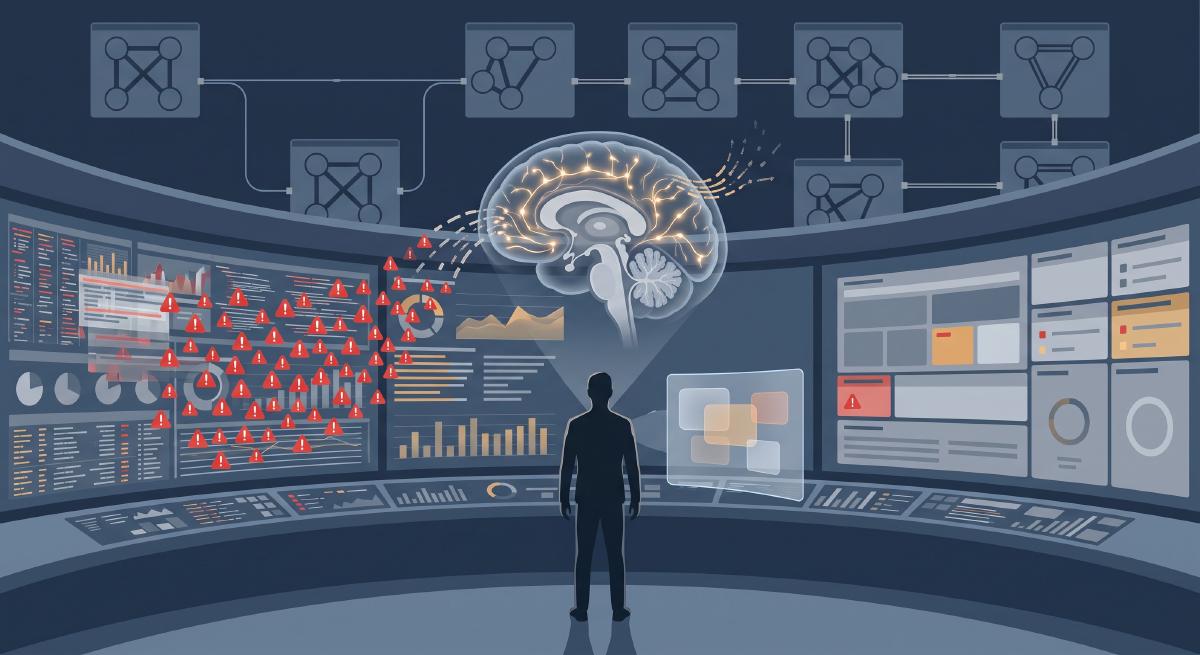
Introduction: The Crisis of Cognitive Capacity in the Modern Enterprise#
In today’s organizational landscape, the exponential proliferation of data, algorithmic decision-support systems, and complex digital interfaces has fundamentally altered managerial and operational work. While technological infrastructure has scaled infinitely, the human operator’s cognitive capacity remains biologically constrained. This physiological and psychological bottleneck results in information overload, diminished situational awareness, and catastrophic decision-making failures in high-stakes environments. Addressing this crisis requires a radical departure from traditional technocentric design paradigms, necessitating a pivot toward a human-centric approach grounded in cognitive ergonomics, neurophysiology, and behavioral science.
This analysis constructs a comprehensive, multidisciplinary blueprint, the September Framework, to optimize enterprise workflows, control room dashboards, and organizational architectures. By synthesizing Herbert A. Simon’s foundational theories of bounded rationality and near-decomposability with modern cognitive ergonomics, empirical measurement protocols, and psychological safety methodologies, this article provides an actionable methodology for global leaders. The overarching objective is to engineer sociotechnical systems that align closely with human neurological limits, prevent cognitive saturation, mitigate the insidious effects of automation bias, and ensure long-term institutional resilience in an era of hyper-complexity and artificial intelligence.
Theoretical Foundations: Bounded Rationality in the Era of Hyper-Complexity#
To engineer effective enterprise workflows, organizational architects must first accept the human mind’s biological limitations. Classical economic and organizational theories historically operated on the assumption of homo economicus, the perfectly rational actor who possesses access to all relevant information, accurately evaluates all possible consequences, and consistently selects the optimal choice to maximize utility. However, decades of empirical observation in cognitive science show that this optimization model is a theoretical fiction when applied to real-world administrative behavior.
Bounded Rationality and the Pragmatism of Satisficing#
Herbert A. Simon’s Nobel Prize-winning framework of bounded rationality systematically dismantled the classical optimization model, positing instead that computational limits, time constraints, and environmental ambiguity severely restrict human cognition. In complex, uncertain environments, decision-makers cannot process every variable or predict every downstream outcome. Consequently, the human mind relies on heuristic shortcuts and simplified mental models to navigate uncertainty.
Rather than exhaustively searching for the absolute optimal solution, bounded minds engage in satisficing. Satisficing, a portmanteau of “satisfy” and “suffice,” describes a decision-making strategy in which an individual stops searching for alternatives as soon as they find a solution that meets a predefined minimum threshold of acceptability. At the same time, while traditional economic theory viewed satisficing as a cognitive deficiency, modern behavioral science recognizes it as an ecologically rational adaptation that conserves vital mental resources for high-priority tasks. In organizational behavior, acknowledging the reality of satisficing is critical; workflows and algorithmic support systems that demand exhaustive optimization from human operators will inevitably induce cognitive failure and decision paralysis.
Dual Process Theory and the Cognitive Reflection Test#
Dual Process Theory further illuminates the mechanics of bounded rationality by delineating human cognition into two distinct systems. System 1 represents intuitive, fast, automatic, and emotionally driven thought processes, whereas System 2 governs deliberate, slow, analytical, and effortful reasoning. Empirical psychophysiological studies reveal that these two systems exhibit distinct biological signatures. For instance, intuitive judgments correspond to significantly lower sympathetic nervous system activation (emotional arousal) than deliberate decision-making, suggesting that a relaxed psychophysiological state facilitates the holistic processing needed for rapid semantic associations.
Understanding which cognitive system an operator is utilizing is essential for workflow design. Researchers often use the Cognitive Reflection Test (CRT) to measure an individual’s tendency to override intuitive, heuristic responses (System 1) in favor of reflective, analytical processing (System 2). The interplay between these systems dictates how operators respond to crises. When a decision-maker’s working memory resources are mismanaged or quickly depleted by a poorly designed interface, they are forced to abandon System 2 analysis and rely exclusively on the experiential, heuristic patterns of System 1. While intuition enables rapid adaptation in environments with frequent feedback and learning opportunities, heavy reliance on System 1 in novel, high-stakes environments lacking familiar reference points can lead to catastrophic misjudgments.
The Architecture of Complexity and Near-Decomposability#
To mitigate the rapid depletion of cognitive resources, organizational workflows must be architected to respect the boundaries of human processing. Herbert Simon proposed that complex systems, whether biological, computational, or organizational, operate most efficiently and resiliently when they possess the property of “near-decomposability”.
Modularity in Organizational and System Design#
In a nearly decomposable system, the overall structure is organized hierarchically into distinct, semi-autonomous modules or subsystems. Interactions within a single module are dense, highly coupled, and cohesive, while interactions between modules are weak, standardized, and aggregated. This architectural paradigm is fundamentally nature’s answer to bounded rationality, allowing distributed actors to coordinate massive complexity without requiring any single human mind to hold the entire system in working memory.
Applied to enterprise workflows, near-decomposability dictates that complex operational tasks must be deconstructed into discrete, manageable sub-tasks with clear, contractable interfaces. If a control room operator is responsible for a specific chemical refinement subsystem, they do not need to comprehend the intricate, real-time thermodynamic dynamics of every other subsystem in the facility. They only need to understand the aggregate outputs and formalized parameters that cross the modular interfaces between their domain and the broader plant. This modular trust enables distributed teams to function cohesively without the exorbitant coordination costs and cognitive overhead of holistic central planning.
Microfoundations of Organizational Routines#
The principles of near-decomposability extend to the microfoundations of organizational routines. Macro-level enterprise capabilities are ultimately constructed from the lower-level variables of individual actions and interpersonal interactions. When workflows are properly modularized, teams within these modules can use intuitive thinking to cope with environmental changes efficiently, particularly in stable environments with ample feedback. By structurally isolating cognitive load, near-decomposability ensures that local disruptions or anomalies can be managed at the subsystem level, preventing cognitive saturation from cascading across the entire enterprise architecture.
Cognitive Load Theory and the Physiology of Decision-Making#
The constraints of bounded rationality and the necessity for near-decomposability are mechanistically explained by Cognitive Load Theory (CLT). Working memory, the cognitive system that holds and manipulates transient information, is strictly limited in both capacity and duration. CLT categorizes the mental effort required during task execution into three distinct modalities, each demanding rigorous management through workflow design.
The Tripartite Model of Cognitive Load#
Effectively deploying enterprise resources requires minimizing unnecessary mental strain while maximizing capacity for analytical thought. The tripartite model categorizes this strain as follows:
| Type of Cognitive Load | Definition and Mechanism | Implications for Enterprise Workflow Design |
|---|---|---|
| Intrinsic Load | The inherent, irreducible complexity and difficulty of the task itself (e.g., stabilizing a volatile power grid or interpreting complex financial algorithms). | Cannot be eliminated, but can be managed by sequencing complex tasks logically and ensuring the operator possesses adequate prior training. |
| Extraneous Load | The mental effort wasted on poorly designed interfaces, cluttered dashboards, ambiguous navigation, or irrelevant auditory noise. | Cognitive ergonomists must ruthlessly minimize it. High extraneous load drives decision paralysis and operator fatigue. |
| Germane Load | The productive cognitive effort devoted to processing information, constructing mental schemas, and synthesizing new knowledge. | Should be maximized. By eliminating extraneous load, working memory is freed to engage in the germane processing required for deep situational comprehension. |
In augmented reality (AR) and complex enterprise dashboards, extraneous load becomes especially dangerous. When digital interfaces superimpose thousands of unprioritized, high-density data points onto a physical space or a control screen, the extraneous load rapidly eclipses cognitive capacity. To counter this, designers must use adaptive content density, spatial alignment, and strict visual hierarchies to reduce cognitive load without sacrificing functionality.
Empirical Measurement: Validating Cognitive Ergonomics#
Designing workflows for bounded minds requires objective methods to measure cognitive load and validate ergonomic interventions. Relying solely on lagging performance outcomes, such as error rates, is insufficient, as operators often mask high cognitive load by expending extreme, unsustainable mental effort until a sudden catastrophic failure occurs. The September Framework mandates a dual-validation approach that correlates subjective psychometrics with objective physiological biosensors.
The gold standard for subjective assessment is the NASA Task Load Index (NASA-TLX). This multidimensional psychometric instrument evaluates perceived workload across six axes: mental demand, physical demand, temporal demand, performance, effort, and frustration. While robust, subjective measures are inherently retrospective. To capture real-time, objective data regarding cognitive saturation, modern ergonomic assessments employ sophisticated physiological telemetry.
The autonomic nervous system directly links cognitive effort to pupil dilation. Under high intrinsic or extraneous cognitive load, task-evoked pupillary responses reliably show increased dilation, which eye-tracking hardware can continuously monitor alongside saccadic jump distances and fixation durations. Concurrently, electroencephalography (EEG)- derived neural processing signatures provide deep insights into cognitive bandwidth. Empirical neurophysiological studies demonstrate that periods of acute cognitive load are inextricably associated with increased spectral power in the EEG theta band, particularly over frontal cortical regions, often coupled with alpha band desynchronization. Furthermore, elevated heart rate variability and tonic electrodermal activity serve as reliable secondary indicators of cognitive stress. By triangulating these physiological indicators with NASA-TLX psychometric data, system designers can pinpoint the threshold at which an interface induces cognitive saturation, enabling precise empirical calibration of enterprise workflows.
Situational Awareness and the Paradox of Automation#
The intersection of bounded rationality and cognitive load directly dictates an operator’s Situational Awareness (SA). As defined by human factors pioneer Mica Endsley, SA is not merely observing data; it is perceiving environmental elements, understanding their contextual meaning, and accurately projecting their status into the near future.
The Three Levels of Situational Awareness#
Endsley’s universally adopted model stratifies SA into three sequential, hierarchical levels, each vulnerable to specific cognitive disruptions within the modern enterprise:
| SA Level | Cognitive Mechanism | Vulnerabilities in Complex Workflows |
|---|---|---|
| Level 1: Perception | Detecting the status, attributes, and dynamics of relevant entities within the operational environment. | Failure occurs due to sensory overload, cluttered interfaces, alarm floods, or inadequate signal-to-noise ratios. |
| Level 2: Comprehension | Synthesizing disjointed Level 1 elements to understand their aggregate significance relative to strategic objectives. | Failure occurs when the operator lacks appropriate internal mental models, or when extraneous cognitive load disrupts semantic pattern recognition. |
| Level 3: Projection | Forecasting future states, actions, and consequences based on the comprehensive understanding achieved in Level 2. | Failure occurs when working memory is saturated, preventing the complex mental simulation required to anticipate future system behaviors. |
When enterprise dashboards aren’t ergonomically aligned with human cognitive constraints, operators often stall at Level 1. They may perceive an alarm light flashing but lack the cognitive bandwidth to understand the underlying thermodynamic root cause (Level 2) or predict an imminent cascading mechanical failure (Level 3). To address this, organizations frequently turn to artificial intelligence, seeking to augment human SA with algorithmic processing. However, this introduces the profound paradox of automation.
Automation Complacency, Bias, and the Out-of-the-Loop Problem#
While intended to reduce cognitive load, poorly integrated automation engenders severe human-factors vulnerabilities. Introducing AI and automated control systems shifts the human operator’s role from active, manual controller to passive, supervisory monitor. This paradigm shift precipitates the “out-of-the-loop” performance problem, wherein operators lose track of the automated system’s status and fail to intervene effectively when the automation encounters an edge case it cannot algorithmically resolve.
This catastrophic degradation of Situational Awareness is driven by two distinct but overlapping cognitive failures: automation complacency and automation bias. Automation complacency occurs when operators, often under high multitasking workloads, over-rely on the perceived reliability of an automated system, severely degrading active monitoring. The operator implicitly trusts the system to govern routine operations and fails to actively sample environmental data to verify the automation’s ongoing efficacy, resulting in critical omission errors (failing to detect a systemic malfunction).
Conversely, automation bias refers to the heuristic tendency of boundedly rational humans to accept algorithmically generated recommendations as inherently superior, even when salient contradictory evidence is present. When decision aids generate flawed outputs, automation bias leads directly to commission errors, situations where operators execute a dangerous or incorrect action simply because the artificial intelligence suggested it. For a mind constrained by temporal pressure and information overload, trusting the algorithm is a highly efficient form of satisficing. However, in safety-critical domains, this uncritical reliance replaces robust human judgment with algorithmic opacity.
The Vicious Circle of Cognitive Deskilling#
A secondary, insidious consequence of excessive cognitive automation is longitudinal skill erosion, colloquially termed deskilling. When cognitive technologies substitute for human expertise in complex knowledge work, operators are temporarily freed from routine mental effort. However, human expertise is not static; it must be continuously maintained through active, mindful engagement with intrinsic cognitive tasks.
As automation subsumes diagnostic and analytical functions, workers gradually lose their fundamental understanding of the underlying task mechanics and logic. This erosion of hands-on, procedural knowledge renders the human workforce increasingly incapable of recognizing algorithmic drift, diagnosing complex anomalies, or safely assuming manual control during unexpected technological failures. System dynamics modeling reveals this phenomenon as a vicious circle: automation fosters reliance; reliance breeds complacency and reduces mindful engagement; a lack of mindfulness causes expertise to decay; and diminished expertise forces even greater reliance on the automated system to function at all. The enterprise challenge is to deploy technology that informs and empowers human comprehension and germane learning, rather than technology that merely automates and replaces human cognition.
Enterprise Dashboard Design: From Data Visualization to Cognitive Ergonomics#
These theoretical principles manifest in the physical and graphical design of the Human-Machine Interface (HMI) and the enterprise dashboard. Without rigorous cognitive design standards, HMIs rapidly devolve into chaotic environments characterized by sensory noise, visual clutter, and dangerous ambiguity. The September Framework mandates strict adherence to the ISO 9241-110 dialogue principles, the ANSI/ISA-101 standard for HMI design, and advanced data storytelling frameworks.
ISO 9241-110 Dialogue Principles#
The ISO 9241-110 standard establishes critical dialogue principles that optimize the ergonomic exchange of information between the human operator and the enterprise system. Foremost among these is Suitability for the Task, which dictates that interfaces present only the information needed to execute the current objective, ruthlessly excising extraneous data that increases cognitive load. Furthermore, interfaces must exhibit Self-Descriptiveness, continuously and intuitively orienting the user so that the purpose of every visualization is immediately apparent without requiring deep, effortful memory retrieval. Finally, Conformity with User Expectations mandates that system behaviors align seamlessly with the operator’s existing mental models and industry conventions, minimizing the germane load required to translate abstract system states into actionable intelligence.
ANSI/ISA-101 and High-Performance HMIs#
The ANSI/ISA-101.01 standard provides a highly structured lifecycle and engineering methodology for process automation HMIs, focusing on usability and mitigating operator workload. The standard advocates “High-Performance HMI” principles that use visual psychology to direct human attention to anomalous operational states quickly.
Key cognitive design patterns embedded within ISA-101 include:
- Progressive Disclosure: To manage cognitive bandwidth, information is meticulously layered. Level 1 displays provide a high-level, aggregate overview of the entire system’s health, ensuring global situational awareness. Operators only drill down to Level 2 (unit control), Level 3 (detailed equipment), or Level 4 (diagnostic data) when specific, targeted interventions are required. This architectural hierarchy prevents the “fog of war” induced by presenting raw, unfiltered data on a primary screen.
- Grayscale-First Layouts: Legacy HMIs frequently utilized saturated colors for pipes, vessels, and static text, transforming the screen into a distracting, high-noise mosaic. High-performance HMIs require low-contrast grayscale backgrounds for all normal operational states. Bright, highly saturated colors are strictly reserved as semantic indicators for abnormal conditions (e.g., ANSI/ISA safety yellow for warnings, safety red for critical alarms). This rigorous visual hierarchy drastically reduces extraneous visual processing and dramatically accelerates the Mean-Time-To-Detect (MTTD) for anomalies.
- Cognitive Aggregation: Rather than forcing operators to perform mental mathematics to determine if a dynamic variable is out of bounds, optimized HMIs utilize analog indicators with normal operational bands clearly delineated. This allows the operator’s visual cortex to process deviations pre-attentively, bypassing the slower, analytical bottleneck of working memory.
The Decision-Oriented Data Storytelling Framework#
For executive and managerial dashboards, raw data visualization is insufficient to drive action. Research documents that information overload and poor communicative design systematically prevent decision-makers from deriving actionable insights, degrading decision quality and organizational effectiveness. To bridge this gap, the September Framework integrates the five-layer Decision-Oriented Data Storytelling Framework, which grounds analytical communication in cognitive theory:
| Data Storytelling Layer | Function within the Enterprise Dashboard | Cognitive Purpose |
|---|---|---|
| 1. Data Foundation | Ensures the underlying integrity, latency, and structure of the enterprise data warehouse. | Prevents heuristic distrust of the system by ensuring empirical accuracy. |
| 2. Analytical Processing | Utilizes algorithms to identify trends, anomalies, and correlations within the data layer. | Offloads the intrinsic cognitive load of mathematical pattern recognition to the machine. |
| 3. Visual Abstraction | Translates complex statistical outputs into pre-attentive graphical representations (e.g., charts, heatmaps). | Bypasses slow working memory by leveraging the brain’s rapid visual processing cortex. |
| 4. Narrative Structuring | Frames the visual data within a logical, sequential story that provides context and highlights key takeaways. | Enhances Level 2 Situational Awareness (Comprehension) by linking abstract data directly to operational reality. |
| 5. Decision Activation | Presents explicit, actionable recommendations based on the narrative insights, outlining potential risks and rewards. | Facilitates Level 3 Situational Awareness (Projection) and drives decisive organizational action. |
By embedding narrative architecture directly into the dashboard, organizations transform passive monitoring tools into active decision-support systems, structurally preventing the cognitive dissonance caused by decontextualized data dumps.
Alarm Management and Rationalization: Taming the Flood#
One of the most profound drivers of cognitive overload in control environments is the “alarm flood”, a hazardous condition where a system generates alerts at a rate far exceeding the human biological capacity to read, comprehend, and respond. In poorly managed systems, operators suffer from chronic alarm fatigue and become desensitized to auditory and visual noise. This condition can cause operators to miss critical events, paving the way for catastrophic industrial or organizational disasters.
The ANSI/ISA-18.2 (and closely related EEMUA 191) standard addresses this systemic failure by defining an alarm as an audible or visual indicator of an abnormal condition that requires an immediate operator response. If an alert does not require an immediate, definable action, it is merely an event or a status badge and must not be configured as an alarm.
The ISA-18.2 Alarm Lifecycle and Metrics#
The ISA-18.2 standard mandates an 11-stage continuous lifecycle, moving from Philosophy and Identification through Rationalization, Detailed Design, Implementation, Operation, Maintenance, Monitoring & Assessment, Management of Change (MOC), and periodic Audit. The cornerstone of this lifecycle is the rationalization workshop, where every configured alarm is rigorously tested against philosophy criteria; if it lacks a defined consequence or required operator action, it is summarily removed or demoted.
To protect operator cognitive bandwidth, ISA-18.2 establishes strict quantitative metrics for acceptable alarm rates, which serve as the baseline for assessing cognitive ergonomics in any control room:
| Alarm Performance Metric (ISA-18.2 / EEMUA 191) | Target Value (Maximum Manageable) | Target Value (Very Likely Acceptable) |
|---|---|---|
| Average Alarms per Day (per operator position) | ~300 alarms | ~150 alarms |
| Average Alarms per Hour | ~12 alarms | ~6 alarms |
| Average Alarms per 10 Minutes | ~2 alarms | ~1 alarm |
| Peak Alarms in 10 minutes | ≤ 10 alarms (prevents flood conditions) | < 10 alarms |
| Percentage of time in alarm flood | < 1% of total operating time | < 1% |
| Priority Distribution (Low / Medium / High) | 80% / 15% / 5% | 80% / 15% / 5% |
Achieving these targets requires aggressively eliminating chattering alarms (alarms that trigger repeatedly due to minor signal noise) and stale alarms (alerts left active for over 24 hours), which train operators to ignore the system. Furthermore, advanced dynamic alarm suppression methodologies must be engineered into the control logic to prevent downstream alarms from cascading when a known upstream parent condition triggers. By enforcing these strict boundaries, the enterprise ensures that when an alarm does annunciate, it possesses immense diagnostic value and commands immediate, focused human attention.
Digital Transformation in Practice: Macro-Ergonomics and Case Studies#
While HMIs and alarms constitute the micro-ergonomics of a workflow, the command center’s physical and strategic layout profoundly affects macro-cognitive performance. The ISO 11064 standard provides comprehensive international guidelines for the ergonomic design of control centers, seamlessly integrating human psychological capabilities with architectural and environmental constraints.
An optimized control room actively mitigates physical and environmental stressors, such as improper acoustics, glaring illumination, and poor thermal regulation, that subconsciously drain mental energy and induce fatigue. ISO 11064 mandates that workstation dimensions, operator-screen distances, and display visual angles be empirically calculated. Empirical regression models indicate that optimal performance occurs at specific parameters, such as a visual angle of 13 degrees, illuminance of 500 lux, and strict limits on the number of simultaneous scenes displayed to a single operator to prevent visual saturation.
Implementing the Framework: SABIC and Saudi Aramco#
Leading organizations in Saudi Arabia’s energy and chemical sectors demonstrate the value of combining macro-ergonomics, near-decomposability, and digital transformation, driven by Vision 2030 and the National Industrial Development and Logistics Program (NIDLP).
For instance, the Saudi Basic Industries Corporation (SABIC) has executed comprehensive modernization projects that physically and digitally restructure its operational core. In a notable control system modernization, SABIC replaced legacy bus architectures with an Ethernet-based, star-topology gigabit fiber-optic network, laying over 10 kilometers of data lines to seamlessly link critical control rooms. This infrastructure upgrade, executed with precise roadmaps and checklists, enables the real-time, high-fidelity data transmission required to support advanced, low-latency HMI graphics and centralized alarm management, significantly reducing operator cognitive load. Concurrently, SABIC integrates strict Environmental, Social, and Governance (ESG) considerations directly into its governance practices, utilizing advanced digital technologies to support emissions management and decarbonization strategies.
Similarly, Saudi Aramco has situated itself at the forefront of the Fourth Industrial Revolution (4IR), aggressively integrating automation, robotics, and big data analytics into its organizational decision-making centers. By establishing massive, digitally integrated operations control centers, such as the 42,000-square-meter facilities in Jubail, these organizations instantiate the principles of near-decomposability at a planetary scale. Furthermore, to combat deskilling and strengthen training in these complex environments, Aramco heavily uses immersive virtual reality (VR) and 4IR technologies, directly applying cognitive load theory to craft eLearning modules that safely build germane cognitive schemas without risking operational disruption.
However, these digital transformations come with strategic constraints. Organizations operating in these jurisdictions must navigate strict data sovereignty laws, such as the Saudi Personal Data Protection Law (PDPL), which requires sensitive industrial data to remain within national borders. This regulatory environment forces multinational firms to design highly secure, localized, and ergonomically efficient on-premises analytical solutions, reinforcing the need for modular, decentralized system architectures. Furthermore, integrating Industry 4.0 technologies such as collaborative robots (cobots), Artificial Intelligence, and Radio Frequency Identification (RFID) for collision detection introduces new occupational health and safety vectors that require continuous cognitive monitoring and dynamic risk assessment to ensure human-machine harmony.
Human-AI Teaming and the Cognitive Explainability-Sense-Making Framework#
As AI assumes a larger role in enterprise workflows, human-machine interaction must shift from human-as-monitor to true human-AI collaboration. This collaboration can take multiple configurations, governed by the nature of task interdependence (sequential or parallel) and the necessity for skill specialization. For AI to function as a trusted colleague rather than an opaque tool, the system must be designed around the Cognitive Explainability-Sense-Making Framework (CESF).
The CESF posits that Explainable AI (XAI) is not merely a technical output; it is a cognitively mediated process occurring between the algorithm, human interpretation, and the final decision outcome. Drawing on theories of sensemaking, bounded rationality, and predictive processing, the framework highlights that explanations must modulate user expectations and integrate seamlessly into the user’s existing mental models. If an AI provides a highly complex, statistically dense explanation, it may inadvertently induce cognitive dissonance and decision paralysis. Conversely, an overly simplistic explanation might breed false confidence and exacerbate automation bias, leading the operator to conflate interpretability with infallible correctness. Therefore, AI explanations must be context-sensitive, cognitively aligned, and designed to calibrate operator trust dynamically based on the specific cultural and regulatory environment.
Furthermore, enterprise leaders must establish explicit boundaries for AI delegation using the “FIRE” criteria. These criteria act as exclusion principles, identifying decisions that require “actor-specificity”, judgments deeply intertwined with human beliefs, normative goals, and localized context. By delineating an epistemic boundary between tasks suitable for algorithmic optimization and those requiring human heuristic judgment, organizations ensure that AI acts as a cognitive scaffold rather than a usurpation of human agency.
Cultivating Institutional Resilience through Psychological Safety#
Ergonomic interfaces, rationalized alarms, and explainable AI are necessary but ultimately insufficient for true enterprise resilience. When boundedly rational humans execute workflows in complex, ambiguous, and volatile environments, cognitive errors are mathematically inevitable. If fearful employees hide these mistakes, the organization loses vital telemetry data, permanently turning off evolutionary adaptation and systemic correction. Therefore, cognitive ergonomics must be unequivocally paired with macro-cultural engineering, specifically, the rigorous cultivation of psychological safety.
The Edmondson Paradigm of Teaming and Learning#
Pioneered by Harvard Business School Professor Amy Edmondson, psychological safety is defined as “the belief that one will not be punished or humiliated for speaking up with ideas, questions, concerns, or mistakes, and that the team is safe for interpersonal risk-taking”. Crucially, it is not a personality trait, a metric of interpersonal warmth, or a guarantee of comfort; it is an emergent property of group dynamics that fosters candid, frictionless communication.
In clinical studies, Edmondson famously discovered a counterintuitive phenomenon: medical teams that reported the most errors paradoxically achieved the best patient outcomes. The teams were not inherently more prone to failure; rather, their environment possessed the psychological safety requisite to report, analyze, and systematically correct near-misses before they escalated into fatalities. In environments lacking this safety, human operators default to self-preservation. When they encounter an interface anomaly, make a cognitive error, or experience automation bias that leads to a near-miss, they remain silent. This silence degrades the enterprise’s collective situational awareness. Bad news fails to travel up the hierarchical chain, and executives operate under a dangerous illusion of security while systemic vulnerabilities silently compound.
Intelligent Failures and Mitigating Automation Bias#
Edmondson’s framework reframes errors not as moral or professional failings, but as inevitable byproducts of bounded rationality interacting with complex systems. High-performing organizations carefully distinguish between blameworthy acts (e.g., deliberate sabotage or gross negligence) and “intelligent failures,” undesired outcomes that result from well-planned actions in novel, uncertain territories.
When leaders respond to errors with analytical curiosity rather than punitive retribution, asking “what happened in the system?” rather than “whose fault is this?”, they transform the organization into a continuous learning machine. This cultural pivot fundamentally supports cognitive ergonomics. If an operator is punished for missing an alarm during an unpredictable plant upset, the true root cause (an unrationalized ISA-18.2 violation causing an alarm flood) is ignored, and the system remains perilous. However, if the operator feels psychologically safe reporting that the HMI was overwhelmingly cluttered and confusing, the organization can redesign the visual hierarchy using ANSI/ISA-101 principles, permanently eliminating extraneous cognitive load and structurally preventing the error from recurring.
Furthermore, psychological safety is the primary, indispensable defense against automation bias. To prevent catastrophic “out-of-the-loop” disasters, human operators must feel fully empowered to question, challenge, and aggressively override AI recommendations. In traditional, hierarchical, fear-based corporate cultures, questioning a multi-million-dollar algorithmic decision system is perceived as a massive interpersonal risk, leading operators to defer to the machine even when their intuition signals danger. Cultivating psychological safety keeps human intuition and tacit knowledge active, serving as vital checkpoints against algorithmic hallucinations, bad data, and the inherent, bounded limitations of artificial intelligence.
Conclusion: The September Framework for Global Leaders#
The September Framework synthesizes behavioral economics, cognitive psychology, industrial engineering, and cultural management to insulate the modern enterprise from the human mind’s inherent vulnerabilities. Bounded rationality is not a defect to be trained out of the workforce; it is a rigid biological constant that systems must be meticulously designed around.
To achieve operational excellence, digital transformation, and enduring institutional resilience, global leaders must implement the following architectural mandates:
- Design for Satisficing, Not Optimizing: Acknowledge that operators operating under temporal pressure and uncertainty rely on heuristics and intuitive processing. Architect workflows and organizational structures around near-decomposability, breaking complex, highly coupled environments into manageable, modular tasks with clear interfaces.
- Eradicate Extraneous Cognitive Load: Strictly apply ANSI/ISA-101 guidelines for progressive disclosure and grayscale-first HMIs to protect visual processing capacity. Concurrently, ruthlessly enforce ISA-18.2 alarm rationalization targets (maintaining an average of fewer than 150 alarms per day) to preserve working memory and ensure that alarms dictate immediate action.
- Mitigate Automation Risks through Active Human Engagement: Prevent the insidious creep of automation complacency and deskilling by maintaining humans in the active decision loop. Design human-AI teaming configurations that leverage the Cognitive Explainability-Sense-Making Framework (CESF), ensuring AI serves as a transparent cognitive scaffold rather than an opaque oracle.
- Validate Ergonomics Through Multimodal Measurement: Do not rely solely on outcome metrics to gauge system health. Utilize NASA-TLX psychometrics in tandem with continuous physiological telemetry, such as EEG theta band analysis and task-evoked pupillometry, to objectively and scientifically verify that workflow demands align with human neurological capacity.
- Enforce Psychological Safety as a Strategic Imperative: Cultivate a fearless, candid organizational culture where interpersonal risk-taking is explicitly rewarded, errors are treated as invaluable systemic telemetry, and human operators feel unconditionally empowered to challenge both hierarchical superiors and automated systems.
By embedding these multi-disciplinary principles at the very core of technological deployment and organizational design, the enterprise transcends the biological limitations of bounded minds. The resulting architecture is a highly adaptive, deeply resilient sociotechnical system, uniquely capable of thriving amidst the accelerating complexity, data saturation, and algorithmic transformation of the twenty-first century.
References#
- Akgün, Ö., & Gerasimou, G. (2026). Distilling Models of Bounded-Rational Choice: A Constraint Programming Approach. ArXiv. https://arxiv.org/abs/2607.03962
- Barlo, M., & Dalkıran, N. A. (2023). Behavioral implementation under incomplete information. Journal of Economic Theory, 213, 105738. https://doi.org/10.1016/j.jet.2023.105738
- Bhat, Srikrishna & Dobbins, Chelsea & Dey, Arindam & Sharma, Ojaswa. (2023). Multi-modal classification of cognitive load in a VR-based training system. 503-512. 10.1109/ISMAR59233.2023.00065.
- Broniatowski, D. A., & Magee, C. L. (2017). The Emergence and Collapse of Knowledge Boundaries. IEEE Transactions on Engineering Management, 64(3), 337. https://doi.org/10.1109/TEM.2017.2677744
- Burbach, M. E., Eaton, W. M., & Delozier, J. L. (2023). Boundary spanning in the context of stakeholder engagement in collaborative water management. Socio-Ecological Practice Research, 5(1), 79. https://doi.org/10.1007/s42532-023-00138-w
- Clancy, Jon & Jarrahi, Mohammad Hossein. (2019). Breakdowns in Human-AI Partnership: Revelatory Cases of Automation Bias in Autonomous Vehicle.
- Edmondson, A. C. (2018). The fearless organization: Creating psychological safety in the workplace for learning, innovation, and growth. John Wiley & Sons.
- Endsley, Mica, & Jones, Debra. (2025). Automation, AI, and Situation Awareness. 10.1201/9781003388234-12.
- Endsley, Mica & Jones, Debra. (2025). Designing for Situation Awareness: An Approach to User-Centered Design, Third Edition. 10.1201/9781003388234.
- Evans, B. P., Ardon, L., & Ganesh, S. (2025). Modeling bounded rational decision-making through Wasserstein constraints. ArXiv. https://arxiv.org/abs/2504.03743
- Gigerenzer, G. (2026). From bounded rationality to ecological rationality. Industrial and Corporate Change, 35(3), 688-707. https://doi.org/10.1093/icc/dtag017
- Hagiwara, M. (2025). Behavioral subgame perfect implementation. Journal of Economic Behavior & Organization, 233, 106992. https://doi.org/10.1016/j.jebo.2025.106992
- Hazy, James & Tivnan, Brian. (2003). The Impact of Boundary Spanning on Organizational Learning: Computational Explorations. Emergence, 5. 86-123. 10.1207/s15327000em0504_7.
- Juliano, J. M., Schweighofer, N., & Liew, S. L. (2022). Increased cognitive load in immersive virtual reality during visuomotor adaptation is associated with decreased long-term retention and context transfer. Journal of NeuroEngineering and Rehabilitation, 19, 106. https://doi.org/10.1186/s12984-022-01084-6
- Korpela, V., Lombardi, M., & Zachariassen, J. (2025). Behavioral implementation by individual-based rights structures: A full characterization. Journal of Economic Behavior & Organization, 241, 107367. https://doi.org/10.1016/j.jebo.2025.107367
- Leicht-Deobald, U., Backmann, J., de Vries, T. A., Weiss, M., Hohmann, S., Walter, F., van der Vegt, G. S., & Hoegl, M. (2025). A Contingency Framework for the Performance Consequences of Team Boundary Management: A Meta-Analysis of 30 Years of Research. Journal of Management, 51(2), 704-747. https://doi.org/10.1177/01492063231206107
- Mahmoudsalehi, Mahdi & Moradkhannejad, Roya & Safari, Khalil. (2012). How knowledge management is affected by organizational structure. The Learning Organization, 19. 518-528. 10.1108/09696471211266974.
- Menon, R., James, L., N, E., & Babu, T. R. C. (2026). Founder Attributes and Self-Reported Decision-Making Styles in Startup Execution: A Dual-Process Perspective on Strategic and Operational Decision Contexts. Behavioral Sciences (Basel, Switzerland), 16(7), 1130. https://doi.org/10.3390/bs16071130
- Moore, Fahmeena Odetta. (2025). Organizational Structure and Innovation. 10.13140/RG.2.2.20340.00647/1.
- Mulotte, Louis & Duysters, Geert & Sneep, Ruud. (2014). Knowledge Base Structure and Governance Choice. Academy of Management Proceedings. 2014. 16897-16897. 10.5465/AMBPP.2014.16897abstract.
- Nolwenn Lherisson, Laurent Dehouck, Marc Lassagne, Jean-François Vautier, Ali Siadat. Articulation del’intuition et du raisonnement dans la gestion de crise : le cas des exercices. Congrès Lambda Mu 24 (Congrès𝜆𝜇24) : " Les métiers du risque : clés de la réindustrialisation et de la transition écologique “, Institut pour laMaîtrise des Risques (IMdR), Oct 2024, Bourges, France. hal-04896528⟩
- P. J., Swarubini & Kirita, Ryunosuke & Igasaki, Tomohiko. (2025). Automated Multimodal Sensing for Cognitive Load Assessment Using Cross-Modality-Driven Attention Fusion. IEEE Sensors Letters. 10. 1-4. 10.1109/LSENS.2025.3648946.
- Parasuraman, R., & Manzey, D. H. (2010). Complacency and bias in human use of automation: an attentional integration. Human Factors, 52(3), 381–410. https://doi.org/10.1177/0018720810376055
- Qu, Ziyi & Cao, Huai. (2026). Reducing Cognitive Load in Audio Interface Design: A Metaphor-Informed Modular Approach for Professional Tools. 10.1007/978-3-032-13083-9_14.
- Russo, Ana & Cardoso-Junior, Moacyr & Villani, Emilia. (2024). Eye-tracking analysis to assess the mental load of unmanned aerial system operators: systematic review and future directions. The Aeronautical Journal. 129. 529-558. 10.1017/aer.2024.122.
- Russo, Ana & Gomes Pereira Sarmento, Andrew & Rehder, Ivan & Cardoso-Junior, Moacyr & Villani, Emilia. (2024). Assessing Mental Workload And Interface Usability In Military Pilots: An Advanced Eye-Tracking Methodology.
- Soyer, Ayberk & Asan, Umut & Eris, Ozgur Utkan. (2018). Toward a Conceptualization of Organizational Modularity. 10.4018/978-1-5225-6301-3.ch018.
- Taherdoost, Hamed & Madanchian, Mitra. (2023). Decision Making: Models, Processes, Techniques. Cloud Computing and Data Science. 1-14. 10.37256/ccds.5120233284.
- Testa, A., Simeone, A., Zecca, M., Paoli, A., & Settineri, L. (2025). Fuzzy-Based Sensor Fusion for Cognitive Load Assessment in Inclusive Manufacturing Strategies. Sensors (Basel, Switzerland), 25(11), 3356. https://doi.org/10.3390/s25113356
- Vosman, L., Deken, F., & Volker, L. (2024). Boundary work in a project-based organization: Flow across interdependent boundaries in interorganizational programs. International Journal of Project Management, 42(5), 102622. https://doi.org/10.1016/j.ijproman.2024.102622
- Wang, Y., Luan, S., & Gigerenzer, G. (2022). Modeling fast‐and‐frugal heuristics. PsyCh Journal, 11(4), 600–611. https://doi.org/10.1002/pchj.576
- Yayavaram, Sai & Ahuja, Gautam. (2008). Decomposability in Knowledge Structures and Its Impact on the Usefulness of Inventions and Knowledge-base Malleability. Administrative Science Quarterly. 53. 333-362. 10.2189/asqu.53.2.333.