Introduction: Confronting a Pervasive Educational Myth#
For decades, the idea that each student possesses a dominant “learning style”, such as visual, auditory, or kinesthetic, has shaped educational theory, teacher training, and classroom practice. Its appeal lies in its simplicity and its promise of personalized education: by tailoring instruction to match a learner’s preferred mode of intake, educators hope to unlock individual potential and improve academic outcomes. This belief is so widespread that surveys consistently show that a large majority of teachers endorse it, and it has become a staple of corporate workshops, curriculum guides, and even popular self-help literature.
Yet beneath this surface of intuitive appeal lies a striking scientific reality: the learning styles hypothesis lacks credible evidence. Despite its deep entrenchment in educational culture, it belongs to a category of ideas known as “neuromyths”, misconceptions about the brain that persist despite being contradicted by empirical research. The central claim, known as the meshing hypothesis, that learning is optimized when instructional methods align with a learner’s preferred style, has been rigorously tested and consistently disproven.
This article offers a comprehensive examination of the learning styles myth, tracing its origins, unpacking its theoretical variations, and presenting the definitive scientific verdict against it. We deconstruct the paradigm, exploring why such an unsubstantiated theory has endured. We analyze prominent models such as VARK, Kolb’s Experiential Learning Cycle, and the Dunn and Dunn framework, revealing a field marked by theoretical inconsistency and a lack of falsifiable definitions. Most importantly, we review landmark studies and meta-analyses that demonstrate the absence of empirical support for matching instruction to learning styles. This finding represents a strong consensus within cognitive psychology.
The persistence of this myth, however, is not benign. It also explores the psychological, commercial, and institutional forces that sustain it. It outlines the tangible harms it causes: fostering fixed mindsets, perpetuating stereotypes, diverting limited resources, and crowding out effective pedagogical practices.
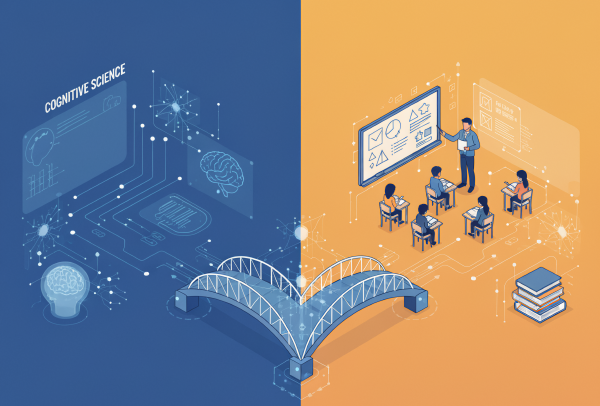
Moving from critique to construction, the second Part shifts the focus toward an evidence-based framework for effective learning. Grounded in the universal principles of cognitive science, this section introduces the core architecture of human learning, working memory, and long-term memory. It explains how Cognitive Load Theory provides a scientifically sound guide for instructional design. Rather than categorizing learners by style, effective teaching aligns method with content and employs high-impact, universal strategies such as dual coding, retrieval practice, spaced repetition, and interleaving. These approaches do not rely on diagnosing unsubstantiated preferences; instead, they leverage the fundamental ways all brains acquire, retain, and apply knowledge.
Ultimately, this article is more than a debunking; it is a call for a paradigm shift. By moving beyond the seductive but flawed framework of learning styles, educators, administrators, and policymakers can reorient toward practices grounded in robust research. The goal is not to discard the value of individual difference, but to refocus it on what truly matters: prior knowledge, cognitive capacity, and strategic competence. In doing so, we replace limiting labels with empowered, flexible learners equipped to succeed in any context. The journey from styles to science is not merely an academic correction; it is a necessary step toward a more effective, equitable, and intellectually honest approach to education.
Deconstructing the Learning Styles Paradigm#
The belief that individuals learn best when instruction matches their preferred “learning style” is one of the most widely accepted ideas in modern education. Yet, beneath its intuitive appeal lies a profound disconnect from scientific evidence. In this section, we systematically dismantle the learning styles paradigm, examining its origins, its theoretical variations, and the overwhelming body of research that exposes it as a persistent neuromyth. By exploring why this idea endures despite empirical refutation, we lay the groundwork for moving beyond myth and toward evidence-based practice.
The Enduring Allure of “I’m a Visual Learner”#
A Pervasive Belief in Education and Beyond#
The idea that individuals possess distinct “learning styles” is one of the most pervasive and deeply entrenched beliefs in modern education. It has become a cornerstone of teacher training, a staple of corporate professional development, and a common piece of self-identity for learners of all ages. The concept holds that individuals differ in the mode of instruction or study that is most effective for them. This belief is so influential that surveys consistently reveal an overwhelming majority of educators, often between 80% and 95%, endorse the idea that matching instruction to a student’s preferred learning style is an effective pedagogical practice. This widespread acceptance is not limited to educators; the public also strongly believes in the concept’s validity. Despite its widespread acceptance, this concept belongs to a category of scientifically unsupported educational ideas known as “neuromyths”, common misconceptions about the brain that, while intuitively appealing, lack a basis in empirical reality.
The Intuitive Appeal of Personalization#
The appeal of learning styles is undeniably powerful. It offers a simple, intuitive framework for understanding the complex reality of individual differences in the classroom. The theory promises a key to unlock personalized learning, suggesting that if an instructor can diagnose whether a student is a “visual,” “auditory,” or “kinesthetic” learner, they can tailor instruction to that student’s unique cognitive wiring and thereby optimize academic outcomes. This notion resonates with the common-sense observation that people are different and provides a straightforward, tangible approach to personalization. Furthermore, the theory offers a comforting and non-threatening explanation for academic difficulties. If a student is struggling, it may not be due to a lack of effort or intelligence, but simply because the instruction does not match their innate learning style. For many who have faced challenges in traditional academic settings, the theory offers a form of “retrospective absolution,” a reassuring narrative that their difficulties were not a personal failing but a systemic mismatch. This narrative of empowerment and individual potential, combined with its apparent simplicity, has made the concept of learning styles an incredibly resilient idea in the collective consciousness of education.
A critical error, however, lies at the heart of the learning styles paradigm: the conflation of subjective preference with objective effectiveness. Cognitive science readily acknowledges that individuals, when asked, will express preferences for how they like to receive information. One person might prefer watching a documentary, another might enjoy listening to a podcast, and a third might favor reading a book. These are matters of taste, interest, and prior experience. The myth of learning styles emerges from an unsubstantiated leap of faith, transforming a statement of preference (“I like to learn by watching videos”) into a claim of efficacy (“I am a visual learner, and therefore I learn best from videos”). This article will demonstrate that this leap lacks scientific support. Moreover, by focusing almost exclusively on the initial sensory channel through which information enters the brain, the learning styles model presents a dangerously simplistic view of learning. It largely ignores the complex and crucial cognitive processes that occur after information is perceived, as well as the methods of elaboration, organization, and connection to prior knowledge that constitute genuine learning.
Defining the Central Premise: The “Meshing Hypothesis”#
At the heart of nearly all learning style theories lies a single, core, testable claim known as the “matching hypothesis” or, more commonly, the “meshing hypothesis”. This hypothesis posits a specific, causal relationship: instruction is most effective. It leads to superior learning outcomes when the mode of presentation is matched, or “meshed,” with a learner’s preferred style. For example, the meshing hypothesis predicts that a self-identified “visual learner” will learn more from a diagram than from a spoken lecture. In contrast, an “auditory learner” will learn more from the lecture than from the diagram. This premise forms the foundational justification for a thriving commercial industry devoted to publishing learning-styles tests, guidebooks, and professional development workshops. It is this specific, causal claim that matching instruction to style improves learning that is the primary subject of scientific evaluation. The validation of this claim is the prerequisite for justifying the use of learning styles assessments in educational practice; without it, the entire enterprise collapses into little more than a catalog of personal preferences with no pedagogical significance.
A Taxonomy of Prominent Learning Style Models#
Proliferation of Theories#
While the central idea of learning styles appears simple, the field is characterized by a confusing proliferation of theories and assessment instruments. One comprehensive review identified over 70 learning-style models, each proposing a different way to categorize learners. This diversity reflects a lack of theoretical consensus among proponents about what precisely constitutes a “style” and how it should be measured or applied. This theoretical incoherence is a significant weakness; the term “learning style” has become an umbrella concept that aggregates dozens of disparate theories of individual difference, from lighting preferences to cognitive processing, under a single, unscientific label. The fact that these wildly different constructions are all called “learning styles” indicates that the term lacks a coherent, falsifiable scientific definition. To bring clarity to this landscape, this chapter analyzes four of the most influential models, each representing a distinct theoretical approach.
Sensory-Based Models: The VARK Framework#
One of the most popular and widely recognized models is the VARK framework, developed by New Zealand educator Neil Fleming in 1992. An expansion of the pre-existing Visual-Auditory-Kinesthetic (VAK) model, VARK categorizes learners based on their preferred sensory modality for receiving and processing information. The acronym VARK stands for Visual, Aural (or Auditory), Read/Write, and Kinesthetic.
Fleming and his colleague Colleen Mills proposed the model not as a rigid prescription for teachers, but as a tool to empower students to think about their own learning processes (metacognition). They argued it was unrealistic to expect educators to fully accommodate a wide range of styles, so students should instead be encouraged to identify their own preferences and adapt their study habits accordingly. The four modalities are defined with specific nuances:
- Visual (V): A preference for information presented in graphical or symbolic forms, such as maps, diagrams, charts, and flow charts. Crucially, Fleming’s model excludes still pictures, photographs, and videos of reality, focusing instead on abstract, symbolic representations that convey information through design and patterns. Visual learners thrive when the information hierarchy is clear and may translate verbal information into visuals to process it better.
- Aural (A): A preference for information that is “heard or spoken.” Aural learners report learning best from lectures, group discussions, podcasts, and discussions that involve talking through concepts. They often repeat information aloud to understand it better.
- Read/Write (R): A preference for information displayed as words. These learners excel with text-based input and output, such as reading textbooks, writing essays, and taking detailed notes. They often perform best when they can reference written text and are frequently avid note-takers.
- Kinesthetic (K): A preference for learning through direct experience and practice. Kinesthetic learners learn best through hands-on activities, experiments, simulations, and tasks that involve physically manipulating objects. They prefer to be actively engaged, using their senses to explore and understand the material.
While some individuals may have a single strong preference (unimodal), research using the VARK questionnaire suggests that most learners are “multimodal,” showing preferences for multiple styles. The underlying assumption is that by understanding their profile, learners can select study strategies that align with their strengths, such as a visual learner redrawing notes into diagrams.
Experiential Models: Kolb’s Experiential Learning Cycle#
Psychologist David A. Kolb developed his influential Experiential Learning Model in 1984, building on the work of theorists like John Dewey and Jean Piaget. The theory’s central tenet is that “learning is the process whereby knowledge is created through the transformation of experience”. It posits a four-stage learning cycle through which a learner must progress for effective learning to occur:
- Concrete Experience (CE) - “Feeling”: The cycle begins with a direct, hands-on experience. This stage anchors learners in a tangible action or participation.
- Reflective Observation (RO) - “Watching”: The learner steps back to observe and reflect on the experience from multiple perspectives, examining what happened and how it aligns or conflicts with their current knowledge.
- Abstract Conceptualization (AC) - “Thinking”: The learner forms new ideas or modifies existing abstract concepts to make sense of the experience. This is a stage of analysis and generalization where they build or refine mental models.
- Active Experimentation (AE) - “Doing”: The learner applies these new concepts to the world, testing them in new situations and generating a new concrete experience, thus beginning the cycle anew.
From this cycle, Kolb derived four learning styles based on an individual’s preferences along two intersecting axes: the Perception Continuum (Concrete Experience vs. Abstract Conceptualization) and the Processing Continuum (Active Experimentation vs. Reflective Observation).
- Diverging (CE/RO): Imaginative and sensitive, preferring to watch rather than do. They excel at brainstorming and viewing situations from multiple viewpoints. They tend to have broad cultural interests and are often strong in the arts.
- Assimilating (AC/RO): Favor a concise, logical approach, where abstract concepts are more important than people. They excel at organizing information into clear, logical models and are often found in science and information careers.
- Converging (AC/AE): Practical problem-solvers who enjoy finding practical uses for ideas and theories. They prefer technical tasks and are less concerned with interpersonal aspects, excelling at decision-making.
- Accommodating (CE/AE): “Hands-on” and reliant on intuition rather than logic. They are attracted to new challenges and prefer to act on “gut” instinct, often relying on others for information rather than their own analysis.
Environmental and Personality-Based Models: The Dunn and Dunn Model#
Developed by Rita and Kenneth Dunn during the 1970s, the Dunn and Dunn Learning Style Model is one of the most comprehensive and prescriptive frameworks in the field. Its core principle is unequivocal: to improve student learning, instructional methodology must be matched to an individual’s diagnosed learning style. The model organizes dozens of individual preferences into five broad categories of stimuli that affect learning:
- Environmental: Concerns the physical setting, including preferences for sound (quiet vs. background music), light (bright vs. dim), temperature (cool vs. warm), and seating design (formal desk vs. informal couch).
- Emotional: Relates to personality and feelings, including motivation (self-motivated vs. peer-motivated), persistence (task-oriented vs. needing breaks), responsibility (conforming vs. non-conforming), and the need for structure.
- Sociological: Addresses social preferences for learning, such as alone, in a pair, with a small group, as part of a team, or with an authority figure.
- Physiological: Concerns the body’s needs, including perceptual preferences (visual, auditory, tactile, kinesthetic), intake needs (eating/drinking while studying), time-of-day energy levels (morning person vs. night owl), and mobility (sitting still vs. moving around).
- Psychological: Relates to cognitive processing styles, such as global versus analytic (big picture vs. step-by-step) and impulsive versus reflective in decision-making.
The sheer breadth of this model, from lighting preferences to cognitive processing, makes it a prime example of the rigid, prescriptive “matching” approach that has become synonymous with the learning styles concept in practice, and it highlights the “everything but the kitchen sink” problem of the field.
Cognitive Processing Models: The Felder-Silverman Model#
The Felder-Silverman Model of Learning Styles was developed in the late 1980s by Richard Felder and Linda Silverman, specifically within the context of engineering education. The model describes preferences along four distinct continua, emphasizing that these are preferences, not strict dichotomies:
- Active/Reflective (Processing): Active learners retain information by doing something with it (discussing, applying, explaining it to others), while reflective learners prefer to think about it quietly first and tend to work alone or in pairs.
- Sensing/Intuitive (Perception): Sensing learners are concrete and practical, liking facts, details, and established procedures with real-world applications. Intuitive learners prefer discovering possibilities and relationships and are comfortable with abstract concepts and theories.
- Visual/Verbal (Input): Visual learners remember best what they see (pictures, diagrams, flow charts, demonstrations), while verbal learners get more out of words (written and spoken explanations).
- Sequential/Global (Understanding): Sequential learners gain understanding in linear, logical steps, following orderly progressions. Global learners learn in large, holistic leaps, needing the “big picture” first before the details “click” into place.
A key aspect of the Felder-Silverman model, which is often lost in its widespread application, is its emphasis on instructional balance. The creators argue that optimal teaching does not involve exclusively catering to a student’s preferred style. Instead, instruction should address all categories in each dimension. This approach ensures that all students are sometimes taught in their preferred manner (increasing comfort) and sometimes in a less preferred manner (providing necessary practice in weaker modes). This nuanced goal of promoting flexibility reveals a significant contradiction between the thoughtful intentions of some model creators and the rigid, prescriptive “matching” that has come to dominate educational practice.
The Scientific Verdict: An Unsubstantiated Hypothesis#
The Methodological Standard: Testing the Meshing Hypothesis#
For any educational theory to be considered scientifically valid, its central claims must be testable. As established, the core, testable claim of learning styles theory is the meshing hypothesis. To validate such a causal claim, a specific and rigorous experimental design is required. As articulated in a landmark review by Pashler, McDaniel, Rohrer, and Bjork, any credible validation of learning-style-based instruction must demonstrate a particular type of statistical result known as a “crossover interaction”.
The required experimental design involves several necessary criteria:
- First, participants must be assessed and classified based on their purported learning style (e.g., “visual learners” and “verbal learners”).
- Second, participants from each of these groups must be randomly assigned to receive one of at least two different methods of instruction (e.g., a visual-heavy lesson or a verbal-heavy lesson).
- Finally, all participants, regardless of their group or the instruction they received, must be given the same final test of learning.
For the meshing hypothesis to be supported, the results of this experiment must reveal a crossover interaction. This means that the instructional method most effective for one group of learners must differ from that most effective for the other group. For instance, visual learners must perform better with visual instruction than with verbal instruction, and verbal learners must perform better with verbal instruction than with visual instruction. If one method of instruction proves to be superior for both groups, or if there is no significant difference in performance, the meshing hypothesis is contradicted or unsupported. This specific design is the only way to rule out the possibility that one teaching method is better for everyone, regardless of their “style”.
The Landmark Review: Pashler et al. (2008)#
In 2008, a team of prominent cognitive psychologists led by Harold Pashler published a comprehensive review titled “Learning Styles: Concepts and Evidence,” commissioned by the Association for Psychological Science. The team was charged with systematically evaluating whether the widespread practice of tailoring instruction to learning styles is supported by scientific evidence.
The reviewers found that although the literature on learning styles is enormous, the vast majority of studies failed to use the essential crossover interaction methodology required to test the meshing hypothesis. Most existing research was correlational or descriptive and, therefore, incapable of providing evidence for the causal claim at the heart of the theory. For example, a study might find that most medical students self-identify as kinesthetic learners. This observation, while potentially interesting, says nothing about whether they learn medical procedures more effectively through hands-on practice compared to other methods. Such studies create a misleading illusion of a scientific foundation, allowing the myth to persist despite its refutation in the laboratory. This proliferation of methodologically flawed but frequently cited “zombie research” helps explain the disconnect between the vast body of literature and the lack of credible evidence.
Of the small number of studies that did employ the appropriate experimental design, the findings were overwhelmingly negative. Several studies found results that flatly contradicted the meshing hypothesis, while virtually none produced the specific crossover interaction required for validation. Based on this exhaustive review, the authors arrived at a stark conclusion: “at present, there is no adequate evidence base to justify incorporating learning-styles assessments into general educational practice”. They recommended that limited educational resources be better devoted to adopting other educational practices with a strong, established evidence base.
Reinforcing the Consensus#
The findings of the 2008 review were not an isolated event; they represent a broad and stable consensus within the scientific community. In 2015, educational researcher Joshua Cuevas published another comprehensive review, analyzing the research on learning styles that had emerged in the years following the Pashler et al. report. His findings were analogous: the more methodologically sound studies continued to refute the meshing hypothesis. His research also highlighted an alarming and “substantial divide” between scientific evidence and educational practice, noting that teacher education textbooks almost universally endorsed the use of learning styles without mentioning the profound lack of empirical support.
More recent meta-analyses have further solidified this conclusion. A 2023 study that aggregated findings from 21 eligible studies found that a crossover interaction supportive of the matching hypothesis was present in only 26% of the measures. The researchers concluded that, given the low quality of many of the included studies and the time and expense of implementation, “the benefits of matching instruction to learning styles are interpreted as too small and too infrequent to warrant widespread adoption”.
The scientific verdict is not merely that there is “insufficient evidence” for learning styles. Instead, after decades of research, the consistent failure of properly designed experiments to produce the predicted crossover interaction constitutes a robust finding of “no effect.” When a specific, falsifiable effect consistently fails to appear under controlled conditions, it is evidence of absence, not just a lack of evidence. The scientific community does not consider this an open question.
Anomalous positive findings have been reported in meta-analyses focusing specifically on the highly prescriptive Dunn and Dunn model. However, this requires careful consideration. One possible explanation is that the model is so comprehensive, encompassing environmental and emotional factors like lighting, sound, and motivation, that its interventions improve learning for reasons unrelated to matching a cognitive “style”. Simply making a student more comfortable, focused, or motivated is likely to improve performance, but this does not validate the core concept of learning styles. Furthermore, many of the studies included in these pro-Dunn and Dunn meta-analyses were unpublished doctoral dissertations, many from the theorists’ own institution, raising concerns about confirmation bias and a lack of rigorous peer review.
The Psychology of a Persistent Myth#
Given the overwhelming scientific consensus against learning styles, a critical question arises: why does the myth persist so stubbornly? The answer lies not in pedagogical effectiveness, but in a combination of powerful psychological biases, commercial interests, and institutional inertia that form a robust, self-sustaining ecosystem.
The Power of Intuition and Simplicity#
At its core, the concept of learning styles feels right. It aligns with our lived experience that people are different and offers a simple, neat system for categorizing the messy reality of human individuality. For many who struggled in traditional academic settings, the theory provides a form of “retrospective absolution”, a comforting explanation that their difficulties were not a personal failing but a result of a mismatch between their learning style and the teaching method. This intuitive appeal makes the idea highly compelling and resistant to debunking through abstract scientific evidence alone.
Cognitive Biases at Work#
Once an individual accepts the idea of learning styles, cognitive biases reinforce and protect that belief.
- Confirmation Bias: This is the natural human tendency to seek out, interpret, and recall information that confirms one’s pre-existing beliefs, while ignoring or dismissing contradictory evidence. An educator who believes in learning styles is likely to notice and remember the time a “kinesthetic learner” thrived during a hands-on activity, interpreting it as proof of the theory. They are far less likely to notice or attach significance to the many instances in which that same student learned effectively from a textbook or a lecture. This selective attention creates a powerful illusion of personal validation that can easily override scientific research findings.
- Psychological Essentialism: Research suggests that many people hold an essentialist view of learning styles, believing these styles are innate, biologically determined, stable, and highly predictive traits, a core part of a person’s “essence”. This framing makes the concept feel more fundamental and scientific, leading to greater resistance when confronted with evidence that learning styles are not, in fact, fixed or meaningful categories.
The Commercialization Engine#
The persistence of the learning styles myth is significantly bolstered by a thriving commercial industry that has a vested financial interest in its continuation. This industry markets and sells a vast array of products, including learning-style assessment inventories, teacher guidebooks, and professional development workshops, to schools, universities, and corporations. The marketing of these products creates a self-perpetuating cycle: the availability of commercial tools lends the theory an air of legitimacy, which in turn drives demand for more products. This commercialization is so successful that learning styles content continues to be included in official teacher-preparation and licensure materials, further cementing the myth as established pedagogical practice despite its lack of scientific foundation.
Institutional Inertia#
This commercial and psychological appeal is further entrenched by institutional inertia. As noted by Cuevas and others, learning styles theory became a fixture in teacher education programs and official government curriculum documents. Teachers are trained to believe it is an effective, research-based practice. When they enter the classroom and see students responding positively to a variety of activities (as all students do), this is easily interpreted through the lens of confirmation bias as evidence that they are successfully catering to different “styles”. This institutional endorsement makes the myth incredibly difficult to dislodge, as it is woven into the very fabric of teacher training and educational policy. The factors behind the myth’s persistence are not independent but form a robust, self-sustaining ecosystem where intuitive appeal creates a receptive audience, which the commercial industry capitalizes on, which educational institutions then legitimize, which teachers then “validate” through confirmation bias, completing the cycle.
The Hidden Costs of a “Harmless” Fad#
While the belief in learning styles may seem harmless, its application in education can have significant negative consequences that extend beyond mere ineffectiveness.
Fostering a Fixed Mindset and Stereotyping#
Labeling a student as a “kinesthetic learner” can inadvertently send the message that they are not good at reading or listening. This can create a self-fulfilling prophecy, where students avoid activities outside their perceived style, limiting their potential and discouraging them from developing necessary skills in other modalities. It pigeonholes learners into rigid categories based on invalid criteria, promoting a “fixed mindset”, the belief that one’s abilities are static traits, rather than a “growth mindset,” the understanding that abilities can be developed through effort. This can make learners less likely to attempt challenging tasks or persevere in the face of obstacles.
This harm extends to how educators and parents perceive students. Recent research has shown that the learning-styles myth actively biases perceptions of student abilities. A 2023 study found that children, parents, and teachers rated “visual learners” as smarter and more likely to succeed in academic subjects, while “hands-on learners” were seen as sportier and better suited for arts and physical education. This demonstrates a direct link between the myth and the creation of harmful stereotypes that could limit student opportunities based on a meaningless label.
The Opportunity Cost: Wasted Resources#
The most significant harm of the learning styles myth is the opportunity cost it imposes. Every hour, dollar of budget, and unit of effort that educators spend diagnosing learning styles and creating multiple versions of lessons is time, money, and effort diverted from implementing genuinely effective strategies. An educator who designs a single, powerful lesson incorporating principles of cognitive science will have a far greater impact on student learning than one who creates three mediocre lessons in an attempt to cater to mythical teaching styles. This “crowding out” of effective practices is the myth’s most damaging legacy.
The Conflation of Key Concepts#
The learning styles myth also thrives on the common conflation of several distinct psychological concepts, which lends it a false veneer of credibility.
- Learning Styles vs. Learning Preferences: It is undeniably true that individuals have preferences for how they like to receive information. One person might prefer watching a documentary, while another prefers reading a book. The logical fallacy of learning styles is the unsupported leap from acknowledging these preferences to concluding that catering to them will enhance learning outcomes.
- Learning Styles vs. Cognitive Abilities: It is also true that individuals possess different cognitive abilities. Some people have stronger spatial reasoning skills, while others have stronger verbal skills. However, having a high ability in one area does not mean that all learning is best achieved through that modality. A person with excellent visual-spatial ability will still learn the rules of grammar more effectively through a verbal explanation than by looking at a diagram, because the nature of the content dictates the most effective mode of instruction.
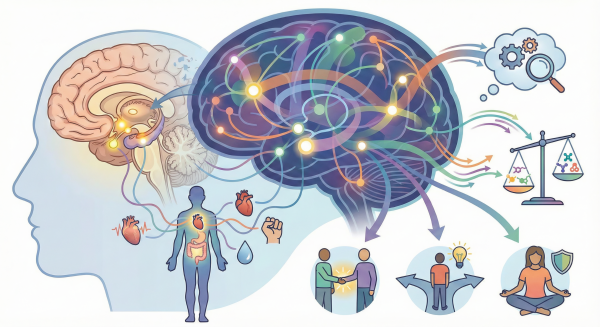
- Misinterpretation of Neuroscience: Valid findings from neuroscience, such as the fact that visual and auditory information are processed in different parts of the brain, are often incorrectly co-opted as evidence for learning styles. While these findings are accurate, they do not support the conclusion that an individual is a “visual learner” or that they learn better when instruction is restricted to a single modality. In fact, neuroscience provides substantial evidence for cross-modal processing and interconnectivity, contradicting the idea that sensory modalities operate independently.
This reveals a paradox of personalization. The learning styles approach, while promising personalization, results in a less effective and less equitable form of personalization. It personalizes along an invalid dimension (style) while ignoring the most critical one: a student’s prior knowledge.
Building an Evidence-Based Framework for Effective Learning#
Having deconstructed the unsubstantiated claims of the learning-styles paradigm, we now turn to a constructive alternative grounded in robust cognitive science. This section shifts from critique to solution, outlining a research-informed approach to learning that is both universal in application and powerful in effect. By exploring the core principles of memory architecture, Cognitive Load Theory, and high-impact learning strategies, we provide educators with a practical, evidence-based toolkit-one that moves beyond the myth of styles and toward the science of how all minds truly learn.
The Universal Architecture of How We Learn#
To scientifically evaluate the claims of learning style theories and to build a more effective pedagogy, it is essential first to establish a foundational understanding of how learning occurs according to modern cognitive science. This field provides a robust, evidence-based model of the human mind’s “cognitive architecture” that is universal to all learners. This framework, centered on the interplay between working memory and long-term memory, provides the necessary lens for scrutinizing pedagogical claims.
The Brain’s Two-System Memory Model#
The consensus model in cognitive psychology divides memory into two principal systems that are critical for learning: working memory and long-term memory.
- Working Memory (WM): This is the component of our cognitive system that holds and actively processes the information we are consciously thinking about at any given moment. It is the workspace of the mind, essential for tasks like reasoning, comprehension, and problem-solving. The most critical characteristic of working memory is its severe limitation. Research consistently shows that for novel information, working memory has a tiny capacity, able to hold only about three to five distinct “chunks” of information at once. Furthermore, this information is held for only a very short duration unless it is actively rehearsed. When this limited capacity is exceeded, a state known as cognitive overload occurs, and learning slows or stops altogether because new information cannot be effectively processed. This limited capacity is the primary bottleneck of all human learning.
- Long-Term Memory (LTM): In contrast, LTM is the vast and seemingly unlimited repository of all our knowledge, skills, and experiences accumulated over a lifetime. Unlike working memory, long-term memory is a passive storehouse until its contents are retrieved back into working memory for active use. The ultimate goal of learning is to move new information from the constrained, temporary workspace of working memory into the durable, organized structure of long-term memory. Memory is the “residue of thought,” and this transfer is essential for learning to have occurred.
Schema Theory: The Organization of Knowledge#
Information is not stored in long-term memory as a jumble of disconnected facts. Instead, it is organized into complex, interconnected knowledge structures known as schemas. A schema is a mental framework that organizes categories of information and the relationships among them, based on how that information is used. Schemas are dynamic cognitive constructions that develop and change in response to new information and experiences. They are fundamental to learning. When we encounter new information, we process it in working memory by attempting to connect it to relevant, pre-existing schemas retrieved from long-term memory. This process of integration is what gives new information meaning. This can involve assimilation, in which new information is added to existing schemas, or accommodation, in which existing schemas are altered, or new ones are formed.
As schemas become more developed and automated through practice, they can be treated as a single “chunk” in working memory. This is the primary mechanism that distinguishes an expert from a novice. An expert chess player, for instance, does not see individual pieces on a board; they see meaningful patterns (schemas) that can be processed as single units, thus bypassing the limits of working memory and freeing up cognitive resources for strategic thinking. This principle reveals that while the architecture of working memory is universal, the effective load a task imposes is highly individual because it depends entirely on the learner’s existing schemas. A task that overloads a novice (who lacks the relevant schema) may be trivial for an expert (who has a well-developed schema). This is why the most significant individual difference affecting learning is not a preferred sensory modality, but the extent and sophistication of a learner’s prior knowledge on a given topic.
Managing the Bottleneck: An Introduction to Cognitive Load Theory#
Built upon this understanding of cognitive architecture, Cognitive Load Theory (CLT) is an instructional framework designed to optimize learning by managing the demands placed on working memory. Pioneered by educational psychologist John Sweller in the 1980s, CLT provides a set of principles for designing instruction that aligns with how the human brain naturally learns. Described by prominent educationalist Dylan Wiliam as “the single most important thing for teachers to know,” CLT provides a powerful, evidence-based alternative to learning styles. It shifts the focus of instructional design from “What is this student’s style?” to a more functional, scientifically grounded question: “How can this instruction be designed to manage cognitive load and facilitate schema construction for all learners, given their level of prior knowledge?”
CLT categorizes the total cognitive load imposed on working memory during a task into three types:
- Intrinsic Cognitive Load: This is the load inherent to the complexity of the learning material itself. It is determined by the number of interacting elements that must be processed simultaneously in working memory to understand the topic. Intrinsic load is not fixed; it is relative to the learner’s prior knowledge. For a novice math student, solving the equation a/b = c for a has a high intrinsic load, whereas for an expert mathematician, the load is negligible. While this load cannot be altered by instructional design without changing the content, it can be managed by breaking complex tasks into smaller parts or introducing them in a simple-to-complex order.
- Extraneous Cognitive Load: This is the “unproductive” or “bad” load imposed by the design of the instruction or the learning environment. It consumes valuable working memory resources without contributing to schema construction. Examples include poorly designed slides that require learners to split their attention between a diagram and a separate key, or lessons filled with distracting, irrelevant information, such as confusing fonts or background noise. This load is superfluous to achieving the learning goals and should be minimized.
- Germane Cognitive Load: This is the “productive” or “good” load. It refers to the cognitive effort devoted to the process of learning itself, that is, processing information and constructing and automating schemas in long-term memory. This is the mental work that constitutes deep learning, involving connecting new information to prior knowledge. It is the effort required to transfer information into long-term knowledge successfully.
The three types of loads are additive. The primary goal of instructional design from a CLT perspective is to manage intrinsic load and minimize extraneous load, freeing up as much working memory capacity as possible for the essential work of germane load. This framework provides a scientific alternative to the goal of learning styles. While learning styles theory seeks to make learning easier by matching instruction to a learner’s preferences, Cognitive Load Theory seeks to make learning more effective by managing the universal constraints of working memory, often by reducing unproductive (extraneous) difficulty to free up resources for productive struggle.
A Universal Toolkit of High-Impact Learning Strategies#
Rejecting the unsubstantiated theory of learning styles does not mean abandoning the goal of effective and engaging instruction. On the contrary, it frees educators to focus on strategies that are validated by decades of cognitive science research. These principles are powerful because they are universal; they work by aligning with the fundamental architecture of human cognition shared by all learners.
The Foundational Shift: From Learner Style to Content Nature#
The most critical conceptual shift required is to move away from matching the instructional method to the supposed style of the learner and toward matching it to the nature of the content being taught. Cognitive science demonstrates that the effectiveness of a presentation modality depends on the information it conveys.
- Some concepts are inherently visual. Learning a country’s geography is best done with a map. Understanding the anatomy of a cell is best done with a labeled diagram.
- Some concepts are inherently auditory. Learning to distinguish a major from a minor chord, or mastering the pronunciation of a foreign language, requires listening.
- Some concepts are inherently kinesthetic. Learning to tie a surgical knot, perform a dance step, or operate a piece of machinery requires hands-on physical practice.
In each case, the optimal modality is determined by the topic itself and is the best for all learners, regardless of their self-reported preferences. A varied, multimodal approach to teaching is often practical not because it caters to different “types” of learners, but because it provides a welcome change of pace that recaptures attention and because complex topics often have components best explained through various modalities.
A Toolkit of Universal, High-Impact Learning Strategies#
Instead of focusing on diagnosing styles, educators can achieve far greater impact by implementing a toolkit of robustly supported universal learning strategies. Many of these strategies share a common, counterintuitive mechanism: they work because they make learning feel harder in the short term. This “desirable difficulty” is what signals to the brain that information is essential and triggers long-term consolidation.
Dual Coding: The Power of Words and Pictures#
Dual coding involves combining verbal representations (words, spoken or written) with visual representations (pictures, diagrams, graphic organizers). This strategy is based on Allan Paivio’s theory that the human mind has separate, parallel channels for processing verbal and non-verbal information. When information is presented in both formats, it is encoded through both channels, creating two distinct but interconnected memory traces. This redundancy provides multiple retrieval pathways, significantly increasing the likelihood that the information will be remembered. This principle directly refutes the notion that only certain “types” of learners benefit from visuals; dual coding is a universal principle that benefits all learners by leveraging both cognitive channels and reducing cognitive load on any single channel.
Retrieval Practice: Learning by Recalling#
Retrieval practice, also known as the “testing effect,” is the act of actively recalling information from memory rather than passively rereading or reviewing it. This can take many forms, including low-stakes quizzes, using flashcards, or simply pausing to write down everything one can remember about a topic (a “brain dump”). The act of effortful retrieval is not merely an assessment; it is a powerful learning event. The struggle to recall information strengthens the neural pathways associated with that memory, making it more durable and easier to access in the future. This process also helps learners accurately identify knowledge gaps.
Spaced Practice: Defeating the Forgetting Curve#
This strategy involves spacing out learning and retrieval sessions over time, rather than cramming them into a single, massed session. In the late 19th century, psychologist Hermann Ebbinghaus discovered the “forgetting curve,” a principle demonstrating that we forget information at an exponential rate after learning it unless we take steps to retain it. Spaced practice is the most effective way to combat this natural process. Allowing some time to pass so that a memory is not as readily accessible makes the subsequent act of retrieving it more effortful. This “desirable difficulty” signals to the brain that information is essential, triggering processes that strengthen its long-term storage. For optimal long-term retention, the intervals between review sessions should gradually increase.
Interleaving: Mixing It Up for Deeper Understanding#
Interleaving involves mixing the practice of different but related topics or skills within a single study session. This is the opposite of “blocked practice,” where one topic is practiced to mastery before moving to the next (e.g., studying in the pattern ABCABC instead of AAABBBCCC). While blocked practice can feel easier and lead to better short-term performance, interleaving produces superior long-term learning and knowledge transfer. It forces the brain to constantly discriminate between different types of problems and select the appropriate solution strategy, rather than mindlessly repeating the same procedure. This process of comparison and contrast builds a more flexible and robust understanding of the underlying concepts.
Elaboration and Concrete Examples#
Elaboration is the process of thinking deeply about a concept by explaining it in detail and making connections between the new information and one’s existing prior knowledge and experiences. A common technique is “elaborative interrogation,” which involves constantly asking and answering “how” and “why” questions about the material. This is the primary process through which new schemas are constructed and integrated into long-term memory. Using specific, tangible, and real-world examples to illustrate abstract principles is another powerful strategy. Concrete examples serve as a bridge, grounding an abstract idea in a familiar context. This reduces the material’s intrinsic cognitive load, making it more comprehensible and easier to encode into long-term memory.
These high-impact strategies are not isolated techniques but form an interconnected system. Spaced practice is most effective when the “practice” is active retrieval. Interleaving different problem types inherently requires retrieving the correct solution strategy for each. An effective learning plan combines these strategies: for example, using dual-coded flashcards for retrieval practice on an interleaved and spaced schedule.
Conclusion: From Fixed Labels to Flexible Learners#
Synthesis and Call to Action#
The concept of learning styles, particularly the central claim that matching instruction to a learner’s preferred style enhances learning, has been the subject of extensive scientific scrutiny. The conclusion from the fields of cognitive psychology and neuroscience is unequivocal: the meshing hypothesis lacks credible empirical support. Despite its enduring popularity, the theory is now widely considered a “neuromyth”. Its persistence is not a reflection of its pedagogical utility but rather a product of its intuitive appeal, the influence of cognitive biases, and the reinforcement provided by a substantial commercial industry.
The debunking of learning styles should not be viewed as a loss for education, but as an opportunity to pivot toward a more effective, evidence-informed paradigm. Instead of investing valuable time, effort, and resources in diagnosing and catering to unsubstantiated “styles,” the educational community should embrace the robust findings from the science of learning. This article advocates for a three-pronged shift in practice:
- Implement Universal, High-Impact Strategies: Educational practice should be centered on implementing universal learning strategies, such as retrieval practice, spaced repetition, interleaving, and dual coding, that are validated by decades of research and are effective for all learners because they align with the fundamental mechanisms of human cognition.
- Focus on Prior Knowledge: Instructional differentiation should be guided not by perceived styles, but by the most powerful individual difference affecting learning: a student’s existing knowledge and skills in a specific domain. Assessing prior knowledge allows educators to effectively manage intrinsic cognitive load and provide appropriate scaffolding for all students.
- Promote Scientific Literacy in Education: Teacher-preparation programs and professional development should prioritize training educators to be critical consumers of research and educational products. This includes removing debunked theories, such as learning styles, from licensure exams and coursework, and instead focusing on empirically supported principles of instruction and cognitive development.
Final Thought: From Fixed Labels to Flexible Learners#
Ultimately, the learning styles paradigm promotes a limiting, fixed mindset by placing learners into rigid categories and suggesting that their capacity to learn depends on external modes of delivery. The science of learning offers a more empowering alternative. By teaching students a flexible toolbox of evidence-based strategies, we equip them with cognitive tools to take ownership of their own learning. The goal of education is not to accommodate perceived, unchangeable traits, but to cultivate adaptable, resilient, and self-aware learners capable of succeeding in any context, regardless of how information is presented. The shift from styles to science is a shift from labeling students to empowering them.
References#
- Newton, P. M., & Salvi, A. (2020). How Common Is Belief in the Learning Styles Neuromyth, and Does It Matter? A Pragmatic Systematic Review. Frontiers in Education, 5, 602451.
- Husmann, P. R., & O’Loughlin, V. D. (2019). Another Nail in the Coffin for Learning Styles? Disparities among Undergraduate Anatomy Students’ Study Strategies, Class Performance, and Reported VARK Learning Styles. Anatomical sciences education, 12(1), 6-19.
- Cuevas, J. (2015). Is learning styles-based instruction effective? A comprehensive analysis of recent research on learning styles. Theory and Research in Education, 13(3), 308-333.
- Kirschner, P. A. (2017). Stop propagating the learning styles myth. Computers & Education, 106, 166-171.
- Knoll, Abby & Otani, Hajime & Skeel, Reid & Horn, K.. (2017). Learning style, judgements of learning, and learning of verbal and visual information. British Journal of Psychology. 108. 544-563. 10.1111/bjop.12214.
- Rohrer, D., & Pashler, H. (2012). Learning Styles: Where’s the Evidence?. Online Submission, 46(7), 634-635.
- Green, L. O. (2023). A causal comparative study of the difference in achievement scores of at-risk, minority students based on learning styles.
- Marwaha, K., & Sharma, U. (2025). Debunking Learning Styles: Analyzing Key Predictors of Academic Success in Dental Education. Advances in Physiology Education.
- Papadatou-Pastou, Marietta & Gritzali, Maria & Barrable, Alexia. (2018). The Learning Styles Educational Neuromyth: Lack of Agreement Between Teachers’ Judgments, Self-Assessment, and Students’ Intelligence. Frontiers in Education. 3. 105. 10.3389/feduc.2018.00105.
- Willingham, Daniel & Hughes, Elizabeth & Dobolyi, David. (2015). The Scientific Status of Learning Styles Theories. Teaching of Psychology. 42. 266-271. 10.1177/0098628315589505.
- Macdonald, K., Germine, L., Anderson, A., Christodoulou, J., & McGrath, L. M. (2017). Dispelling the Myth: Training in Education or Neuroscience Decreases but Does Not Eliminate Beliefs in Neuromyths. Frontiers in psychology, 8, 1314.
- Sweller, John & Van Merrienboer, Jeroen J. G. & Paas, Fred. (2019). Cognitive Architecture and Instructional Design: 20 Years Later. Educational Psychology Review. 31. 261-292. 10.1007/s10648-019-09465-5.
- Chen, Ouhao & Castro-Alonso, Juan & Paas, Fred & Sweller, John. (2018). Extending Cognitive Load Theory to Incorporate Working Memory Resource Depletion: Evidence from the Spacing Effect. Educational Psychology Review. 30. 483-501. 10.1007/s10648-017-9426-2.
- Gog, Tamara & Paas, Fred & Sweller, John. (2010). Cognitive Load Theory: Advances in Research on Worked Examples, Animations, and Cognitive Load Measurement. Educational Psychology Review. 22. 375-378. 10.1007/s10648-010-9145-4.
- Sweller, John. (2016). Cognitive Load Theory, Evolutionary Educational Psychology, and Instructional Design. 10.1007/978-3-319-29986-0_12.
- Agarwal, P. K., Nunes, L. D., & Blunt, J. R. (2021). Retrieval practice consistently benefits student learning: A systematic review of applied research in schools and classrooms. Educational Psychology Review, 33(4), 1409-1453.
- Dunlosky, J., Rawson, K. A., Marsh, E. J., Nathan, M. J., & Willingham, D. T. (2013). Improving Students’ Learning With Effective Learning Techniques: Promising Directions From Cognitive and Educational Psychology. Psychological science in the public interest: a journal of the American Psychological Society, 14(1), 4-58.
- Carpenter, Shana & Pan, Steven & Butler, Andrew. (2022). The science of effective learning with a focus on spacing and retrieval practice. Nature Reviews Psychology. 1-16. 10.1038/s44159-022-00089-1.
- Weinstein, Y., Madan, C. R., & Sumeracki, M. A. (2018). Teaching the science of learning. Cognitive research: principles and implications, 3(1), 2.
- Price, D. W., Wang, T., O’Neill, T. R., Morgan, Z. J., Chodavarapu, P., Bazemore, A., Peterson, L. E., & Newton, W. P. (2025). The Effect of Spaced Repetition on Learning and Knowledge Transfer in a Large Cohort of Practicing Physicians. Academic medicine: journal of the Association of American Medical Colleges, 100(1), 94-102.
- Taylor, Kelli & Rohrer, Doug. (2010). The Effects of Interleaved Practice. Applied Cognitive Psychology. 24. 837 - 848. 10.1002/acp.1598.
- Castro-Alonso, Juan & Sweller, John. (2022). The Modality Principle in Multimedia Learning. 10.1017/9781108894333.026.
- Tardif, E., Doudin, A., & Meylan, N. (2015). Neuromyths Among Teachers and Student Teachers. Mind, Brain, and Education, 9(1), 50-59.
- Dekker, S., Lee, N. C., Howard-Jones, P., & Jolles, J. (2012). Neuromyths in Education: Prevalence and Predictors of Misconceptions among Teachers. Frontiers in psychology, 3, 429.
- Rousseau, L. (2021). Interventions to Dispel Neuromyths in Educational Settings-A Review. Frontiers in Psychology, 12, 719692.
- Horvath, J. C., & Donoghue, G. M. (2016). A Bridge Too Far - Revisited: Reframing Bruer’s Neuroeducation Argument for Modern Science of Learning Practitioners. Frontiers in psychology, 7, 377.
- Im, S. H., Cho, J. Y., Dubinsky, J. M., & Varma, S. (2018). Taking an educational psychology course improves neuroscience literacy but does not reduce belief in neuromyths. PloS one, 13(2), e0192163.
- Kalyuga, S., & Singh, A.-M. (2016). Rethinking the boundaries of cognitive load theory in complex learning. Educational Psychology Review, 28(4), 831-852.
- Schnotz, Wolfgang. (2014). Integrated model of text and picture comprehension. The Cambridge handbook of multimedia learning. 72-103. 10.1017/CBO9781139547369.006.
- Sweller, J. (2020). Cognitive load theory and educational technology. Educational Technology Research and Development, 68(1), 1-16.
- Kirschner, P. A., & Hendrick, C. (2020). How Learning Happens: Seminal Works in Educational Psychology and What They Mean in Practice. Routledge.
- Priyadharsini, V & Mary, Sahaya. (2024). Universal Design for Learning (UDL) in Inclusive Education: Accelerating Learning for All. Shanlax International Journal of Arts, Science and Humanities. 11. 145-150. 10.34293/sijash.v11i4.7489.