
Introduction#
For decades, innovation has been misunderstood as a linear sequence, a spark of genius followed by methodical execution and eventual market introduction. This static, assembly-line conceptualization has profoundly limited our ability to cultivate creativity systematically, whether within individual minds, organizational structures, or entire socio-technical ecosystems. The Innovation Breath: Architecting the Neural Cycle of Divergent and Convergent Thinking proposes a fundamental paradigm shift: innovation is not an event but a continuous, rhythmic, and inherently biological process of cognitive respiration.
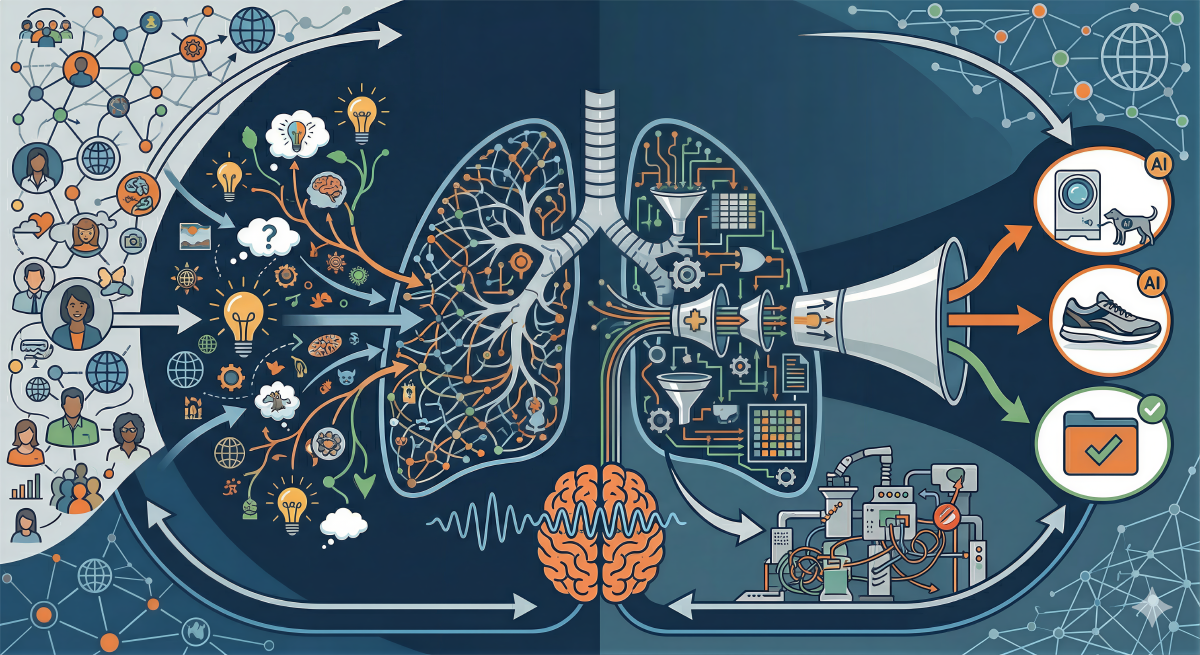
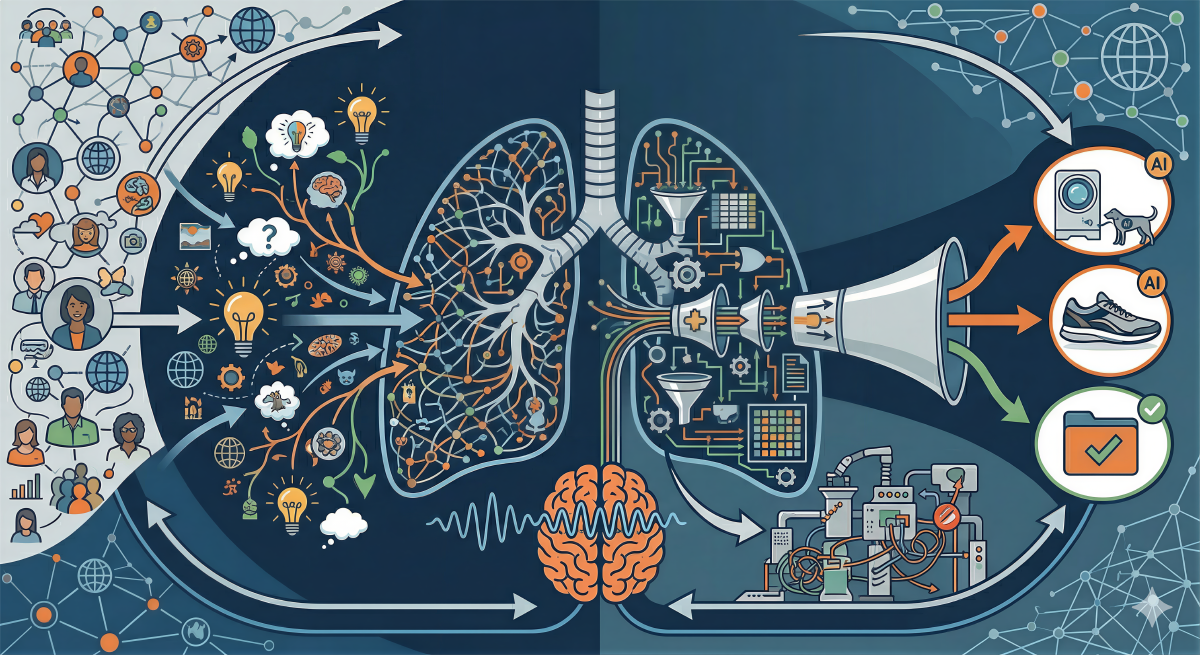
Drawing upon convergent evidence from cognitive neuroscience, organizational theory, thermodynamics, autonomic physiology, and aesthetic philosophy, this article advances a unified framework in which creative ideation oscillates between two indispensable phases: the inhalation of divergent, unstructured possibility and the exhalation of convergent, applied utility. Just as physiological respiration sustains life through the rhythmic exchange of gases, the Innovation Breath sustains intellectual and institutional vitality by perpetually cycling chaotic potential into ordered value. This respiratory metaphor is neither a poetic abstraction nor an empirical reduction; rather, it reflects the neuroanatomical dynamics of the Default Mode, Executive Control, and Salience Networks, the thermodynamic requirements for reversing cognitive entropy, and the measurable autonomic modulation achievable through breath-based interventions.
The article begins by establishing the triadic dimensions of the creative persona, professional, personal, and civic, before dismantling the fear of failure that arrests divergent thinking. It then maps the specific neural substrates of the creative cycle, introduces the thermodynamic principles governing ideation, and demonstrates how literal respiratory practices enhance cognitive flexibility. Subsequent sections scale this framework from individual neurobiology to organizational open-innovation architectures, macroeconomic trade policies, and human-capital ecosystems. Case studies ranging from AI-driven cancer diagnostics to integrated pediatric asthma care illustrate the tangible translation of these principles into practice. Finally, the analysis confronts the systemic barriers, regulatory bottlenecks, epistemic corruption, and institutional friction that threaten to asphyxiate innovation, offering a diagnostic vocabulary for restoring cognitive and organizational respiration.
By reimagining innovation as a trainable, archetypal, and fundamentally breath-like cycle, this framework equips leaders, researchers, educators, and policymakers with both a theoretical lens and practical grammar for transcending incrementalism. In an era defined by the unforgiving mandate to innovate or die, mastering the rhythm of divergence and convergence is not merely advantageous; it is the very condition of sustainable relevance and collective flourishing.
The Ontological Framework of Cognitive Respiration#
Innovation has historically been relegated to linear models of ideation, execution, and commercialization. However, contemporary cognitive neuroscience, organizational theory, and sociotechnical philosophy demand a substantially more dynamic, cyclical framework. The concept of the “Innovation Breath” serves as a profound theoretical model for understanding the rhythmic oscillation between divergent and convergent thinking. Just as physiological respiration alternates between the inhalation of oxygen and the exhalation of carbon dioxide to sustain biological viability, cognitive respiration mandates a perpetually oscillating cycle: the intake of unstructured, divergent stimuli followed by the structured, convergent exhalation of applied utility.
At its core, this framework repositions innovation not as a static event or an isolated paradigm shift, but as a biological and structural imperative. It serves as a literal and metaphorical “breath of fresh air,” preventing stagnation in intellectual, cultural, and organizational life. Within established lexicons of systemic transformation, this respiratory process is synonymous with profound metamorphosis, transmutation, and transubstantiation. It operates as cognitive metabolism and catabolism, breaking down incoming paradigms and synthesizing them into novel utilities. The metabolism of new ideas requires an influx of radically diverse perspectives, the cognitive inhalation, which is then catabolized into structured, executable strategies. Without this ongoing respiratory cycle, systems succumb to deterioration, degeneration, and a regression into bad taste or coarseness, failing to capitalize on the watersheds, vicissitudes, and groundswells of contemporary megatrends.
The prevailing literature suggests that the capacity for innovation is not an accidental byproduct of innate genius but rather a highly structured, trainable state of mind. The “breath” of this creative process demands a sophisticated architecture that continuously balances spontaneous ideation with rigorous top-down executive control. By mapping the interaction of large-scale brain networks, the thermodynamic properties of information processing, the autonomic modulation of the human nervous system, and the behavioral frameworks of organizational routinization, a unified model emerges. This model illustrates how the intrinsic human drive to create uniquely applied value permeates professional, personal, and civic dimensions, echoing the most fundamental metabolic, catabolic, and anabolic processes of life itself.
The Triadic Dimensions of the Creative Persona#
The foundational epistemological framework of the Innovation Breath posits that the drive to innovate cannot be artificially compartmentalized within professional boundaries; rather, it is a triad of interconnected dimensions that encompass professional, personal, and civic life. This triadic ontology asserts that individuals are intrinsically multidimensional entities. The artificial suppression of creative impulses in one domain inevitably stifles the vitality of the others. The process of generating novelty, whether a disruptive financial product, an artistic rendition, or an optimized workflow, requires a spiritual and psychological connection to the act of creation, in which innovations serve as literal, external manifestations of the inner self.
The primary equation that dictates this phenomenon is elegantly simple yet notoriously difficult to execute: Creative Ideas + Experimentation = Innovation. However, the successful execution of this formula is consistently hindered by human risk aversion and the deeply ingrained fear of failure. The behavioral trap of “incrementalism”, often demonstrated in pedagogical environments where subjects redesign existing paradigms with only negligible alterations rather than pursuing radical novelty, highlights the dormant nature of intrinsic creativity. A classic illustrative example is an engineering student experiment in which participants were asked to design innovative playground equipment. Because the students did not fundamentally view themselves as creative beings, they produced only minor iterative updates to existing structures, such as a slightly modified teeter-totter, rather than reimagining the concept of play itself. To activate the innovation breath, the underlying assumptions of failure and self-identity must be radically reconstructed.
The Dynamics of Intelligent Fast Failure#
A central behavioral pillar supporting the innovation cycle is the operationalization and destigmatization of failure. The creative landscape is, in theory, analogous to navigating an uncharted, highly complex, and somewhat hostile topography. The myriad paths attempted represent experiments; the inevitable dead ends, impenetrable thickets, and quicksand represent necessary failures. The traditional organizational aversion to failure fundamentally arrests the divergent phase of the innovation cycle, creating intellectual stagnation and preventing the mapping of this unknown territory.
The literature explicitly differentiates between the detrimental “slow stupid failure” and the catalytic “intelligent fast failure.” Intelligent fast failure is characterized by the logical, rapid extraction of data from failed experimental pathways. This high-velocity iterative process feeds the individual’s proprietary information base regarding the unknown parameters of the space problem. The mandate to “Innovate or Die” recognizes that existing structures are inherently entropic; capitalizing on rapid, low-cost change is the only sustainable method to explore the “edges of chaos” where genuine breakthroughs reside. A breakthrough is mathematically dependent on generating a high volume of ideas, which directly increases the statistical probability of a successful, unique application. The zenith of the creative cycle is reached when a unique concept converges with a unique mental model (the paradigm shift required to understand it). This process often requires early integration of external user feedback loops to maximize acceptance.
Neurobiological Substrates of the Creative Cycle#
To operationalize the metaphor of the “breath” beyond mere philosophical abstraction, it is imperative to dissect the specific neuroanatomy that governs the rhythmic alternation between expansive ideation (divergent thinking) and rigorous synthesis (convergent thinking). Cognitive neuroscience provides robust, empirical evidence that these phases correspond directly to distinct activations within the brain’s macro-scale, intrinsic functional networks.
The Tripartite Network Model of the Creative Breath#
The rhythmic cognitive cycle relies fundamentally on the interactions, antagonisms, and synchronization among three distinct large-scale neural systems: the Default Mode Network (DMN), the Executive Control Network (ECN), and the Salience Network (SN).
The Default Mode Network encompasses critical regions such as the posterior cingulate cortex (PCC), the precuneus, the temporoparietal junction (TPJ), and the medial prefrontal cortex. The DMN is the primary neurological engine of spontaneous thought, autobiographical memory retrieval, mind-wandering, and internally directed cognition. In the context of the innovation breath, the activation of the DMN corresponds to the divergent “inhalation” of ideas. During this phase, conscious associative barriers are lowered, and highly disparate memories, concepts, and sensory inputs are synthesized into novel combinations without immediate judgment. Recent literature utilizing resting-state functional connectivity (rsFC) indicates that specific subnetworks within the DMN are profoundly predictive of creative output, particularly when moderated by personality traits such as industriousness.
Conversely, the Executive Control Network is responsible for top-down cognitive control, conscious goal-directed behavior, working memory, and the active mitigation of external and internal distraction. The ECN operates as the cycle’s convergent “exhalation”. It is within the ECN that the raw, unfiltered, and highly entropic ideations generated by the DMN are rigorously evaluated, refined, structured, and executed into pragmatic utility. Without the ECN, the DMN produces only daydreams; without the DMN, the ECN produces only rigid, uninspired repetition.
The Salience Network serves as the vital neural pacemaker for this creative breath. The SN manages the dynamic, largely non-volitional switching between the internally directed DMN and task-positive networks, such as the ECN and the Dorsal Attention Network. This subconscious rhythmic switching ensures that the human mind becomes permanently trapped in endless, unproductive mind-wandering, nor does it become overly rigid and exhausted in myopic goal execution.
The Tripartite Network Model of the Creative Breath#
- Default Mode Network (DMN)
- Respiratory Phase: Inhalation (Divergence).
- Primary Cognitive Function: Spontaneous thought, self-reflection, associative memory.
- Anatomical Correlates: PCC, Precuneus, TPJ, Medial Prefrontal Cortex.
- Creative Role: Generating high volumes of novel, unfiltered connections.
- Executive Control Network (ECN)
- Respiratory Phase: Exhalation (Convergence).
- Primary Cognitive Function: Top-down control, goal execution, working memory.
- Anatomical Correlates: Lateral Prefrontal Cortex, Anterior Cingulate Cortex.
- Creative Role: Filtering, refining, and executing ideas into tangible value.
- Salience Network (SN)
- Respiratory Phase: The Respiratory Rhythm.
- Primary Cognitive Function: Autonomic switching between internal and external cognitive states.
- Anatomical Correlates: Anterior Insula, Dorsal Anterior Cingulate Cortex.
- Creative Role: Acting as the pacemaker, determining which network dominates based on environmental relevance.
Alpha Synchronization and Top-Down Neural Regulation#
The execution of highly complex creative tasks, such as jazz improvisation, is inextricably linked to specific oscillatory dynamics within the cortex. Empirical studies utilizing continuous electroencephalography (EEG) during high-level creative processes demonstrate significant modulation of frontal alpha synchronization. Crucially, research indicates that frontal alpha synchronization occurs robustly during both convergent and divergent thinking, specifically when these cognitive states are placed under exclusive top-down control to manage exceptionally high internal processing demands.
This finding fundamentally disrupts earlier assumptions that alpha waves are solely indicative of passive relaxation. Instead, this synchronization suggests that alpha oscillations do not represent a unique, isolated “creativity module” within the brain, but rather reflect an enhanced state of top-down neural gating. This gating actively shields internal cognitive processes from external sensory interference, allowing the delicate “breath” of innovation to proceed uninterrupted by environmental noise. The sustainability of this high-demand cognitive state relies on a self-reinforcing neural cycle characterized by intrinsic psychological reward and automated motor execution.
The Limbic-Cortical Axis and Decision Mapping#
Complementing the tripartite network model, the neurological translation of the Innovation Breath relies heavily on the rapid, seamless dialogue between the primary, limbic, and rational regions of the brain. The decision-making architecture dictates that raw, divergent impulses originate in the limbic system, the epicenter of emotional, intuitive, and pre-conscious processing. These unstructured signals represent the absolute raw material of creativity. In the context of cognitive respiration, the limbic system functions as the primary receptor during the “inhalation” phase, drawing in vast arrays of affective and sensory data without immediate judgment, filtration, or logical constraint.
Once generated, these affective impulses are rapidly transmitted across the neural networks to the rational brain, primarily localized in the frontal lobe and broader cerebral cortex, which serves as the convergence mechanism. This rational center processes the emotional and divergent impulses alongside auxiliary inputs transmitted from other cerebral lobes, substantiating decisions and finalizing the cognitive “exhalation.” This transanimation of raw, chaotic data into coherent, actionable thought occurs in mere seconds, yet it forms the foundational algorithm for all complex problem-solving and systemic modernization.
The Thermodynamics of Ideation and Information Entropy#
The mechanics of divergent and convergent thinking can be enriched and quantified in depth by applying the foundational principles of thermodynamics. A mechanical framework posits that a convergent, concentrating movement within any closed system inevitably and necessarily shifts into a divergent, dispersing movement. This action inherently increases the system’s entropy (disorder). In cognitive terms, the divergent generation of hundreds of unvetted ideas represents a state of extraordinarily high informational entropy, a chaotic, probabilistic distribution of possibilities across the intellectual landscape.
Because the arrow of time is irreversible, reducing this cognitive entropy to a singular, crystallized innovation requires the equivalent of thermodynamic “pumping work.” Left to mere probability, the spontaneous alignment of high-entropy thoughts into a perfectly structured, market-ready innovation is statistically infinitesimal. To conceptualize this probability, the literature compares it to the likelihood of a gas accidentally concentrating in exactly one-half of a cylinder without external force.
Therefore, the conscious, convergent effort executed by the prefrontal cortex functions as the exact metabolic and psychological “work” required to reverse local cognitive entropy. This mental labor compresses the divergent chaos generated by DMN into highly ordered, uniquely applied value. The Innovation Breath is thus a thermodynamic engine: inhaling high-entropy potential and exhaling low-entropy, highly structured reality. Attempting to bypass the divergent phase results in an absence of raw material, while failing to apply the convergent “pumping work” results in permanent, unstructured chaos.
Autonomic Modulation and the Physiology of Cognitive Flexibility
The metaphor of the “innovation breath” finds its most literal grounding in the study of how human respiratory mechanics directly influence the autonomic nervous system, thereby exerting profound control over large-scale brain networks. The neurophysiology of physical breath serves as a bidirectional conduit between bodily states, emotional regulation, and cognitive flexibility.
Vagal Tone, Neuromuscular Recovery, and Sensory Exploration#
Clinical and rehabilitation literature demonstrates that breath-based interventions profoundly alter neuromuscular and cognitive states. Specific, controlled respiratory cadences activate the parasympathetic nervous system via the vagus nerve, initiating an optimal physiological state for sensory exploration and mitigating the fight-or-flight response. Robust evidence on breath-based vagus nerve stimulation (VNS) highlights its potential to redefine neuromuscular care and establish the biological safety needed for risk-taking.
By synthesizing deep relaxation techniques with targeted sensory inputs, such as Autonomous Sensory Meridian Response (ASMR) or hypnotic language patterns, practitioners can purposefully decrease limbic reactivity and alter memory consolidation. This manipulation creates the precise emotional security required for radical divergent thinking, as fear of failure (the primary inhibitor of innovation) is physiologically suppressed at the autonomic level.
Altering Resting State Functional Connectivity via Mindfulness#
Mindfulness meditation, specifically focused attention on the physical sensations of the breath, induces measurable, long-term alterations in the resting state functional connectivity (rsFC) of both the DMN and the ECN. The rigorous practice of sustaining attention on biological breath, often measured using metrics such as the Breath Counting Task or the State Mindfulness Scale, actively mitigates the distractions arising from spontaneous thought.
Over time, these respiratory practices alter the brain’s baseline synchrony. They downregulate hyperactive DMN states associated with negative rumination, anxiety, and rigid self-reflection, while simultaneously upregulating the connectivity and efficiency of the executive control networks. In highly suggestible states facilitated by advanced breath control and Neuro-Linguistic Programming (NLP), functional MRI reveals decreased activity in the DMN and increased connectivity between the ECN and the Salience Network. This orchestrated manipulation of brain states via respiration enhances cognitive flexibility, reframes emotional memory, and primes the neurological substrate for rapid paradigm shifts.
Mechanisms of Autonomic and Cognitive Modulation#
- Breath-based Vagus Nerve Stimulation
- Neurological Target: Parasympathetic Nervous System.
- Physiological Mechanism: Activation of the vagus nerve via specific respiratory cadences.
- Cognitive/Emotional Outcome: Decreased limbic reactivity; enhanced neuromuscular recovery; state of calm.
- Mindfulness (Focused Attention on Breath)
- Neurological Target: DMN and ECN Resting State Connectivity.
- Physiological Mechanism: Sustained attention on sensory input overrides spontaneous thought loops.
- Cognitive/Emotional Outcome: Mitigation of distraction; improved stress resilience; enhanced executive control.
- Neuro-Linguistic Programming (NLP) & Hypnosis
- Neurological Target: Amygdala, Prefrontal Cortex, Temporal Lobe.
- Physiological Mechanism: Reframing emotional meaning; reactivating and re-encoding emotional memories.
- Cognitive/Emotional Outcome: Increased cognitive flexibility; decreased fear of failure; enhanced responsiveness to novel suggestion.
Phenomenological Rhythms in Aesthetic Expression and Design#
The rhythm of divergence and convergence is vividly actualized in the aesthetic and artistic domains, where the visceral reality of the physical breath intersects with the mechanics of creation and sociopolitical commentary.
Sound Art and the Resonance of the Kledik#
In the realm of ethnomusicology and experimental sound art, the literal breath is often merged with technological or instrumental apparatuses to produce sustained, rhythmic, and transformative experiences. Observations of Indonesian sound art, specifically the use of the traditional Kledik (a mouth organ) to produce continuous drone sounds, reveal profound connections among human breath, mechanical resonance, and aesthetic expression. The drone sound’s production is characterized by organic, improvised dynamics that foster a deeply resonant, experimental aesthetic. When traditional artists apply mechanical innovations, such as utilizing an air compressor to mimic and sustain the continuous human breath through the Kledik, an acoustic “edges of chaos” environment is established. Here, traditional local wisdom and deep cultural heritage interface directly with mechanical innovation. This continuous, breathing auditory environment often induces altered phenomenological states, lowering conscious cognitive guards and facilitating intense community engagement, unity, and solidarity.
Literary and Commercial Manifestations of Breath#
The literary arts similarly utilize the breathing cycle as a profound metaphor for sociopolitical and intellectual freedom. In critical analyses of Ray Bradbury’s seminal dystopian novel Fahrenheit 451, the respiratory motif functions as an intimate marker of the tension between an anesthetized, highly controlled society and the disruptive, organic force of human consciousness. By using the breathing cycle as the metaphor, Bradbury links the macro-level sociopolitical conditions of his world to the micro-level markers of personal unhappiness, such as Mildred’s dependence on sleeping medication and Montag’s inability to remember true happiness. In the “technoscientific imaginary”, the culturally embedded imagining of futures enabled by technological innovation, reducing breath merely to an empirical, biological process, risks solving the metaphysical problem of existence through sterile scientific discourse. Breath, as an objective fact, yields easily to bald empirical description, but to ask “how do the characters breathe?” is to ask how they resist. Thus, the “breath” remains a potent symbol of the disruptive, unquantifiable nature of true creative divergence.
In commercial and industrial design, the concept of allowing an innovation to “breathe” serves as a critical heuristic for balancing aesthetic complexity with functional clarity. In the architecture of high-performance footwear, such as the development of the Adidas Mercury Pack (including the ACE PURECONTROL), design teams explicitly utilize the terminology of letting the “innovation breathe.” This principle serves as a safeguard against over-styling or an overly graphic aesthetic that would obscure the product’s fundamental technological advancements. This design philosophy perfectly mirrors the convergent phase of the cognitive cycle: stripping away high-entropy visual noise to highlight the core functional truth and unique value of the innovation.
Network Architectures: Scaling to Open Innovation Breadth#
Moving from the neurobiology of the individual and the aesthetics of art to the architecture of the enterprise, the Innovation Breath must be codified into robust organizational structures to ensure long-term corporate viability. Organizations must master the systemic equivalent of inhaling highly diverse external ideas and exhaling routinized, valuable market outputs.
The Moderating Role of Open Innovation Breadth#
A critical metric of systemic creativity is “Open Innovation Breadth” (OIB), defined as the diversity, scope, and number of external innovation partners an organization engages with during its R&D processes. A high OIB represents a massive, organizational-level “inhalation” of divergent data, drawing on expansive external ecosystems, patent-licensing networks, and varied intellectual property portfolios. By leveraging financial technology and knowledge spillovers, firms can artificially expand their cognitive boundaries. Firms operating in industries characterized by a high concentration of collaboration partners must employ sophisticated “selective revealing” strategies. By doing so, they protect their core competencies while avoiding the pitfalls of deepening individual relationships to a degree that might inadvertently harm their own proprietary innovation outcomes.
However, absorbing high levels of external complexity is energetically and financially expensive. Research indicates a highly nuanced, non-linear input-output relationship regarding OIB; under certain structural circumstances, a high diversity of external partners generates profound complexities, communication barriers, and integration costs that can depress industrial innovation output if not rigorously managed. This dynamic perfectly mirrors the cognitive thermodynamics discussed previously: a massive influx of divergent variables (high cognitive entropy) requires substantial systemic “pumping work” (management overhead, legal integration, R&D synthesis) to converge into profitable outcomes. The organizational Executive Control Network, comprising senior leadership and project management, must selectively prune and filter these diverse external inputs to prevent bureaucratic paralysis.
Phases of the Organizational Innovation Cycle#
- Systemic Inhalation
- Strategic Action / Metric: Expanding Open Innovation Breadth (OIB); engaging varied external partners and patent networks.
- Biological/Cognitive Equivalent: Default Mode Network (DMN) activation; broad sensory gating and divergence.
- Primary Systemic Risks: High integration costs; operational complexity outstripping management capacity.
- Systemic Filtering
- Strategic Action / Metric: Evaluating licensing portfolios, assessing bargaining power, and R&D down-selection.
- Biological/Cognitive Equivalent: Salience Network (SN) switching; top-down Alpha synchronization.
- Primary Systemic Risks: Premature optimization; rejecting highly disruptive “fast failures” due to risk aversion.
- Systemic Exhalation
- Strategic Action / Metric: Execution, product launch, market extraction, and standardization of protocols.
- Biological/Cognitive Equivalent: Executive Control Network (ECN) execution; thermodynamic “pumping work” to reduce entropy.
- Primary Systemic Risks: Reverting to incrementalism, launching products with negligible novel value.
Trade Policies and the Macroeconomic Breath#
At the macroeconomic level, government trade policies and export promotion programs serve as the mechanism to facilitate this systemic exhalation into international markets. The literature notes that designing trade policy requires governments to carefully manage the domestic disruption caused by innovation by designing ways to compensate “losers”, those legacy industries displaced by novel technologies. Providing free services to help firms overcome barriers to exporting constitutes a deliberate structural effort to ensure the innovation cycle completes its outward trajectory, preventing domestic market saturation.
Human Capital Ecosystems and “Ventata di Novità”#
The organizational breadth is fundamentally sustained by the quality and diversity of its human capital. Advanced recruitment and human resources strategies explicitly recognize the value of injecting entirely new, divergent cognitive patterns into a corporate monoculture to stave off institutional entropy.
European recruitment analyses and sociological frameworks demonstrate that candidates with migrant backgrounds are often specifically evaluated for their “essentialized otherness”, the unique cultural, experiential, and educational differences they bring to a firm. While this dynamic is sometimes deeply tied to supply chain capitalism and the creation of a subordinate, flexible labor force, progressive HR executives also conceptualize this infusion of diverse perspectives as an “innovation breath” (ventata di novità). The deliberate acquisition of external cognitive models is viewed as a necessary mechanism to disrupt internal incrementalism, valuing the extent to which intrinsic otherness can bring novel ways of “understanding work” into the company. By integrating personnel with radically different life experiences, such as individuals balancing domestic care, international migration, and complex professional histories, organizations force their internal networks to process non-homogeneous stimuli. The friction generated by introducing these diverse, multifaceted inputs prevents cognitive echo chambers and supplies the necessary intellectual raw material for radical ideation.
This philosophy of continuous intellectual circulation is now scaling to the macroeconomic level through massive, cross-border initiatives such as the Building R&I Talent Ecosystems to Advance Careers in Health Innovation (BREATH) project. Functioning across diverse European regions, including Catalonia, Flanders, and Lithuania, the BREATH consortium is explicitly designed to foster talent circulation, establish sustainable research careers, and support cross-border mobility across both academic and non-academic institutions. By structurally facilitating the rapid movement of intellectual capital, such ecosystems ensure the continuous respiration of ideas across national borders, combat regional intellectual stagnation, and align local regulatory frameworks with global technoscientific advancements.
The Routinization of the Innovation Breath and Visible Service Payoffs#
For any innovation to survive beyond its initial, disruptive genesis, it must become systematically embedded into the daily, unconscious operations of an institution. The “Passages and Cycles Framework” outlines the exact organizational conditions and life histories necessary for the true routinization of an innovation over time.
Routinization is defined mathematically and operationally as the successful survival of the innovation over multiple operational cycles and structural passages. A critical, non-negotiable determinant of this survival is the presence of “Visible Service Payoffs.” Regardless of the abstract brilliance or thermodynamic efficiency of an idea, if the functional payoff is not readily apparent and immediately beneficial to the daily practitioner, the innovation will act as a foreign body and be expelled from the system.
The literature highlights the historical deployment of breath-testing innovations in law enforcement (specifically for Driving While Intoxicated, or DWI, arrests) as a primary example of rapid routinization. Even though breath testing was limited to a single, specific application, it achieved permanent systemic integration because DWI arrests occurred frequently in the everyday activities of a police department. The immediate, practical utility provided a highly visible service payoff that did not rely purely on the abstract metrics or long-term statistical analyses favored by evaluation researchers. Therefore, the convergent phase of the innovation cycle must ruthlessly prioritize the solution’s visibility, frequency, and immediacy at the user level to ensure survival.
Applied Respiratory Technologies: Translation into Practice#
The theoretical mapping of the Innovation Breath culminates in highly tangible, applied technologies that operate at the frontier of modern science. The literal scientific understanding of respiration has birthed a suite of convergence-driven innovations spanning medical diagnostics, law enforcement, and environmental architecture.
Diagnostic Oncology and Volatile Organic Compounds#
At the absolute vanguard of medical innovation is the convergence of biological olfactory systems and cutting-edge Artificial Intelligence for the non-invasive detection of oncology markers via breath analysis. Exhaled human breath samples contain highly specific Volatile Organic Compounds (VOCs) that serve as distinct metabolic biomarkers for various malignancies, including breast, colorectal, lung, and prostate cancers.
Innovative enterprises are currently revolutionizing global cancer screening by pioneering a new era of diagnostics that harnesses the unparalleled scent-detection capabilities of highly trained canines in tandem with the analytical processing power of AI. In rigorously validated, peer-reviewed clinical trials, this dual-mechanism approach has demonstrated a staggering ability to detect early-stage cancers from breath samples with over 90% accuracy. This methodology fundamentally disrupts the limitations of traditional screening protocols, which are historically invasive, cost-prohibitive, and plagued by high rates of false positives. By merging the ancient, natural intuition of the canine olfactory bulb with the modern, algorithmic rigor of AI, this technology perfectly encapsulates the synthesis of divergent biology and convergent computation.
Integrated Healthcare Ecosystems: A Case Study in Systemic Respiration#
The flawless manifestation of these multi-layered systemic architectures is highly visible in integrated healthcare innovation, most notably in initiatives such as the Breath of Hope collaborative for pediatric asthma care. This program serves as a perfect capstone case study, as it addresses a literal respiratory illness through a metaphorical and systemic “Innovation Breath.”
By applying rigorous design thinking, community-based education, and standardized behavioral guidance across the hospital-community interface, the program demonstrated profound, statistically significant quantitative improvements in patient outcomes. Data collected over 12 months revealed massive systemic shifts: a 24.9% decrease in emergency department (ED) asthma visits, a 2.6% decrease in ICU stays, and an overall decrease of 0.13 hospitalizations and ED visits per patient per year. Furthermore, the program successfully drove a decrease in reliance on prescribing systemic medications like prednisone.
This initiative exemplifies the end-to-end realization of the Innovation Breath framework. It began with divergent, cross-community ideation, utilized continuous data loops to map the “unknowns” of patient compliance and environmental triggers, and applied rigorous convergent standardization to hospital protocols. The success of the Breath of Hope program subsequently served as the foundational design for children’s hospital medical home operations, leading to continued funding from major healthcare innovation centers. The presentation of this program as an exemplary model for family-centered care signifies the successful routinization and vertical scaling of a localized, highly effective convergent concept.
Environmental Control Systems and Architectural Breath#
The practical application of breath-focused innovation extends deeply into the architectural design of human habitats, emphasizing the profound correlation between well-designed physical spaces, respiratory health, and the cognitive functionality required for learning and ideation. Advanced clean-air innovations have been developed in the textile and architectural materials industries to support the respiratory health of learners and knowledge workers directly. Products such as scientifically tested carpet tiles engineered to capture and retain fine dust particles at rates dramatically more effective than standard hard flooring options proactively manage indoor air quality. By drastically reducing exposure to disruptive particulates, these environmental innovations create a physiological baseline that optimally supports the neurological functions required for complex learning and creative ideation. Designing spaces that support the sheer biological necessity of clean air ensures that the literal inhalation required for survival is untainted, thereby safeguarding the metaphorical inhalation required for the diversity of learning styles and cognitive processing.
Law Enforcement: Breathalyzer Technology and Evidential Breath Testing#
The deployment of breath analysis technologies within law enforcement represents one of the most mature, widespread, and operationally successful translations of respiratory science into public safety practice. Evidential Breath Testing (EBT) devices, commonly known as breathalyzers, are designed to measure the concentration of ethanol in exhaled breath, providing a non-invasive, immediate, and legally admissible estimate of an individual’s blood alcohol content (BAC).
Modern EBT instruments employ multiple analytical principles, including electrochemical fuel cell sensors, infrared spectrophotometry, and semiconductor oxide detection, to ensure specificity, accuracy, and resistance to interfering substances. The physiological basis of this technology rests upon Henry’s Law, which governs the equilibrium partition of alcohol between pulmonary capillary blood and alveolar air. During a deep, controlled exhalation (the literal “convergent breath”), the deep alveolar air, which is in direct equilibrium with arterial blood, is captured and analyzed, yielding a BAC value that correlates strongly with simultaneous venous blood sampling.
Beyond standard roadside screening, advanced forensic breath analysis has expanded into emerging threat domains. Recent innovations include the development of portable drug detection breathalyzers capable of identifying recent use of amphetamines, methamphetamine, benzodiazepines, cocaine, opiates, and cannabis (specifically Δ9-tetrahydrocannabinol, or THC) through the analysis of aerosol particles and trace volatile compounds exhaled after drug consumption. These devices, which are rapidly entering field validation trials, operate by capturing exhaled breath aerosols on specialized filter membranes followed by immunoassay or mass spectrometry readout.
The operational convergence of these technologies is profound. Unlike invasive blood draws or labor-intensive urine panels, breath-based law enforcement tools deliver visible, near-instantaneous service payoffs at the point of a traffic stop, workplace incident, or border checkpoint. This immediacy not only enhances officer safety and evidentiary efficiency but also exemplifies the complete Innovation Breath cycle: the divergent challenge of unregulated impairment is met by a highly convergent, routinized technological exhalation that has saved hundreds of thousands of lives globally since the introduction of the first breathalyzer by Robert F. Borkenstein in 1954.
Systemic Friction and the Asphyxiation of Innovation#
Despite the clear, multi-disciplinary architectural pathways that support the Innovation Breath, the macro-environment frequently imposes artificial restrictions and systemic frictions that actively stifle the cycle. Across the medical, scientific, and corporate research sectors, entities increasingly encounter profound, “Rube Goldberg-style barriers” to innovation that induce a state of structural asphyxiation.
Regulatory Bottlenecks and Economic Constraints#
Rather than championing breakthroughs and facilitating the rapid convergence of new therapies, systemic regulatory frameworks often serve as devastating chokepoints. Issues such as aggressive price controls, the unforeseen and chilling effects of legislation on small-molecule cancer research, and complex tax loopholes used by non-profit hospital systems contribute to a suffocating environment for research and development. These economic and legislative realities disrupt the natural flow of the innovation cycle, preventing the translation of divergent laboratory discoveries into converged, market-ready therapies accessible to the patient population.
The Crisis of Epistemic Integrity#
The foundational integrity of the convergent cycle is actively and maliciously threatened by fraudulent actors operating within the global academic network. The proliferation of “Fake Science for Sale,” specifically the devastating impact of paper mill scams infiltrating U.S. and international research ecosystems, fundamentally corrupts the data sets required for accurate convergence. When fabricated data pollute a system’s divergent intake, the resulting exhalation is not only useless but also actively harmful to the advancement of human knowledge. These epistemic barriers impede the crucial flow of genuine resources and empirical data, thereby inducing systemic hypoxia that prevents the maturation of novel therapies, applied sciences, and global technological infrastructure. Addressing these barriers is paramount; without securing the integrity of the input and removing the legislative blockades on the output, the entire cycle of cognitive and societal respiration is put at extreme risk.
Conclusion: Synthesis and Structural Integration#
The framework of the Innovation Breath provides an exhaustive, rigorously multi-disciplinary lens through which the mechanics of creativity, organizational strategy, and physical execution can be understood. It fundamentally demands that the act of innovation be completely decoupled from linear, industrialized, assembly-line models of thought, and instead be re-examined as a continuous, biological, and network-driven respiratory cycle.
The neurological origins of this cycle reveal that true creativity necessitates the seamless, sub-second integration of chaotic, divergent emotional impulses originating in the limbic system with the highly structured, convergent executive functions of the neocortex, orchestrated by the rhythmic switching of the Salience Network. This internal biological rhythm perfectly mirrors the macro-dynamics of global organizational survival. In the corporate sphere, Open Innovation Breadth dictates that firms must constantly inhale diverse external knowledge networks while meticulously employing selective revelation to maintain their systemic equilibrium and proprietary control. Whether managing a workforce of individuals balancing disparate life roles or engaging in complex, patent-transferring agglomerations, the need to process diverse inputs remains constant.
Furthermore, the literary and cultural analyses of the technoscientific imaginary serve as a vital warning against reducing this profound process to mere empirical data points or profit margins. The affective, metaphysical dimensions of breath, the deeply human tolerance for failure, the spiritual connection to the ideas one creates, and the literary conceptualization of breath as anticipation and life remain essential for driving genuine, paradigm-shifting ideation.
Finally, the practical, physical materialization of this theoretical architecture, evidenced heavily by the historical routinization of municipal breathalyzers, the advanced modern deployment of AI-driven VOC cancer diagnostics, the development of environmental air-quality architecture, and the integrated success of healthcare initiatives like Breath of Hope, proves that when the cycle of divergence and convergence is fully optimized, the resultant exhalation produces tools of unparalleled societal utility.
To architect the neural cycle of divergent and convergent thinking is to fundamentally accept that organizational and personal efficiency is not defined by strict, unyielding adherence to existing rules. Rather, true efficiency is defined by the flexible, courageous, and innovative use of talent and ideas. In an environment governed by the stark, unforgiving ultimatum to “Innovate or Die,” mastering the continuous, rhythmic respiration of novelty is the sole mechanism for sustaining relevance and vitality across professional, personal, and civic domains. Leaders, researchers, and policymakers must actively dismantle the Rube Goldberg-style barriers that threaten to asphyxiate progress, ensuring that the intellectual and technological ecosystems remain fully oxygenated. By fiercely protecting the temporal and psychological spaces where innovation can “breathe,” both individuals and macroscopic systems can permanently transcend the trap of incrementalism, transforming the chaotic friction of failure into the perpetual fuel of human progress.
References#
- Zhang, Weitao & Sjoerds, Zsuzsika & Hommel, Bernhard. (2020). Metacontrol of human creativity: The neurocognitive mechanisms of convergent and divergent thinking. NeuroImage. 210. 116572. 10.1016/j.neuroimage.2020.116572.
- Beaty, R. E., & Kenett, Y. N. (2023). Associative thinking is at the core of creativity. Trends in cognitive sciences, 27(7), 671-683. https://doi.org/10.1016/j.tics.2023.04.004.
- Kenett, Y. N., & Faust, M. (2019). A Semantic Network Cartography of the Creative Mind. Trends in cognitive sciences, 23(4), 271-274. https://doi.org/10.1016/j.tics.2019.01.007
- Benedek, M., & Fink, A. (2019). Toward a neurocognitive framework of creative cognition: The role of memory, attention, and cognitive control. Current Opinion in Behavioral Sciences, 27, 116-122. https://doi.org/10.1016/j.cobeha.2018.11.002
- Ovando-Tellez, M., Kenett, Y. N., Benedek, M., Bernard, M., Belo, J., Beranger, B., Bieth, T., & Volle, E. (2022). Brain connectivity-based prediction of real-life creativity is mediated by semantic memory structure. Science Advances. https://doi.org/abl4294.
- Ovando-Tellez, M., Benedek, M., Kenett, Y. N., Hills, T., Bouanane, S., Bernard, M., Belo, J., Bieth, T., & Volle, E. (2022). An investigation of the cognitive and neural correlates of semantic memory search related to creative ability. Communications biology, 5(1), 604. https://doi.org/10.1038/s42003-022-03547-x
- Beaty, R. E., Christensen, A. P., Benedek, M., Silvia, P. J., & Schacter, D. L. (2017). Creative constraints: Brain activity and network dynamics underlying semantic interference during idea production. NeuroImage, 148, 189-196. https://doi.org/10.1016/j.neuroimage.2017.01.012
- Beaty, R. E., Benedek, M., Silvia, P. J., & Schacter, D. L. (2016). Creative Cognition and Brain Network Dynamics. Trends in cognitive sciences, 20(2), 87-95. https://doi.org/10.1016/j.tics.2015.10.004
- Spinosa, V., Brattico, E., Campo, F., & Logroscino, G. (2022). A systematic review on resting state functional connectivity in patients with neurodegenerative disease and hallucinations. NeuroImage. Clinical, 35, 103112. https://doi.org/10.1016/j.nicl.2022.103112.
- Arkhipova, Anna & Hok, Pavel & Trneckova, Marketa & Zatkova, Gabriela & Zouhar, Vit & Hluštík, Petr. (2026). Resting-state functional connectivity after creativity training with music composing. 10.64898/2026.01.29.701494.
- Su, H., Li, X., Born, S., Honey, C. J., Chen, J., & Lee, H. (2025). Neural dynamics of spontaneous memory recall and future thinking in the continuous flow of thoughts. Nature communications, 16(1), 6433. https://doi.org/10.1038/s41467-025-61807-w.
- Combil, Pınar. (2026). Neural Dynamics of Spontaneity and Creativity in Psychodrama: An Integrated Neuro-Psychodramatic Model. Psikiyatride Güncel Yaklaşımlar. 18. 163-177. 10.18863/pgy.1700533.
- Andrews-Hanna, Jessica. (2016). Dynamic network interactions supporting internally-oriented cognition. Current opinion in neurobiology. 40. 86-93. 10.1016/j.conb.2016.06.014.
- Collell, G., & Fauquet, J. (2015). Brain activity and cognition: a connection from thermodynamics and information theory. Frontiers in psychology, 6, 818. https://doi.org/10.3389/fpsyg.2015.00818.
- Castro, Alexandre. (2012). The Thermodynamic Cost of Fast Thought. CoRR. abs/1201.5841. 10.1007/s11023-013-9302-x.
- Déli, E., & Kisvárday, Z. (2020). The thermodynamic brain and the evolution of intellect: the role of mental energy. Cognitive neurodynamics, 14(6), 743-756. https://doi.org/10.1007/s11571-020-09637-y.
- Deli E, Peters JF, Tozzi A (2018) The Thermodynamic Analysis of Neural Computation. J Neurosci Clin Res 3:1.
- Lynn, Christopher & Bassett, Danielle. (2018). The physics of brain network structure, function, and control. 10.48550/arXiv.1809.06441.
- Donnelly, J., & Czosnyka, M. (2014). The thermodynamic brain. Critical care (London, England), 18(6), 693. https://doi.org/10.1186/s13054-014-0693-8
- Montgomery, Richard. (2024). Thermodynamics of Brain Configurations. Advance Research in Sciences (ARS). 2. 10.54026/ARS/1023.
- Gerritsen, R. J. S., & Band, G. P. H. (2018). Breath of Life: The Respiratory Vagal Stimulation Model of Contemplative Activity. Frontiers in human neuroscience, 12, 397. https://doi.org/10.3389/fnhum.2018.00397
- López Blanco, C., & Tyler, W. J. (2025). The vagus nerve: A cornerstone for mental health and performance optimization in recreation and elite sports. Frontiers in Psychology, 16, 1639866. https://doi.org/10.3389/fpsyg.2025.1639866
- Canazei, M., Glenzer, L., Staggl, S., Dresen, V., Weninger, J., & Weiss, E. M. (2025). Breathing environment: Exploring the feasibility and efficacy of personalized, light-guided slow breathing while performing two computer tasks in a simulated office environment. Computers in Human Behavior Reports, 18, 100661. https://doi.org/10.1016/j.chbr.2025.100661
- Gerritsen, R. J. S. (2023, December 13). Contemplations into respiration: effects of breathing and meditative movement on body and mind. Retrieved from. https://hdl.handle.net/1887/3672234
- Chin, P., Gorman, F., Beck, F., Russell, B. R., Stephan, K. E., & Harrison, O. K. (2024). A systematic review of brief respiratory, embodiment, cognitive, and mindfulness interventions to reduce state anxiety. Frontiers in psychology, 15, 1412928. https://doi.org/10.3389/fpsyg.2024.1412928
- Zaccaro, A., Piarulli, A., Laurino, M., Garbella, E., Menicucci, D., Neri, B., & Gemignani, A. (2018). How Breath-Control Can Change Your Life: A Systematic Review on Psycho-Physiological Correlates of Slow Breathing. Frontiers in human neuroscience, 12, 353. https://doi.org/10.3389/fnhum.2018.00353
- Taren, A. A., Gianaros, P. J., Greco, C. M., Lindsay, E. K., Fairgrieve, A., Brown, K. W., Rosen, R. K., Ferris, J. L., Julson, E., Marsland, A. L., & Creswell, J. D. (2017). Mindfulness Meditation Training and Executive Control Network Resting State Functional Connectivity: A Randomized Controlled Trial. Psychosomatic medicine, 79(6), 674-683. https://doi.org/10.1097/PSY.0000000000000466
- Krieger-Redwood, K., Lanzoni, L., Gonzalez Alam, T. R. J., Jackson, R. L., Smallwood, J., & Jefferies, E. (2025). Divergent and convergent creativity relate to different aspects of semantic control. Imaging neuroscience (Cambridge, Mass.), 3, imag_a_00502. https://doi.org/10.1162/imag_a_00502
- Beaty, R. E., Benedek, M., Silvia, P. J., & Schacter, D. L. (2016). Creative Cognition and Brain Network Dynamics. Trends in cognitive sciences, 20(2), 87-95. https://doi.org/10.1016/j.tics.2015.10.004
- Beaty, R. E., Kenett, Y. N., Christensen, A. P., Rosenberg, M. D., Benedek, M., Chen, Q., Fink, A., Qiu, J., Kwapil, T. R., Kane, M. J., & Silvia, P. J. (2018). Robust prediction of individual creative ability from brain functional connectivity. Proceedings of the National Academy of Sciences of the United States of America, 115(5), 1087-1092. https://doi.org/10.1073/pnas.1713532115
- Gimenez-Fernandez, Elena M. & Sandulli, Francesco. (2016). Modes of inbound knowledge flows: Are cooperation and outsourcing really complementary?. Industry and Innovation. 1-22. 10.1080/13662716.2016.1266928.
- Bogers, Marcel & Chesbrough, Henry & Heaton, Sohvi & Teece, David. (2019). Strategic Management of Open Innovation: A Dynamic Capabilities Perspective. California Management Review. 62. 77-94. 10.1177/0008125619885150.
- Laursen, Keld & Salter, Ammon. (2013). The Paradox of Openness: Appropriability, External Search and Collaboration. Research Policy. 43. 10.1016/j.respol.2013.10.004.
- West, Joel & Bogers, Marcel. (2016). Open innovation: current status and research opportunities. Innovation. 19. 1-8. 10.1080/14479338.2016.1258995.
- Garay Rairan, Fabian & Baharfar, Mahroo & Wang, Qi & Qian, Jing & Tricoli, Antonio. (2025). Metal Oxide-Based Electronic Noses for Breath-Based Cancer Diagnosis: Advances in Sensor Materials and Machine Learning. 10.36227/techrxiv.175756574.47449772/v1.
- Kaloumenou, Maria & Skotadis, E. & Lagopati, Nefeli & Efstathopoulos, Efstathios & Tsoukalas, D.. (2022). Breath Analysis: A Promising Tool for Disease Diagnosis-The Role of Sensors. Sensors. 22. 1238. 10.3390/s22031238.
- Kaloumenou, M., Skotadis, E., Lagopati, N., Efstathopoulos, E., & Tsoukalas, D. (2022). Breath Analysis: A Promising Tool for Disease Diagnosis-The Role of Sensors. Sensors (Basel, Switzerland), 22(3), 1238. https://doi.org/10.3390/s22031238
- Lourenço, C., & Turner, C. (2014). Breath analysis in disease diagnosis: methodological considerations and applications. Metabolites, 4(2), 465-498. https://doi.org/10.3390/metabo4020465
- Nakhleh, M. K., Amal, H., Jeries, R., Broza, Y. Y., Aboud, M., Gharra, A., Ivgi, H., Khatib, S., Badarneh, S., Har-Shai, L., Glass-Marmor, L., Lejbkowicz, I., Miller, A., Badarny, S., Winer, R., Finberg, J., Cohen-Kaminsky, S., Perros, F., Montani, D., Girerd, B., … Haick, H. (2017). Diagnosis and Classification of 17 Diseases from 1404 Subjects via Pattern Analysis of Exhaled Molecules. ACS nano, 11(1), 112-125. https://doi.org/10.1021/acsnano.6b04930
- Jones, A. W. 2025. " Evolution of Analytical Methods for the Determination of Ethanol in Blood and Breath for Clinical and Forensic Purposes." Wiley Interdisciplinary Reviews: Forensic Science 7, no. 4: e70018. https://doi.org/10.1002/wfs2.70018.