Introduction: The Epistemological Shift from Recovery to Evolutionary Advancement#
Within the contemporary landscape of corporate strategy, risk management, and organizational development, the theoretical conceptualization of resilience has undergone a profound epistemological transformation. Historically, organizational resilience was viewed predominantly through the lens of engineering a systemic capacity to absorb shocks, weather disruptions, and swiftly return to a pre-crisis state of equilibrium. This conventional paradigm, commonly articulated as “bouncing back,” implies that the optimal outcome following a systemic shock is the precise restoration of the historical status quo. However, empirical evidence from modern organizational behavioral science suggests that bouncing back is an inherently flawed, if not actively dangerous, strategic objective. In the wake of a macroeconomic shock, a global pandemic, or a structural market disruption, the external environment changes fundamentally and irreversibly. Consequently, an organization that expends its resources merely to return to its historical equilibrium risks profound maladaptation, as the operational context, consumer behaviors, and market dynamics that previously sustained it may no longer exist.
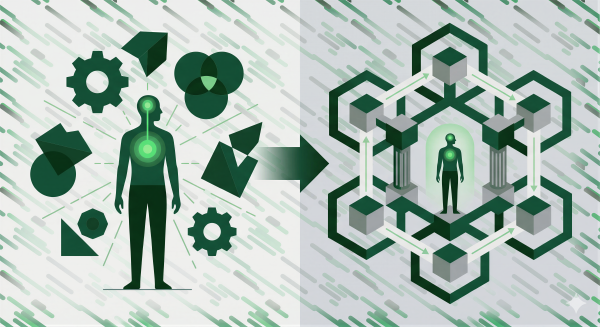
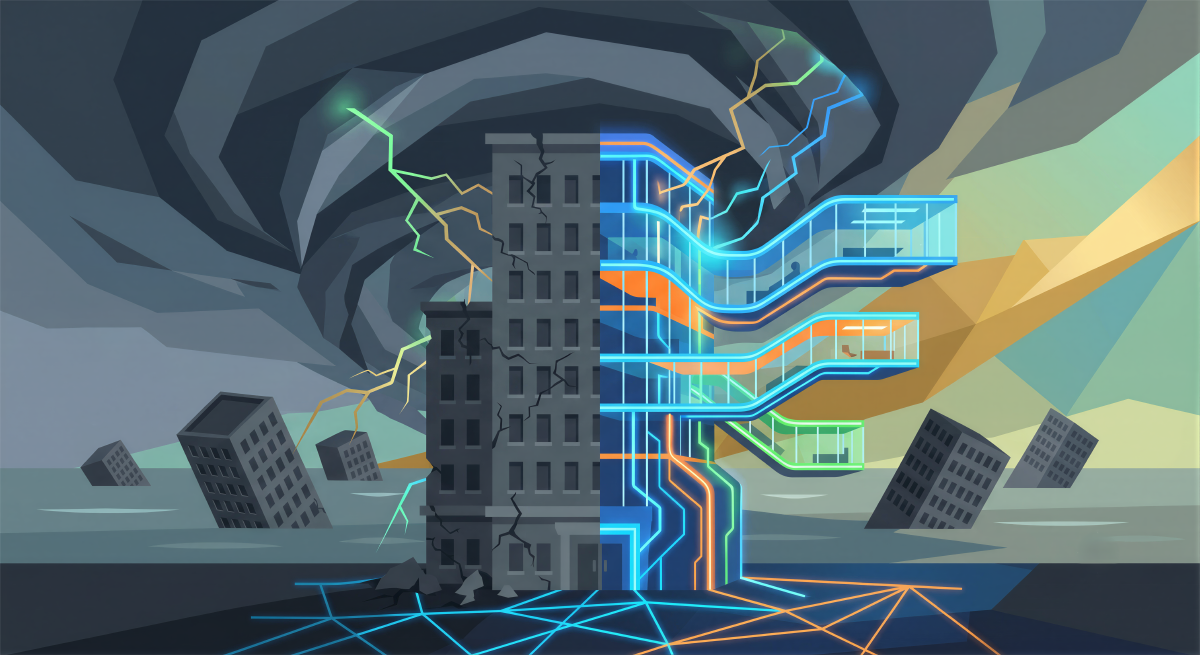
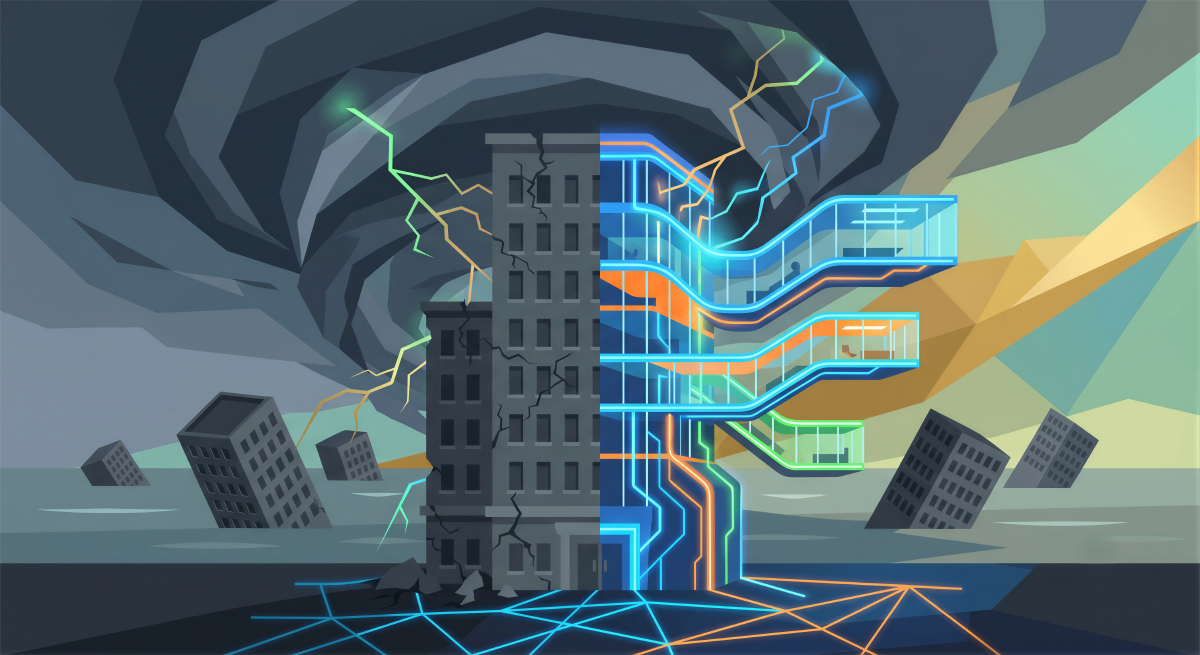
The emergent paradigm shifts the analytical focus from engineering resilience to ecological and evolutionary resilience, conceptualizing post-crisis recovery not as a return to a baseline, but as an opportunity for structural metamorphosis. This theoretical framework is captured by the strategic mandate to “bounce forward”. Bouncing forward requires organizations to leverage the destabilizing forces of a crisis to permanently dismantle legacy bottlenecks, rewrite operational defaults, and embed systemic adaptability into the enterprise’s core cultural memory. When an organization experiences an existential threat or a catastrophic disruption, the deeply entrenched bureaucratic structures, institutionalized narratives, and routines that typically govern its operations are temporarily fractured. This fracturing creates a transient, highly valuable window of “systemic fluidity.” Master architects of organizational change exploit this precise window to initiate what behavioral scientists term Post-Traumatic Organizational Growth (OPTG).
Organizational trauma must be distinctly differentiated from routine operational stress. While routine stress involves a perception of control over the outcome and can be mitigated through standard risk management strategies, organizational trauma occurs when an entity faces sudden, unexpected, and inescapable events that shatter its fundamental assumptions about control, predictability, and systemic safety. Trauma fundamentally destabilizes the system, often causing organizations to fragment, lose their foundational identity, and become trapped in primitive patterns of mere survival, a state in which the organization effectively “loses its soul”. Yet, paradoxically, it is exactly this deep destabilization that serves as the necessary catalyst for OPTG. OPTG posits that organizations, much like human individuals, can exceed their prior levels of functioning, innovation capacity, and psychological safety by cognitively, emotionally, and structurally metabolizing the trauma.
This exhaustive research report dissects the behavioral science, temporal dynamics, and strategic mechanisms of Post-Traumatic Organizational Growth at an enterprise scale. By synthesizing the threat-rigidity thesis, double-loop learning theory, the temporal trajectory model of resilience, and extensive empirical case studies from global enterprises, this analysis provides a definitive structural framework for designing organizations that do not merely survive the storm but are irrevocably propelled forward by its legacy.
The Behavioral Architecture of Disruption: Threat Rigidity vs. Systemic Fluidity#
To systematically design for post-traumatic growth, it is critical to understand the innate, almost biological responses that organizational systems exhibit in the face of existential disruption. The intense systemic tension between constriction and fluidity largely governs the behavioral science of crisis management.
The Threat-Rigidity Thesis and the Elastic Band Effect#
When a profound disruption occurs, the default organizational reflex is highly predictable, structurally defensive, and deeply maladaptive. Formulated initially by organizational theorists Staw, Sandelands, and Dutton in 1981, the “threat-rigidity thesis” illustrates how threat perceptions severely restrict cognitive processing and centralize control within a firm. Under the psychological and operational weight of a crisis, decision-makers experience a profound narrowing of their cognitive aperture. They instinctively filter out peripheral information, precisely the novel, external data required to navigate uncharted market waters, and prioritize internal, threat-focused attention.
The empirical robustness of the threat-rigidity thesis has been validated across multiple decades of research. For instance, Ocasio’s 1995 study on organizational responses to economic threats in declining industries demonstrated that firms facing financial adversity consistently constricted information flows and adhered rigidly to established routines, leading to maladaptive persistence in outdated strategies. Similarly, a 2008 experimental study by Kamphuis et al., using three-person teams in a laboratory evacuation-planning task under physical threat manipulations (such as anticipated oxygen deprivation), found that the threat significantly restricted team information processing. Threatened teams exhibited reduced attention to peripheral emails (scoring a mean of 2.03 versus 3.00 in control groups), reported a severe lack of situational overview, centralized their control mechanisms, and diminished backup behaviors, ultimately resulting in incomplete or failed evacuation plans. A 2024 meta-analytic review by Mazzei and colleagues assessed more than 50 empirical studies and confirmed that higher threat perceptions consistently predict greater rigidity in decision-making across high-stakes contexts.
At the structural level, this threat to rigidity manifests as a sudden and aggressive centralization of authority. Top management seizes control, pushing decision-making up the hierarchy under the flawed assumption that concentrating authority at the highest levels minimizes the chance of catastrophic error or financial loss. Procedurally, the organization leans heavily on established routines, standard operating procedures, and legacy knowledge, retreating into the familiar rather than the necessary. During organizational change initiatives, such as post-disruption technological implementations, this rigidity manifests as deeper cultural entrenchment, in which groups prioritize stability over adaptation to preserve their identity and systemic control.
This dynamic creates an insidious “elastic band effect.” Even if temporary changes are forced upon the organization by the sheer logistical necessity of the crisis, the underlying cultural and operational tension constantly pulls the organization back toward its historical baseline. In such environments, the desire to “bounce back” is merely a prolonged manifestation of threat rigidity. This organizational defense mechanism soothes collective anxiety by reconstructing a lost, idealized past rather than engaging with a volatile future.
Autogenic Crises and the Engineering of Threat Flexibility#
Overcoming the fatal, regressive pull of threat rigidity requires the deliberate cultivation of “threat flexibility,” a process often initiated through what organizational theorists define as an “autogenic crisis”. An autogenic crisis is a socially engineered, strategically but prematurely initiated organizational crisis. Top leaders consciously and deliberately provoke it in anticipation of “real” radical environmental threats (referred to as “latent” threats) that could undermine organizational welfare. Rather than waiting for an external catastrophe to impose rigid, reactive centralization, leaders preemptively unfreeze the organization by exposing it to a controlled dose of systemic stress.
The learning model of an autogenic crisis serves as a structural blueprint for navigating actual trauma and achieving post-traumatic growth. According to the foundational model developed by Barnett and Pratt, this engineered crisis catalyzes long-term organizational change through several distinct phases:
The Unfreezing Phase: Top managers initiate strategic “pre-adaptations” to future adversity by loudly alarming members about the latent threat. This call generates a highly functional bundle of disconfirming data, cognitive anxiety, and, crucially, psychological safety that collectively “unfreezes” the human system and sets the stage for profound change.
The Complete Change and Learning Cycle: If short-term cognitive adjustments are sustained, the complete cycle of change unfolds through three meticulously managed steps:
Unlearning: This is the most critical phase, enabling the long-term development of new mental maps. Unlearning encompasses three distinct modes of operation: the disconfirmation or disassembly of existing worldviews so that the organization no longer assumes it knows what it is perceiving; the disconfirmation of connections between stimuli and responses so that the organization abandons its default reactions; and the disconfirmation of connections between responses, so that the organization no longer relies on legacy methods to assemble solutions.
Relearning: Accomplished by making entirely new connections between external stimuli and organizational responses, actively modifying collective cognitive maps.
Organizational Learning: Defined as the sustained process through which new knowledge about action-outcome relationships develops and permanently modifies collective behavior.
Unlike the threat-rigidity model, which relies on restricted information and the constriction of control, the threat-flexibility model generated by an autogenic crisis is characterized by knowledge generation and the expansion of control. Top managers actively protect information channels from overloading by mandating decentralized problem-solving. Following strategic choices, information seeking continues to increase to intentionally improve policy action, encouraging experimentation and a high volume of new ideas. Authority and accountability for change are distributed throughout the organization. Instead of relying on strict formalization, the organization values and utilizes “bricolage”, the improvisational use of whatever resources are currently available, resulting in open communication flows and greater long-term viability.
Historical examples of this preemptive unfreezing validate its efficacy. In 1983, despite a highly successful year of 15% growth, Motorola CEO Bob Galvin initiated an autocratic crisis by challenging senior managers to aggressively dismantle their multi-layered matrix structure and reorganize it into self-contained business units to preempt a future global competitive crisis. Similarly, in 1991, NAC Re CEO Ron Bornhuetter, uneasy that initial financial success had made executives “too comfortable,” initiated a radical restructuring using cross-functional teams to transform operations before external disruption forced their hand. By understanding the dichotomy between threat rigidity and threat flexibility, master organizational architects recognize the immediate aftermath of a severe disruption not as a period to enforce top-down control, but as a period of profound organizational malleability.
The Temporal Trajectory Model of Organizational Resilience#
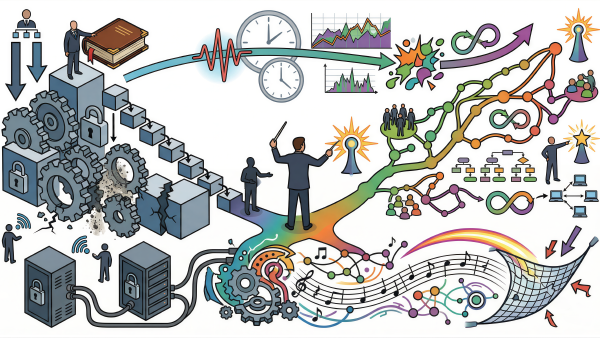
To systematically exploit post-crisis fluidity and circumvent threat rigidity, organizations must fundamentally alter their relationship with time. The Temporal Trajectory Model of Organizational Resilience, developed by Tor Hernes, Blagoy Blagoev, Sven Kunisch, and Majken Schultz, provides a sophisticated temporal framework that explains how actors transition from bouncing back to bouncing forward. Resilience is conceptualized not as a static organizational trait or a finite asset, but as a highly dynamic, processual phenomenon underpinned by the ways in which an organization interacts with its past, present, and future trajectories.
Projecting, Reconstituting, and Reconfiguring#
The Hernes et al. trajectory model delineates three distinct temporal mechanisms that occur during the lifecycle of a disruptive event:
- Projecting Temporal Trajectories: Before a disruption, organizational actors construct strategic narratives based on historical memories and anticipated future states. These projections form the basis of the firm’s operational momentum and strategic planning.
- Reconstituting Trajectories: When a disruptive event strikes, the continuous, predictable flow of organizational time is violently ruptured. The immediate response requires “reconstituting” the trajectory. This represents the acute phase of crisis management, where leaders must hastily reassemble broken operations to meet the severe challenges of the immediate present while preventing total systemic collapse. Reconstitution relies heavily on improvisation and the rapid deployment of contingencies.
- Reconfiguring Trajectories: To achieve true evolutionary advancement and OPTG, organizations must transition from the survival mechanism of reconstitution to the strategic mechanism of reconfiguration. Reconfiguration involves taking the disjointed, fragmented pieces of the post-trauma environment and intentionally weaving them into unprecedented, uncertain futures, without completely losing sight of the firm’s foundational past. This is the absolute essence of bouncing forward, redefining the operational conjectures and strategic models to align with a permanently altered socioeconomic landscape.
Typology of Disruptive Events and Strategic Responses#
The precise temporal trajectory requisite for achieving post-traumatic growth, or “bouncing forward”, is intrinsically contingent upon the fundamental nature of the disruptive stimulus. Drawing substantially on ecological paradigms, the temporal trajectory model categorizes systemic disruptions according to their intersecting vectors of predictability and organizational impact. This classification framework delineates three distinct typologies of disruptive events: Stochastic Events, Probabilistic Transformations, and Tipping Points.
Event Typologies and Resilience Frameworks
1. Stochastic Events
- Characteristics & Probability Parameters: These are rare, highly unpredictable occurrences with a sudden onset (e.g., natural disasters, abrupt supply chain collapses, or global pandemics).
- Systemic Impact: They trigger an immediate and violent rupture of established organizational routines and operational continuity.
- Resilience Mechanism for Bouncing Forward: Organizations must cultivate agile contingencies and leverage bricolage to reconstitute operations rapidly. Furthermore, institutions must extrapolate lessons from the structural breakdown to engineer redundant capacities and rapid-response protocols.
2. Probabilistic Transformations
- Characteristics & Probability Parameters: These encompass anticipated shifts characterized by recognizable trajectories but highly ambiguous timelines (e.g., demographic transitions, gradual technological evolutions, or climate change adaptation).
- Systemic Impact: They precipitate the gradual obsolescence of legacy business models, exacerbate friction within existing operational frameworks, and drive a protracted erosion of market share.
- Resilience Mechanism for Bouncing Forward: The strategic imperative involves rigorous, continuous scenario planning. Leaders must proactively orchestrate socially engineered “autogenic crises” to preemptively unfreeze organizational inertia, facilitating adaptation well before the latent threat fully materializes.
3. Tipping Points
- Characteristics & Probability Parameters: These are threshold-crossing phenomena that precipitate irreversible regime shifts and paradigm collapses (e.g., the digital revolution’s eradication of analog photography).
- Systemic Impact: They represent an existential threat, effectively annihilating the prevailing market equilibrium and transforming former core competencies into strategic liabilities.
- Resilience Mechanism for Bouncing Forward: Survival dictates a radical reconfiguration of the enterprise’s core identity. This necessitates profound double-loop learning, the unmitigated abandonment of legacy operational models, and a comprehensive overhaul of the organization’s governing variables.
A rigorous comprehension of this tripartite typology empowers organizational architects to deploy highly targeted cognitive and structural interventions. Navigating a stochastic event, for instance, demands swift structural reconstitution coupled with the aggressive dismantling of inflexible procedural bottlenecks. Conversely, confronting a tipping point necessitates profound existential sensemaking and the wholesale reconstruction of the organization’s foundational mandate.
The Concept of Eigenzeit and Temporal Uncoupling#
Further deepening the temporal understanding of resilience, advanced organizational theory introduces the concept of Eigenzeit (inherent or proper time), which explores how organizations manage temporal complexity through degrees of temporal uncoupling and differentiation. To solve grand, complex challenges, such as climate change or post-pandemic market reconstruction, organizations cannot rely on monolithic, synchronized timelines. Instead, they must shift to more advanced modes of Eigenzeit.
The theoretical framework identifies four generic modes of Eigenzeit that organizations inhabit:
- Entrained: The organization is rigidly locked into external rhythms (e.g., quarterly earnings cycles, standard fiscal years). This mode is highly susceptible to threat rigidity and is detrimental to post-traumatic growth, as it forces the organization to prioritize immediate financial optics over deep, structural reconfiguration.
- Ambitemporal: The organization attempts to balance short-term operational rhythms with long-term strategic timelines, though these timelines often remain in conflict.
- Agile: The organization uncouples from rigid external pacing, adopting rapid, iterative temporal cycles that allow for fast single-loop learning and rapid pivoting, highly useful in reconstituting trajectories after a stochastic shock.
- Pluritemporal: The most advanced state, essential for true bouncing forward. In a pluritemporal state, the organization supports multiple, uncoupled timelines simultaneously. Different departments or innovation units operate on vastly different temporal horizons, allowing the firm to deeply reconfigure its long-term trajectory while simultaneously managing immediate crisis response. Shifting to pluritemporal Eigenzeit is notoriously difficult, yet it is a prerequisite for executing the complex, multi-layered changes required by OPTG.
Rewriting Operational Defaults: The Mechanics of Double-Loop Learning#
To permanently bounce forward, an organization must exploit the malleability trauma creates to rewrite its fundamental operational defaults. The principles of organizational learning and the dynamic plasticity of organizational routines govern this profound cognitive restructuring.
Single-Loop vs. Double-Loop Learning in Crisis#
The distinction between superficial recovery (bouncing back) and profound post-traumatic growth is rooted deeply in Harvard psychologist Chris Argyris’s theory of Single-Loop and Double-Loop Learning. Under normal, stable operating conditions, organizations rely almost exclusively on single-loop learning.
Single-Loop Learning occurs when an organization detects an error, a failure, or a deviation from expected outcomes and adjusts its action strategies specifically to correct that error, without altering or questioning the underlying systems, policies, beliefs, or values that govern those actions. It operates much like a thermostat, turning on a furnace when the ambient temperature drops below a predefined set point. For instance, if a crucial software product launch is delayed, a single-loop response involves adding more status meetings, reprimanding project managers, or demanding overtime to ensure the new timeline is met. This response fails to question the organizational norm or “governing variable” that prioritized an unrealistic, fixed date over product quality in the first place. In a post-crisis environment, single-loop learning invariably leads to bouncing back. The organization works furiously to repair the localized damage and restore the original governing variables, ultimately leaving itself just as vulnerable to the next shock.
Double-Loop Learning, conversely, involves detecting an error and responding by inquiring into, and fundamentally revising, the “governing variables” themselves. Governing variables are the deeply entrenched assumptions, cultural norms, performance measures, hidden incentives, and unwritten rules that dictate how the organization functions. Following the delayed product launch example, a double-loop response involves pausing to question the “fixed scope/fixed date” paradigm entirely, and rewriting the operational default to adopt incremental agile releases and risk-tiered go/no-go criteria.
Post-traumatic organizational growth is exclusively achieved through the rigorous application of double-loop learning. The crisis itself serves as a violent, undeniable disconfirmation of the organization’s existing governing variables. The Double-Loop Learning Matrix, adapted from John J. Shibley’s work, provides a structured methodology for this process, integrating the classic learning cycle (Observe, Assess, Develop, Implement) with systems thinking.
When applying this matrix, teams observe a gap between intended and actual outcomes. Instead of assessing immediate corrections (single-loop), they shift to assessing their foundational beliefs about why they valued the intended outcome and why they assumed their original strategy would work. Master architects utilize this period of reflection to surface the vast gulf between the organization’s “espoused theory” (what leadership publicly claims the organization values, such as “innovation” or “customer-centricity”) and its “theory-in-use” (the tacit, often cynical structures that actually govern behavior, such as punishing failure or rewarding only short-term quarterly gains). By explicitly surfacing and dismantling the theory-in-use, leaders can permanently rewrite the operational defaults.
The Plasticity, Decay, and Incarnation of Organizational Routines#
A critical component of rewriting operational defaults is understanding the true nature of organizational routines. Contemporary organizational theory asserts that routines are not static objects or immutable laws; they are dynamic processes characterized by ongoing “performative flexibility” and plasticity. Routines exist only through the continuous, space-time reproduction of efforts by human and material actants.
During a period of systemic stability, cultural narratives, institutional rewards, and physical infrastructure align to artificially constrict this plasticity, rendering routines inflexible and highly resistant to change. However, when a disruptive shock occurs, the formal structures that enforce routine conformity begin to decay. The Organizational Institutional Theory (OIT) perspective highlights that organizational budgets and formal processes provide malleability in symbols and rituals relative to tangible outcomes. When normal budgeting and operational processes are disrupted by trauma, this decay creates necessary space for organizational instability, improvisation, and “loose coupling”. The organization reaches a peak state of structural malleability.
If leaders fail to intervene deliberately during this narrow window, the organization will eventually refreeze around its old routines due to the psychological comfort-seeking of threat rigidity. However, by actively managing the double-loop learning cycle during this period of decay, leaders can incarnate and embed new, highly resilient routines into the daily business agenda before the system biologically solidifies.
The Comprehensive Framework of Organizational Post-Traumatic Growth (OPTG)#
While the temporal trajectory model and double-loop learning explain the mechanisms of how organizations transform, the specific diagnostic dimensions of that transformation are codified in the Framework for Organizational Post-Traumatic Growth (OPTG). Developed by leading organizational researchers, including Alexander, Greenbaum, Shani, and Mitki, this framework boldly extends individual-level clinical trauma psychology to the macro-enterprise level.
OPTG posits that organizations can transcend mere survival and achieve a demonstrably superior state of functioning, evidenced by a clearer identity, stronger cross-functional trust, faster feedback loops, higher innovation capacity, and significantly better decision hygiene. Achieving this evolutionary leap requires structured, evidence-based interventions across several primary dimensions:
1. Meaning-Making and Existential Restructuring#
Trauma deeply fractures an organization’s collective identity. To overcome this fragmentation, organizations must engage in deliberate “meaning-making.” This involves group-level existential processing to make sense of the traumatic experience and forge a newly integrated narrative identity. Meaning-making allows the workforce to work actively through their suffering, transforming a passive narrative of victimhood into an active narrative of shared adversity, resilience, and eventual wisdom. When an organization successfully extracts meaning from trauma, it develops what researchers term “polystrengths”, a synergistic combination of regulatory capacities (e.g., economic self-efficacy, financial knowledge), coping mechanisms, and deep social capital that vastly improves long-term economic self-sufficiency and resilience.
2. Leadership Approach and Trauma Competency#
During a severe crisis, the role of leadership must shift dramatically from traditional, authoritative command-and-control to holding a safe, empathetic space for vulnerability. OPTG requires leaders to demonstrate extraordinarily high levels of empathy, trauma competency, and transparent, consistent communication. Empirical research within the OPTG framework highlights statistically significant, profound correlations between leadership empathy and organizational trust (Pearson correlation r = .87, p < .001), as well as between organizational trust and overall post-traumatic improvement and growth (r = .82, p < .001). Leaders facilitate this growth by remaining visibly engaged, standardizing candid communication mechanisms (such as highly organized daily huddles that acknowledge uncomfortable emotions and normalize uncertainty), and demonstrating the humility to admit when they lack immediate answers, which, paradoxically, enhances trust and structural safety.
3. Organizational Culture and Community Design#
A robust OPTG infrastructure requires an organizational culture characterized by extreme psychological safety. Organizations with high-adaptability cultures rebound and bounce forward faster because employees feel secure enough to propose creative, double-loop solutions rather than retreating into the fear-based silence dictated by threat rigidity. This cultural transformation employs principles of “Community Design” for organizational development, as championed by theorists such as Sloan Leo. This involves structurally enabling those who have experienced the disruption to set the pace of repair, focusing on two key tenets: “Design with People” (meeting teams where they are and co-designing solutions) and “Build on Existing Assets” (framing recovery through a strength-based lens rather than a deficit lens). Structurally, this often involves standardizing mindfulness practices, establishing physical or virtual “oasis rooms” or “safe rooms” for employees to decompress without judgment, and fundamentally aligning daily operational agendas with the newly forged mission.
4. Individual Health, Well-being, and Secondary Trauma#
An organization is, at its core, a complex network of human actors. OPTG interventions must recognize the profound toll that trauma takes on individual physical and mental health. This is particularly vital in environments subject to “empathic work,” such as healthcare, where workers face secondary traumatic stress and extreme burnout. By providing comprehensive, multi-layered support networks, recognizing the early signs of burnout, and mitigating secondary traumatic stress, organizations ensure that the human capital necessary for evolutionary advancement remains intact, cognitively engaged, and capable of executing high-level reconfiguration.
Architecting Growth: Enterprise-Scale Case Studies in Bouncing Forward#
The theoretical frameworks of OPTG, double-loop learning, and temporal reconfiguration are vividly illustrated in the historical trajectories of several multinational enterprises. By meticulously analyzing how these organizations navigated tipping points and stochastic events, we can identify the practical, enterprise-scale application of bouncing forward.
Fujifilm: Surviving an Existential Tipping Point#
The trajectory of Fujifilm in the early 2000s represents a quintessential and masterful response to a catastrophic “tipping point”. Founded in 1934, Fujifilm had grown into a global titan, with its traditional photographic film business accounting for a massive 60% of its operating profit in 2000. However, the invention and rapid adoption of digital photography decimated demand for analog film. Within a single decade, demand dropped by 90%, and sales of Fujifilm’s core product plummeted to a mere 1% of total corporate sales by 2011.
While its primary global competitor, Eastman Kodak, succumbed completely to threat rigidity, clinging desperately to its historical identity as a photography company and attempting a superficial, single-loop transition from analog to digital cameras, Fujifilm engaged in radical double-loop learning. Kodak’s leadership sought to protect quarterly earnings and preserve existing market paradigms, prioritizing internal efficiency and historical brand identity over external adaptation. This rigid framing ultimately led Kodak to file for Chapter 11 bankruptcy protection in 2012.
Fujifilm’s CEO, Shigetaka Komori, recognized that surviving this existential trauma required an entirely new set of governing variables. Under his “VISION 75” strategy, he explicitly rallied the workforce around the grim reality of doing nothing, refusing to frame the goal as merely “competing in digital photography”. He initiated a massive, painful pivot, dismantling legacy operations and systematically reconfiguring the firm’s proprietary chemical and photographic technologies to serve fundamentally different, high-growth markets: healthcare, life sciences, and electronics.
This was not an incremental change; it was an existential transformation. By accepting the death of its legacy identity, Fujifilm reconstituted itself as a highly diversified conglomerate. Teiichi Goto, who streamlined the photography business and launched medical equipment sales in China as early as 2003, later became CEO, leading the company to a state of profound post-traumatic growth. Today, Fujifilm is a legitimate contract development and manufacturing organization (CDMO) for the life sciences industry, partnering with giants like Regeneron and Johnson & Johnson. Their healthcare segment alone recently accounted for one-third of the group’s 2.96 trillion JPY in revenue (approximately 975.1 billion JPY), definitively proving that bouncing forward requires the willingness to cannibalize profitable products for uncertain but necessary futures.
The LEGO Group: Resolving the Complexity Bottleneck#
In 2004, the LEGO Group faced a severe probabilistic transformation combined with internal systemic failure that nearly destroyed the company. Despite immense global brand recognition on par with Disney’s, the company was hemorrhaging value at a terrifying rate of 300,000 Euros per day, with profit margins collapsing from 15% in 1993 to 28% in 2004. Classic single-loop learning errors precipitated the crisis: attempting to drive top-line growth through extreme diversification (launching apparel lines, building theme parks, developing TV shows) and explosive supply chain complexity. The number of unique brick components exploded, creating a devastating multiplier effect across the entire supply chain. LEGO sourced raw materials globally from multiple suppliers, which delayed manufacturing, created massive inventory unpredictability, and rendered the company highly susceptible to quality issues and disruptions. Previous turnaround attempts by external experts failed because they applied the standard “turnaround book”, laying off workers and streamlining, but failing to address the underlying governing variables that prized complexity.
When 35-year-old former McKinsey consultant Jørgen Vig Knudstorp assumed the role of CEO in 2004, he triggered a phase of profound unlearning. He initiated a brutal, honest diagnosis that exposed the fatal flaw: LEGO was spending far more than it earned, and no one understood which products were profitable. Knudstorp executed a strategic restructuring that dismantled legacy bottlenecks by radically reducing complexity. He slashed the number of unique product elements by nearly half, discontinued wildly unprofitable lines, and made the critical decision to bring brick manufacturing back in-house to restore stringent quality control. Demonstrating the necessary ruthlessness of OPTG leadership, he fired five of the seven manufacturing executives to break down entrenched management silos. He even brought in a psychoanalyst to teach the management team how to distinguish between decision-making based on logic and that based on emotion.
Crucially, Knudstorp facilitated meaning-making by refocusing the entire organization on its core historical identity: the universal language of the brick system and the empowerment of childhood learning and creativity. By changing operational defaults, optimizing the supply chain, instituting rigorous inventory management, and relying on continuous feedback loops such as Net Promoter Scores, LEGO did not just bounce back; it engineered one of the greatest corporate turnarounds in history, achieving unprecedented global growth and sustained market dominance.
Starbucks: Autogenic Crisis and Routine Reconfiguration#
The case of Starbucks in 2008 illustrates the immense power of an autogenic crisis to rewrite behavioral operational habits at scale. Upon returning as CEO after an eight-year hiatus, Howard Schultz found a company that had lost its cultural soul and customer focus in the blind pursuit of aggressive, mechanized real estate expansion. Recognizing the impending threat of commoditization and the looming global financial crisis, Schultz intentionally “unfroze” the organization, executing a classic step-change model.
Schultz’s philosophy was deeply rooted in his personal history: raised in public housing in New York, he saw his father’s struggles with workplace injury and lack of benefits, which drove his belief that a company must respect workers’ dignity. A central pillar of his 2008 turnaround was addressing the behavioral routines of the frontline workforce. Through extensive, unprecedented training programs, Starbucks targeted the specific “inflection points” where employees experienced stress and trauma, such as dealing with irate, abusive customers. By instituting routines such as the LATTE method (Listen, Acknowledge, Take action, Thank, Explain), the company rewired its staff’s operational defaults. This intervention essentially institutionalized willpower and emotional regulation as an automatic corporate habit, transforming employees like ‘Travis’, who previously struggled with emotional outbursts, into highly capable managers overseeing multi-million dollar locations.
Furthermore, Schultz fostered a culture of shared meaning, restoring Starbucks’ existential vision as a communal “third place” that links hospitality with everyday coffee. This deliberate unfreezing, cognitive restructuring, and subsequent refreezing of advanced assumptions allowed Starbucks to traverse the financial crisis with an enhanced, highly resilient workforce, paving the way for massive global expansion, such as the opening of culturally resonant flagship stores in Beijing’s Kerry Center and a 24-hour location in Taikoo Li Sanlitun in 2013.
Netflix: Digital Resilience and Continuous Transformation#
Netflix provides a paramount, modern example of continuous digital resilience, threat flexibility, and the successful navigation of probabilistic transformations. The company’s origins in 1997 as a DVD-by-mail service positioned it perfectly to be destroyed by the transition to digital streaming, a classic tipping point. However, rather than falling victim to threat rigidity and defending its physical logistics network, Netflix incorporated insights from technological disruption directly into its evolving business model.
Guided by dynamic capabilities theory, Netflix demonstrates how the continuous reconfiguration of digital and organizational resources maintains high adaptability. By fostering a culture that views failure not as a terminal event but as a productive, necessary mechanism for double-loop learning, Netflix successfully transitioned from physical logistics to cloud computing, artificial intelligence, and global content production. Their strategic timing and willingness to preemptively cannibalize their own core business allowed them to shift to web content, leading to a monumental $25 billion valuation marker. Their ability to seamlessly transition models highlights how resilient organizations integrate “bounce forward” mechanisms into their baseline operational posture, avoiding the systemic vulnerabilities that destroy rigid competitors.
Cross-Case Synthesis of Bouncing Forward Mechanisms#
A comprehensive cross-case synthesis of these enterprise-scale trajectories reveals a definitive architectural pattern underpinning post-traumatic organizational growth (OPTG). Regardless of the specific crisis typology, be it an existential tipping point, a probabilistic supply chain collapse, or an autogenic shock, each of these organizations successfully circumvented the fatal, regressive pull of threat rigidity. Rather than retreating to legacy operational defaults or deploying superficial single-loop corrections, these enterprises engaged in rigorous double-loop learning. By aggressively reconfiguring their core governing variables, dismantling obsolete institutional identities, and proactively cannibalizing legacy models, they bypassed mere baseline recovery. Instead, they achieved profound evolutionary advancement, culminating in sustained market dominance, unprecedented structural agility, and highly resilient corporate ecosystems.
Strategic Intervention and Growth Outcomes by Enterprise
1. Fujifilm
- Crisis Typology: Tipping Point (Digitalization)
- Threat Rigidity Pitfall Avoided: Defending legacy analog film markets (which proved to be Kodak’s fatal error).
- Double-Loop Intervention & Reconfiguration: Fundamentally rewrote the corporate identity; successfully transferred proprietary chemical and photographic intellectual property to the healthcare and biotechnology sectors.
- Post-Traumatic Growth Outcome: Transformed from an obsolete film manufacturer into a highly diversified, multi-trillion yen life-sciences and CDMO conglomerate.
2. The LEGO Group
- Crisis Typology: Probabilistic Transformation (Supply Chain Collapse)
- Threat Rigidity Pitfall Avoided: Utilizing extreme diversification and adding severe product complexity in a desperate bid to boost top-line sales.
- Double-Loop Intervention & Reconfiguration: Radically slashed SKU complexity; aggressively optimized the global supply chain; re-anchored the enterprise to the foundational logic of the core brick system.
- Post-Traumatic Growth Outcome: Engineered a historic corporate turnaround characterized by massive margin expansion and sustained dominance in the global toy market.
3. Starbucks
- Crisis Typology: Autogenic Crisis / Exogenous Shock
- Threat Rigidity Pitfall Avoided: Ignoring deep-seated cultural decay in favor of pursuing rapid, mechanized, and aggressive real estate expansion.
- Double-Loop Intervention & Reconfiguration: Deliberately unfroze the organizational system; rewired frontline employee behavioral habits and emotional regulation via the LATTE method; structurally restored the foundational “third place” ethos.
- Post-Traumatic Growth Outcome: Re-established profound brand loyalty, vastly enhanced the psychological resilience of the frontline workforce, and secured expansive international growth.
4. Netflix
- Crisis Typology: Tipping Point (Bandwidth and Digital Streaming)
- Threat Rigidity Pitfall Avoided: Clinging defensively to the historically profitable and established DVD-by-mail logistical model.
- Double-Loop Intervention & Reconfiguration: Willingly and preemptively cannibalized its own core DVD business to pioneer a cloud-based streaming architecture and integrate advanced AI analytics.
- Post-Traumatic Growth Outcome: Achieved unprecedented global scalability, established structural dominance in the digital media landscape, and triggered a massive surge in corporate valuation.
The Insidious Danger of Premature Refreezing: Avoiding the Elastic Band Effect#
While identifying the theoretical necessity for post-traumatic growth is straightforward, the actual organizational execution is fraught with deep psychological and structural hazards. The most insidious and common of these hazards is “premature refreezing.”
The classic change management framework, unfreeze, change, refreeze, posits that an organization must ultimately solidify its new state to ensure operational stability. However, in the immediate aftermath of a deep organizational trauma, the collective desire for stability is overwhelmingly powerful. The workforce, exhausted by the crisis’s chaotic fluidity, existential dread, and heightened operational tempo, inherently yearns for cognitive closure and a rapid return to predictability.
This sheer desperation for normalcy often leads leadership to declare victory far too early. When a surface-level change is implemented, or a highly visible symbolic milestone is reached (such as the deployment of a new software system, the publication of a new mission statement, or the hiring and subsequent exit of an external consultant), the organization may falsely interpret this symbol to mean that the change process is complete. The literature on the symbolic roles of external consultants notes that their presence and exit often trigger this premature refreezing, stifling further necessary change efforts before they have taken root. Consequently, the organization locks down the operational routines before true double-loop learning has been successfully integrated into the collective theory-in-use.
When premature refreezing occurs, the underlying cultural governing variables remain entirely unaltered. The new routines are treated as superficial, burdensome mandates rather than deeply integrated behaviors. A prime example is seen in accounting transitions, where new frameworks (such as the K3 framework) are introduced, but professionals who have not unlearned their old habits revert to legacy behaviors because the change is perceived as merely an administrative effort rather than a cultural shift.
As a result of premature refreezing, the “elastic band effect” takes hold with devastating force. As the acute external pressure of the crisis fades, the massive structural tension of the legacy culture exerts an irresistible, invisible pull, quietly causing the organization to revert to its pre-crisis habits and legacy bottlenecks. Post-crisis reviews remain superficial exercises in compliance; lessons identified fail to translate into changes in daily practice, and critical institutional memory quickly erodes with personnel turnover, leaving the organization highly vulnerable to repeated failures when the next stochastic event strikes.
To actively prevent this regression, leaders must possess the fortitude to maintain the tension of systemic fluidity longer than is psychologically comfortable for the workforce. Sustained healing and organizational growth are ongoing, rigorous practices that require strict accountability and the emotional capacity to sit in the tension of prolonged discomfort and ambiguity. Designing for post-traumatic growth means continuously auditing the newly established routines to ensure they are firmly rooted in updated governing variables, and recognizing that the mere absence of an immediate crisis does not equate to the completion of evolutionary advancement.
Conclusion#
The legacy of a systemic storm is defined not by the financial or operational damage it inflicts, but by the structural rigidities and obsolete paradigms it violently destroys. In an era increasingly characterized by escalating market volatility, stochastic geopolitical disruptions, and rapid technological tipping points, the traditional strategic mandate of organizational resilience, bouncing back to a previous equilibrium, is a profound strategic liability. The pre-crisis state is functionally obsolete the exact moment the crisis occurs.
Designing for Post-Traumatic Organizational Growth requires a fundamental paradigm shift from defensive recovery to aggressive evolutionary advancement. Organizations must recognize the onset of trauma as an unparalleled, albeit painful, transient window of systemic fluidity. During this vital window, the biological threat-rigidity reflex must be actively and systematically suppressed through empathetic leadership, decentralized problem-solving, and the cultivation of robust psychological safety. Master architects of change must utilize this fluidity to project new temporal trajectories, violently dismantle legacy supply chains and cognitive bottlenecks, and engage in the grueling cognitive restructuring of double-loop learning to rewrite operational defaults completely.
The empirical evidence from global enterprise case studies, ranging from Fujifilm’s existential pivot into life sciences, to LEGO’s ruthless supply chain simplification, to Starbucks’ rewiring of frontline behavioral habits, demonstrates unequivocally that thriving after adversity is not a matter of serendipity or luck. It is the direct result of a deliberate, scientifically grounded behavioral architecture that metabolizes trauma, extracts shared existential meaning, and engineers new cultural routines before the organizational system prematurely refreezes. Ultimately, bouncing forward is the highest manifestation of organizational resilience: the supreme capacity to harness the kinetic energy of a catastrophe to propel the enterprise into an unprecedented, highly adaptable, and structurally dominant future.
References#
- Barasa, E., Mbau, R., & Gilson, L. (2018). What is resilience and how can it be nurtured? A systematic review of empirical literature on organizational resilience. International Journal of Health Policy and Management, 7(6), 491–503. https://doi.org/10.15171/ijhpm.2018.06
- Bennett, A. A., Bakker, A. B., & Field, J. G. (2018). Recovery from work-related effort: A meta-analysis. Journal of Organizational Behavior, 39(3), 262–275. https://doi.org/10.1002/job.2217
- Bhamra, R., Dani, S., & Burnard, K. (2011). Resilience: The concept, a literature review and future directions. International Journal of Production Research, 49(18), 5375–5393. https://doi.org/10.1080/00207543.2011.563826
- Blake, H., Hassard, J., Thomson, L., Choo, W. H., Dulal-Arthur, T., Karanika-Murray, M., Delic, L., Pickford, R., & Rudkin, L. (2025). Psychological detachment from work predicts mental wellbeing of working-age adults: Findings from the “Wellbeing of the Workforce” (WoW) prospective longitudinal cohort study. PLOS ONE, 20(1), Article e0312673. https://doi.org/10.1371/journal.pone.0312673
- Burnard, K., & Bhamra, R. (2011). Organisational resilience: Development of a conceptual framework for organisational responses. International Journal of Production Research, 49(18), 5581–5599. https://doi.org/10.1080/00207543.2011.563827
- Chiwisa, C. (2024). The role of leadership in crisis management: A literature review. Journal of Human Resource and Leadership, 9(3), 48–65. https://doi.org/10.47604/jhrl.2844
- Christianson, M. K., & Barton, M. A. (2021). Sensemaking in the time of COVID-19. Journal of Management Studies, 58(2), 572–576. https://doi.org/10.1111/joms.12658
- Crossan, M. M., & Berdrow, I. (2003). Organizational learning and strategic renewal. Strategic Management Journal, 24(11), 1087–1105. https://doi.org/10.1002/smj.342
- Dickson, R. K. (2025). Organizational resilience as the springboard for organizational success in a turbulent business environment. European Journal of Management, Economics and Business, 2(2), 3–24. https://doi.org/10.59324/ejmeb.2025.2(2).01
- Dong, B. (2023). A systematic review of the organizational resilience literature and future outlook. Frontiers in Business, Economics and Management, 8(3), 86–89. https://doi.org/10.54097/fbem.v8i3.7728
- Duchek, S. (2020). Organizational resilience: A capability-based conceptualization. Business Research, 13(1), 215–246. https://doi.org/10.1007/s40685-019-0085-7
- Essuman, D., Bruce, P. A., Ataburo, H., Asiedu-Appiah, F., & Boso, N. (2022). Linking resource slack to operational resilience: Integration of resource-based and attention-based perspectives. International Journal of Production Economics, 254, Article 108652. https://doi.org/10.1016/j.ijpe.2022.108652
- Feldman, M. S. (2021). Practice theory and routine dynamics. In M. S. Feldman, B. T. Pentland, L. D’Adderio, K. Dittrich, C. Rerup, & D. Seidl (Eds.), Cambridge handbook of routine dynamics (pp. 21–36). Cambridge University Press. https://doi.org/10.1017/9781108993340.004
- Galy, A., Chênevert, D., Fouquereau, E., & Groulx, P. (2023). Toward a new conceptualization of resilience at work as a meta-construct? Frontiers in Psychology, 14, Article 1211538. https://doi.org/10.3389/fpsyg.2023.1211538
- Grote, G., & Guest, D. (2017). The case for reinvigorating quality of working life research. Human Relations, 70(2), 149–167. https://doi.org/10.1177/0018726716654746
- Ham, D.-H. (2021). Safety-II and resilience engineering in a nutshell: An introductory guide to their concepts and methods. Safety and Health at Work, 12(1), 10–19. https://doi.org/10.1016/j.shaw.2020.11.004
- Hartmann, S., Weiss, M., Newman, A., & Hoegl, M. (2020). Resilience in the workplace: A multilevel review and synthesis. Applied Psychology, 69(3), 913–959. https://doi.org/10.1111/apps.12191
- Hernes, T., Blagoev, B., Kunisch, S., & Schultz, M. (2025). From bouncing back to bouncing forward: A temporal trajectory model of organizational resilience. Academy of Management Review, 50(1), 72–92. https://doi.org/10.5465/amr.2022.0406
- Hillmann, J., & Guenther, E. (2021). Organizational resilience: A valuable construct for management research? International Journal of Management Reviews, 23(1), 7–44. https://doi.org/10.1111/ijmr.12239
- Högberg, K. (2021). Between hope and despair: Sensegiving and sensemaking in hotel organizations during the COVID-19 crisis. Journal of Hospitality and Tourism Management, 49, 460–468. https://doi.org/10.1016/j.jhtm.2021.10.002
- Jaaron, A. A. M., Pham, D. T., & Cogonon, M. E. (2023). Systems thinking to facilitate “double loop” learning in tourism industry: A COVID-19 response strategy. Journal of Sustainable Tourism, 31(4), 1032–1050. https://doi.org/10.1080/09669582.2021.1948554
- Jaziri, R., & Miralam, M. S. (2021). The impact of crisis and disasters risk management in COVID-19 times: Insights and lessons learned from Saudi Arabia. Ethics, Medicine and Public Health, 18, Article 100705. https://doi.org/10.1016/j.jemep.2021.100705
- Kantur, D., & İşeri-Say, A. (2012). Organizational resilience: A conceptual integrative framework. Journal of Management & Organization, 18(6), 762–773. https://doi.org/10.5172/jmo.2012.18.6.762
- Karabinski, T., Haun, V. C., Nübold, A., Wendsche, J., & Wegge, J. (2021). Interventions for improving psychological detachment from work: A meta-analysis. Journal of Occupational Health Psychology, 26(3), 224–242. https://doi.org/10.1037/ocp0000280
- Kihlberg, R., & Lindberg, O. (2021). Reflexive sensegiving: An open-ended process of influencing the sensemaking of others during organizational change. European Management Journal, 39(4), 476–486. https://doi.org/10.1016/j.emj.2020.10.007
- Kilskar, S. S., Danielsen, B.-E., & Johnsen, S. O. (2020). Sensemaking in critical situations and in relation to resilience—A review. ASCE-ASME Journal of Risk and Uncertainty in Engineering Systems, Part B: Mechanical Engineering, 6(1), Article 010801. https://doi.org/10.1115/1.4044789
- Kreiser, P. M., Anderson, B. S., Kuratko, D. F., & Marino, L. D. (2020). Entrepreneurial orientation and environmental hostility: A threat rigidity perspective. Entrepreneurship Theory and Practice, 44(6), 1174–1198. https://doi.org/10.1177/1042258719891389
- Kuo, K.-C., Lu, W.-M., & Nguyen, T.-T. (2025). The influence of CSR on firm performance: The moderating roles of individualism and long-term orientation. Total Quality Management & Business Excellence, 36(5-6), 477–502. https://doi.org/10.1080/14783363.2025.2465318
- Lengnick-Hall, C. A., Beck, T. E., & Lengnick-Hall, M. L. (2011). Developing a capacity for organizational resilience through strategic human resource management. Human Resource Management Review, 21(3), 243–255. https://doi.org/10.1016/j.hrmr.2010.07.001
- Macrae, C. (2019). Moments of resilience: Time, space and the organisation of safety in complex sociotechnical systems. In S. Wiig & B. Fahlbruch (Eds.), Exploring resilience (pp. 15–23). Springer International Publishing. https://doi.org/10.1007/978-3-030-03189-3_3
- Maitlis, S., & Sonenshein, S. (2010). Sensemaking in crisis and change: Inspiration and insights from Weick (1988). Journal of Management Studies, 47(3), 551–580. https://doi.org/10.1111/j.1467-6486.2010.00908.x
- Mithani, M. A., Gopalakrishnan, S., & Santoro, M. D. (2021). Does exposure to a traumatic event make organizations resilient? Long Range Planning, 54(3), Article 102031. https://doi.org/10.1016/j.lrp.2020.102031
- Nguyen, T. D., Cao, T. H., Nguyen, T. M., & Nguyen, T. T. (2024). Psychological capital: A literature review and research trends. Asian Journal of Economics and Banking, 8(3), 412–429. https://doi.org/10.1108/ajeb-08-2023-0076
- Nie, T., Tian, M., & Liang, H. (2021). Relational capital and post-traumatic growth: The role of work meaning. International Journal of Environmental Research and Public Health, 18(14), 7362. https://doi.org/10.3390/ijerph18147362
- Nugent, N. R., Sumner, J. A., & Amstadter, A. B. (2014). Resilience after trauma: From surviving to thriving. European Journal of Psychotraumatology, 5(1), Article 25339. https://doi.org/10.3402/ejpt.v5.25339
- Osiyevskyy, O., Shirokova, G., & Ritala, P. (2020). Exploration and exploitation in crisis environment: Implications for level and variability of firm performance. Journal of Business Research, 114, 227–239. https://doi.org/10.1016/j.jbusres.2020.04.015
- Paeffgen, T. (2022). Organisational resilience during COVID-19 times: A bibliometric literature review. Sustainability, 15(1), 367. https://doi.org/10.3390/su15010367
- Parker, S. K., & Grote, G. (2022). Automation, algorithms, and beyond: Why work design matters more than ever in a digital world. Applied Psychology, 71(4), 1171–1204. https://doi.org/10.1111/apps.12241
- Pires, M. L. (2025). The effects of job insecurity on psychological well-being and work engagement: Testing a moderated mediation model. Behavioral Sciences, 15(7), 979. https://doi.org/10.3390/bs15070979
- Powley, E. H., Vogus, T. J., Barrett, F. J., Barton, M. A., Dothan, A., Carmeli, A., Sluss, D., & Sutcliffe, K. M. (2017). Making the case for relational resilience. Academy of Management Proceedings, 2017(1), 11694. https://doi.org/10.5465/ambpp.2017.11694symposium
- Raetze, S., Duchek, S., Maynard, M. T., & Wohlgemuth, M. (2022). Resilience in organization-related research: An integrative conceptual review across disciplines and levels of analysis. Journal of Applied Psychology, 107(6), 867–897. https://doi.org/10.1037/apl0000952
- Rhone, C. C. (2021). Organizational resilience during times of trauma. In L. Byrd-Poller, J. Farmer, & V. Ford (Eds.), Role of leadership in facilitating healing and renewal in times of organizational trauma and change (pp. 170–185). IGI Global Scientific Publishing. https://doi.org/10.4018/978-1-7998-7016-6.ch009
- Sajko, M., Boone, C., & Buyl, T. (2021). CEO greed, corporate social responsibility, and organizational resilience to systemic shocks. Journal of Management, 47(4), 957–992. https://doi.org/10.1177/0149206320902528
- Sarkar, S., & Osiyevskyy, O. (2018). Organizational change and rigidity during crisis: A review of the paradox. European Management Journal, 36(1), 47–58. https://doi.org/10.1016/j.emj.2017.03.007
- Setyawan, A., Melinda, R., & Nelson, A. (2024). The role of organizational resilience in the influence of transformational leadership and employee engagement on organizational performance. Dinasti International Journal of Education Management and Social Science, 6(2), 785–798. https://doi.org/10.38035/dijemss.v6i2.3637
- Shoss, M. K. (2017). Job insecurity: An integrative review and agenda for future research. Journal of Management, 43(6), 1911–1939. https://doi.org/10.1177/0149206317691574
- Sobaih, A. E. E., Elshaer, I., Hasanein, A. M., & Abdelaziz, A. S. (2021). Responses to COVID-19: The role of performance in the relationship between small hospitality enterprises’ resilience and sustainable tourism development. International Journal of Hospitality Management, 94, Article 102824. https://doi.org/10.1016/j.ijhm.2020.102824
- Steed, L. B., Swider, B. W., Keem, S., & Liu, J. T. (2021). Leaving work at work: A meta-analysis on employee recovery from work. Journal of Management, 47(4), 867–897. https://doi.org/10.1177/0149206319864153
- Swavely, D., Romig, B., Weissinger, G., Holtz, H., Alderfer, M., Lynn, L., Adil, T., & Rushton, C. H. (2022). The impact of traumatic stress, resilience, and threats to core values on nurses during a pandemic. JONA: The Journal of Nursing Administration, 52(10), 525–535. https://doi.org/10.1097/nna.0000000000001194
- Van Hootegem, A., Niesen, W., & De Witte, H. (2019). Does job insecurity hinder innovative work behaviour? A threat rigidity perspective. Creativity and Innovation Management, 28(1), 19–29. https://doi.org/10.1111/caim.12271
- Vargo, J., & Seville, E. (2011). Crisis strategic planning for SMEs: Finding the silver lining. International Journal of Production Research, 49(18), 5619–5635. https://doi.org/10.1080/00207543.2011.563902
- Vogus, T. J., & Sutcliffe, K. M. (2007). Organizational resilience: Towards a theory and research agenda. In 2007 IEEE International Conference on Systems, Man and Cybernetics (pp. 3418–3422). IEEE. https://doi.org/10.1109/ICSMC.2007.4414160
- Wiklund, J. (2022). Working in bed—A commentary on “Automation, Algorithms, and Beyond: Why Work Design Matters More Than Ever in a Digital World” by Parker and Grote. Applied Psychology, 71(4), 1210–1214. https://doi.org/10.1111/apps.12261
- Williams, T. A., Gruber, D. A., Sutcliffe, K. M., Shepherd, D. A., & Zhao, E. Y. (2017). Organizational response to adversity: Fusing crisis management and resilience research streams. Academy of Management Annals, 11(2), 733–769. https://doi.org/10.5465/annals.2015.0134
- Wut, T.-M., Lee, S.-W., & Xu, J. (2022). Role of organizational resilience and psychological resilience in the workplace—Internal stakeholder perspective. International Journal of Environmental Research and Public Health, 19(18), 11799. https://doi.org/10.3390/ijerph191811799
- Xiao, L., & Cao, H. (2017). Organizational resilience: The theoretical model and research implication. ITM Web of Conferences, 12, Article 04021. https://doi.org/10.1051/itmconf/20171204021
- Yeomans, L., & Bowman, S. (2021). Internal crisis communication and the social construction of emotion: University leaders’ sensegiving discourse during the COVID-19 pandemic. Journal of Communication Management, 25(3), 196–213. https://doi.org/10.1108/jcom-11-2020-0130