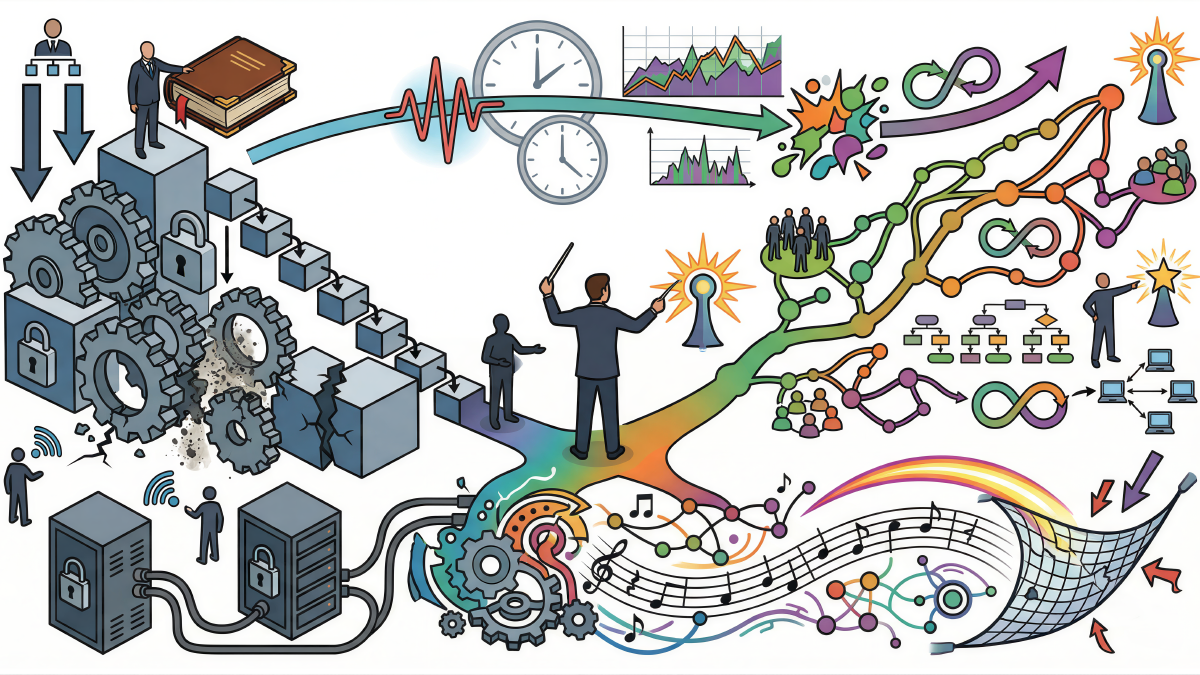
Introduction: The Paradigm Shift from Mechanistic Governance to Organic Cadence#
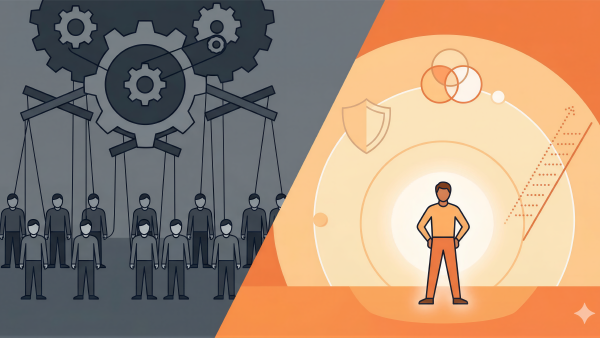
For over a century, architectural philosophy governing organizational behavior, strategic management, and systemic design has been heavily anchored in mechanistic, deterministic paradigms. Rooted in the industrial methodologies of the early twentieth century, this traditional perspective views the enterprise, and, indeed, broader societal and biological structures, as complex machines that demand rigid rules, highly specified processes, and centralized control mechanisms to ensure efficiency and high performance. Under this framework, performance scaling is treated as an algorithmic problem: if a system is faltering, the conventional response is to write a stricter rule, establish a more rigid protocol, and enforce tighter oversight. However, the contemporary landscape of high-velocity markets, technological interconnectedness, and profound environmental volatility has exposed the severe, often catastrophic limitations of this traditional framework. As the foundation of competitive advantage shifts from the static exploitation of resources to the dynamic seizing of fleeting opportunities, high performance is increasingly understood not through the lens of rigid regulations but through the fluid cadence of temporal alignment and adaptive heuristics.
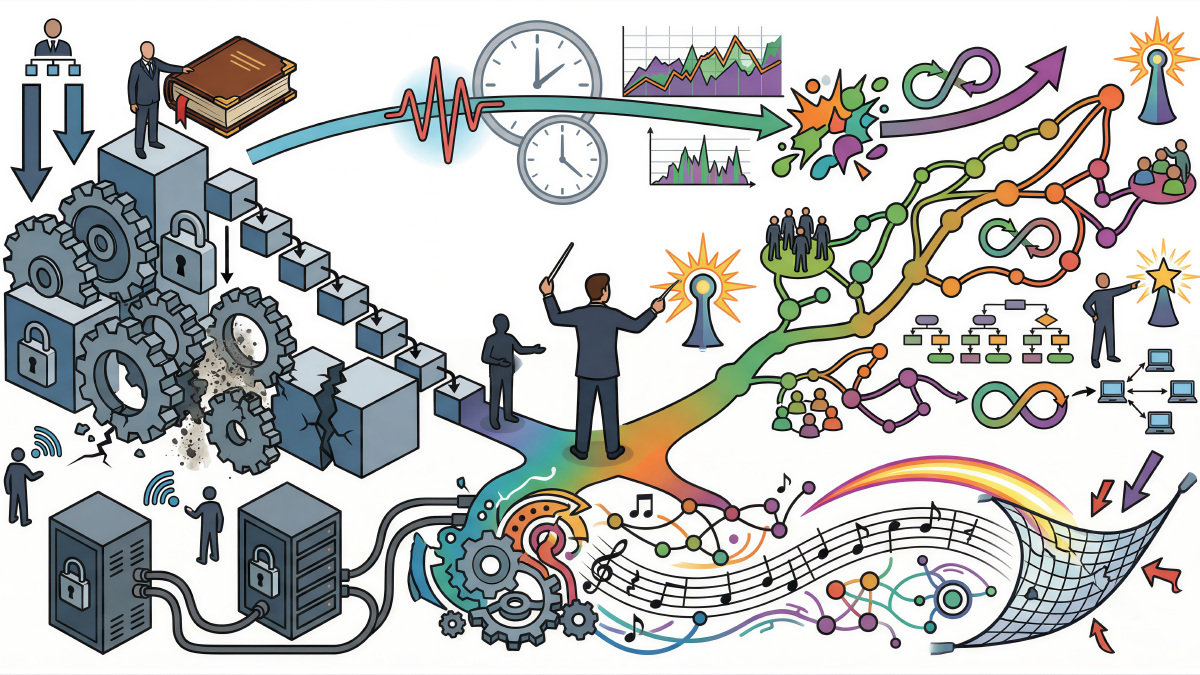
The conceptualization of the “Symphony of Systems” posits that true high performance requires rhythm rather than rules. It suggests that organizations, societies, and even biological entities function most effectively when they operate as complex, interconnected orchestras rather than isolated, deterministic engines. This paradigm shift necessitates a transition from algorithmic, compliance-driven management to rhythmic, heuristic-driven leadership. In this context, human performance and organizational scalability do not derive from a single, rigid way of thinking or an exhaustive manual of procedures. Instead, performance scales through a versatile range of powerful, adaptable mindsets, some geared toward exploration, others toward integration, decision-making, or recovery. A modern organization involves myriad components, individual actors, and diverse teams interacting simultaneously across global networks. The conductor of a grand orchestra does not micromanage the fingering of every individual instrument; rather, the conductor establishes the overarching values, the tempo, and the dynamic cadence, guiding the collective rhythm so that the entire composition remains cohesive.
The underlying thesis of this article is that when boundaries blur and dynamic complexity increases, attempting to govern a system through exhaustive, complicated rules leads to brittleness, bureaucratic paralysis, and a devastating loss of functional intent. Conversely, relying on simple rules and temporal entrainment allows systems to breathe, adapt, and self-organize at the edge of chaos. This article provides an exhaustive, multi-disciplinary analysis of why and how high-performing entities achieve their objectives through the orchestration of rhythm and simple heuristics. By synthesizing research across complexity theory, biological ecosystems, cyber-physical architectures, temporal pacing, and strategic management, the subsequent analysis elucidates the profound theoretical mechanisms that govern dynamic systems. It explores the systemic pathology of rigid rules, the strategic efficacy of simple heuristics, the critical role of organizational rhythm, and the precise ways in which complex systems naturally entrain to environmental pacesetters to maintain ultimate resilience.
The Axioms of Complexity Theory and Systems Thinking#
To fundamentally comprehend why rhythm and simple rules systematically outperform rigid protocols in dynamic environments, it is imperative to examine the foundational principles of Complexity Theory and Complex Adaptive Systems (CAS). A complex system is formally defined as an architecture that exhibits nontrivial emergent and self-organizing behaviors. Unlike merely complicated systems, which may possess thousands of moving parts but operate in a predictable, linear, and deterministic fashion (such as a mechanical clock or a combustion engine), complex systems are composed of independent, interacting agents whose collective, macroscopic behavior cannot be predicted merely by analyzing the individual micro-components in isolation.
Emergence, Dynamic Complexity, and the Illusion of Control#
The central inquiry of complexity sciences concerns how emergent, self-organized behavior arises from seemingly uncoordinated local interactions. In a Complex Adaptive System, macroscopic behavior is highly sensitive to the interconnectedness, information flow, and feedback loops operating between autonomous agents. Systems thinking illuminates these interdependencies, demonstrating conclusively that an organization is not an isolated, hermetically sealed entity. It is a highly porous architecture that bleeds into its environment, interacting continuously with suppliers, customers, regulatory bodies, and ecological variables. Because these systems are characterized by dynamic complexity and nonlinear dynamics, attempting to control them through centralized, rigid regulations is both mathematically and practically futile. A disruption at a single node, such as a localized supply chain failure or an isolated factory closure, ripples through the network, affecting distant partners and destabilizing the entire equilibrium.
The pervasive fallacy that simple rules naturally lead to simplistic, stable system behavior, or conversely, that complex, highly volatile environments demand heavily complicated rules, has been thoroughly debunked by computational models and advanced simulations. A classic illustration of this phenomenon is “Langton’s Ant,” a hypothetical computational model in which a digital “ant” moves through a grid of cells according to highly rudimentary, predetermined rules governing the color of the cell it occupies. Despite the extreme simplicity of the underlying programming, the macroscopic behavior of the ant’s trajectory becomes wildly unpredictable and infinitely complex, eventually generating highly structured emergent highways that could not have been predicted from the initial conditions. Similarly, in the mathematical analysis of Cellular Automata (CA), dynamic systems are governed by spatially rigid rules defined by simple numerical parameters, such as the distance of influence exerted by neighbors (r) and the number of available states (k). Yet, these systems generate trajectories and chaotic attractors of immense intricacy, proving that massive complexity is an emergent property of simple local rules interacting over time.
Biological Metaphors: Boids, NetStarPeople, and Decentralized Autonomy#
The transition from rigid, centralized control to decentralized, heuristic-driven management is elegantly modeled in the algorithmic simulation known as “Boids,” which mathematically models the flocking behavior of birds and schooling behavior of fish. In this model, high-performance, synchronized movement, which appears highly choreographed and centrally directed from the outside, is achieved entirely through self-organization. No central leader is dictating the flock’s coordinates. Instead, each agent is programmed with just three simple rules: first, maintain a minimum distance from other objects in the environment, which translates into a basic collision-avoidance heuristic. Second, attempt to match velocities with neighboring boids to ensure systemic speed alignment. Third, attempt to move toward the perceived center of mass of neighboring boids, which maintains flock cohesion and proximity.
These three fundamental heuristics enable the entire flock to navigate complex physical obstacles, evade sudden predatory attacks, and maintain structural integrity without any single agent possessing a comprehensive map of the overall trajectory. Translated into the context of organizational behavior, this implies that granting individuals autonomous power bounded by a few strategic heuristics allows the broader corporate structure to self-organize, innovate, and navigate rapid environmental shifts far more effectively than centralized planning.
This tension between centralized rules and decentralized autonomy is further explored in participatory simulations such as the NetStarPeople approach. In these human-in-the-loop computational models, researchers observe that when global communication is perfectly available, participants naturally gravitate toward centralized, rigidly controlled strategies. However, as communications are restricted to local, noisy interactions, which accurately mirror real-world business environments, participants are forced to abandon centralized control and develop highly decentralized strategies based on simple rules. This activity provides a profound context for understanding the “organic feel” of complex human systems, demonstrating that the optimal operational state for a high-velocity organization is in the nuanced middle ground between rigid, algorithmic rules and total anarchic rulelessness. A Complex Adaptive System learns dynamically from experience. It continuously adjusts to environmental fluctuations by prioritizing pattern recognition and interrelationships over linear, deterministic cause-and-effect calculations.
To understand the divide between these two operational philosophies, it is helpful to look at their architectural distinctions alongside a real-world application. A perfect illustration of this paradigm is the contrast between traditional Waterfall project management (a Mechanistic System) and Agile methodologies (a Complex Adaptive System) in software development.
Here is how the theoretical framework merges with this practical example:
Architectural Model
Mechanistic System (Rigid Rule-Driven): Characterized by a hierarchical, top-down, highly centralized, and algorithmic structure.
- Real-World Application: In a traditional Waterfall approach, this manifests as a centralized project plan mapped out months in advance by a single authority, utilizing rigid timelines and distinct, non-overlapping phases.
Complex Adaptive System (Rhythm & Heuristic-Driven): Operates as a biological, networked, decentralized, and organic structure.
- Real-World Application: In Agile development, this is seen through small, cross-functional, and autonomous teams working in a decentralized, collaborative environment to solve problems organically as they arise.
Control Mechanism
Mechanistic System: Relies on exhaustive, rigid rules, extensive manuals, and strict compliance protocols.
- Real-World Application: Waterfall projects require exhaustive requirement documents (often hundreds of pages long) and strict change-control boards that dictate every technical step to ensure compliance before development even begins.
Complex Adaptive System: Governed by simple rules, broad boundary conditions, and behavioral heuristics.
- Real-World Application: Agile frameworks operate on simple boundaries, such as short, two-week work cycles (sprints) and 15-minute daily alignment meetings, guided by overarching goals rather than rigid operational manuals.
Response to Stress
Mechanistic System: Exhibits brittleness, systemic fracture at the point of anomaly, and a slow recovery process.
- Real-World Application: If market conditions change or new technology emerges halfway through a Waterfall project, the rigid plan fractures. Work halts, requirements must be rewritten from scratch, and recovery is incredibly slow and expensive.
Complex Adaptive System: Defined by adaptability, self-organization, and emergent resilience.
- Real-World Application: An Agile system naturally absorbs stress. If market dynamics shift, the team easily adjusts its priorities for the very next sprint, self-organizing around the new reality without experiencing a systemic breakdown.
Leadership Function
Mechanistic System: Leaders focus on dictating the “how,” micromanaging execution, and ensuring absolute compliance.
- Real-World Application: The traditional Project Manager assigns highly specific, individualized tasks and demands absolute adherence to the original, unchanging master schedule.
Complex Adaptive System: Leaders focus on establishing the “why,” setting the strategic rhythm, and orchestrating alignment.
- Real-World Application: Agile leaders (like Product Owners) establish the vision and set the strategic rhythm through sprint goals. They orchestrate team alignment but trust autonomous engineers to figure out the “how” themselves.
Predictability Matrix
Mechanistic System: Offers high predictability in stable, low-velocity environments, but faces total failure in volatility.
- Real-World Application: A Waterfall project’s schedule and budget are highly predictable only if the market and user needs remain perfectly stable from start to finish, a rarity in modern tech.
Complex Adaptive System: Shows low predictability of micro-events, but extreme robustness and reliability of macro-outcomes.
- Real-World Application: You cannot predict exactly what a specific developer will code on a random Tuesday afternoon (low micro-predictability), but the macro-outcome, reliably delivering a valuable, working product to users, is highly robust.
The Systemic Pathology of Rigid Rules#
If complex systems naturally thrive on simple rules and adaptive, rhythmic cadences, it follows logically that the imposition of rigid rules in such environments acts as a systemic pathogen. Systems encumbered with rigid rules, strict vertical lines of authority, extensive departmental divisions, and multiple escalation points inevitably suffer from stifled creativity, bureaucratic paralysis, and an absolute inability to innovate at speed. While strict regulations and hierarchical routines may temporarily enforce a veneer of order, short-term predictability, and a superficial sense of community, they inherently impair the organization’s structural ability to respond to novel stimuli or external shocks.
Tectonic Friction, Legal Obsolescence, and Systemic Brittleness#
From a macro-systemic stability perspective, resilience is paradoxically not promoted by enforcing strict or rigid rules that attempt to freeze a system into an artificial state of equilibrium. This concept is vividly illustrated by drawing an analogy to geological mechanics. In the Earth’s crust, the buildup of friction between tectonic plates can be released organically through a continuous series of small, adaptive tremors, or it can be rigidly constrained until the tension exceeds a critical threshold, resulting in a massive, catastrophic earthquake. Applying this principle to organizational behavior and legal frameworks, such as the arguments presented in Richard Epstein’s “Simple Rules for a Complex World”, preserving overall system stability requires allowing for micro-adaptations and minor daily fluctuations. Replacing complicated legal frameworks with simple rules harnesses the informational advantages of private actors, allowing them the discretion to adapt to changing circumstances.
In highly dynamic environments, the application of highly complicated, static rules leads to rapid structural obsolescence. The rules quickly become detached from material reality, trapping organizations in processes that no longer align with market conditions. Furthermore, rigid rules create a unique vulnerability to exploitation, malicious compliance, and bad-faith circumvention. When rigid rules are explicitly known and inflexibly applied, it becomes procedurally simple for fraudulent or self-serving actors to carefully skirt the exact boundaries without technically violating the precise letter of the law. In contrast, managing through complex standards or broad strategic heuristics requires human judgment, making the system far more resilient against technical loopholes and opportunistic behavior.
The Stupidity Paradox and Maladaptive Compliance#
At the individual and psychological level, the enforcement of rigid rules frequently triggers a highly maladaptive response known in behavioral science as “pliant substitution.” Modern psychological research demonstrates that engaging in positive, health-promoting actions requires following basic, flexible heuristics, for example, simple rules to “eat balanced meals” or “exercise regularly”. However, the exact manner in which an individual follows these rules determines the psychological outcome. Consider an individual who shifts away from rigid dietary rules toward a supposedly flexible, body-based tracking system. If the individual interprets this new invitation as a rigid rule to be executed with absolute precision, they will begin documenting hunger levels and meal-satisfaction scores with the same toxic rigidity as in their previous diet. The surface form of the behavior has technically changed, but its underlying psychological function, obsessive compliance to perceived external standards rather than tuning into internal biological rhythms, remains completely unchanged.
In a corporate context, this phenomenon manifests as what organizational scholars term “the Stupidity Paradox.” Organizations that enforce quasi-totalitarian sets of internal beliefs, rigid daily rituals, and militaristic corporate languages create environments in which highly intelligent individuals are caught up in proving their total compliance rather than generating actual value. A historical example can be found in the early management culture at Apple under John Sculley, where executives reported feeling intense guilt if they had not done their utmost during the day and were not physically exhausted when going to bed. In such cultures, the rigid ritual of personal sacrifice and the militaristic pursuit of market share supersede rational strategic pacing. Employees engage in chronic presenteeism, conflating the rigid execution of an exhausting routine with actual strategic efficacy. This superficial compliance masks deep operational inefficiencies, erodes the capacity for critical doubt, and leads to systemic burnout, illustrating that behavior driven by rigid rules often prioritizes compliance over the reality of sustainable performance.
Educational and Developmental Failures#
The detrimental, cascading effects of rigid rules are also acutely observable in learning ecosystems and human capital development. Educational institutions that rely exclusively on “managing and instilling” behavior through highly rigid structures that emphasize absolute discipline and obedience above all else often produce actors who exhibit severe maladjustment when eventually thrust into autonomous environments. When students or junior employees are conditioned entirely by rigid rules, they lose the capacity for system thinking, problem-solving, and independent action. When they transition into platforms that provide multi-faceted services and require self-guidance, such as progressive universities or modern high-tech workplaces, they experience profound cultural shock and structural misunderstanding. Simply encouraging people to act differently or to “be innovative” is entirely insufficient; the organization’s architectural design must actively facilitate independent thought by permanently replacing rigid rules with simple boundary constraints and multi-faceted guidance.
Strategy as Simple Rules: Navigating the Edge of Chaos#
To navigate high-velocity markets effectively, organizations must abandon traditional strategy frameworks built on detailed, long-term predictions. In ecosystems characterized by extreme volatility, detailed predictions are inherently flawed. Instead, successful modern enterprises rely on the strategic paradigm of “Strategy as Simple Rules,” a framework extensively researched and pioneered by management scholars Kathleen Eisenhardt and Donald Sull. This approach asserts that the greatest opportunities for outsized competitive advantage exist precisely within market confusion and chaos, requiring a few crucial strategic processes guided by simple, robust heuristics rather than exhaustive operational manuals.
Bounded Autonomy and the Inverted-U of Structure#
The fundamental premise of the simple rules framework is that, in complicated, rapidly shifting environments, the strategy itself must remain remarkably simple to enable rapid cognitive processing and swift execution. High performance depends critically on continuously balancing the inherent trade-off between operational flexibility and scale efficiency. Extensive empirical studies and computational complexity modeling demonstrate a consistent inverted-U relationship between the amount of organizational structure and overall firm performance. Organizations operating with a moderate number of simple rules, a state characterized as “semi-structure”, consistently outperform both the firms with too little structure (which descend into chaos) and the firms with too much structure (which suffer from bureaucratic rigidity). Operating at this unstable, dissipative critical point, often termed the “edge of chaos”, enables tech firms and legacy enterprises alike to quickly create high-quality, innovative products while rapidly responding to unforeseen market shifts.
Simple rules serve as rational heuristics developed over time through both vicarious observation and direct experiential learning. They encode deep tacit knowledge into explicit, easily shareable formats without suffocating the improvisation necessary for discovery. These heuristics provide the essential guardrails within which managers can safely pursue fleeting opportunities, significantly limiting critical errors by offering tested decision-making patterns while simultaneously facilitating the cognitive integration of paradoxical tensions.
The Five Typologies of Simple Strategic Rules#
The deployment of simple rules is not a haphazard reduction of corporate details or a generic call to “keep it simple.” It is a highly specific, historically informed codification of strategic intent. Eisenhardt and Sull identify five distinct categories of simple rules that govern strategic execution across high-performing entities:
The first category involves How-To Rules. These heuristics govern the precise execution of key strategic processes, dictating the fundamental operational philosophy without prescribing every micro-step of the workflow. For instance, an organization dedicated to poverty alleviation and social justice might adopt a strict how-to rule stating that all advocacy investments must be passionately committed to supporting the direct agency of excluded communities, forbidding top-down paternalistic interventions. In the realm of high-technology hardware, Apple has historically adhered to how-to rules that dictate that customized proprietary products and seamless user interface design must always take absolute precedence over mere technological novelty.
The second category comprises Boundary Rules. These rules define the strict limits of acceptable opportunities, ensuring the organization does not dissipate its finite energy and capital on unviable, distracting paths. A boundary rule in policy advocacy might require that any major investment of time must have a realistic, demonstrably measurable chance of winning a policy change or shifting the public agenda, preventing the organization from engaging in purely performative activism. In a corporate setting, a cross-functional team might implement a boundary rule requiring that any proposed internal initiative remove obstacles to growth, provide immediate benefits, reuse existing corporate resources, and require no up-front capital costs. These specific constraints force extreme creativity and rapid triage of ideas.
The third category relies on Priority Rules. When resources, time, and attention are scarce, priority rules dictate where capital is deployed to maximize impact. For example, large philanthropic organizations tackling global health crises face the agonizing reality that any disease they deprioritize will result in fatalities. To make these mathematically difficult choices, they use simple priority rules based on Disability-Adjusted Life Years (DALYs), which quantify the years of life lost to death or disability for each disease. This provides a crude but highly effective heuristic for comparing diseases. Furthermore, they apply priority rules to focus exclusively on the poorest demographics, intentionally ignoring diseases that predominantly affect affluent nations (such as childhood obesity), thereby forcing brutal but necessary strategic alignment.
The fourth category involves Timing Rules. These rules synchronize the organization’s internal actions with the rhythms of the external environment, dictating the strategic cadence of product releases, geographic expansions, or market entries. Timing rules ask critical questions such as, “What specific political or organizational window of opportunity will this initiative take advantage of?” They act as pacers that prevent the organization from moving too fast and exhausting itself, or moving too slowly and missing the market window entirely.
The fifth, and perhaps most vital, category consists of Exit Rules. Exit rules predetermine the exact conditions under which an organization will ruthlessly abandon a failing project, sunset a legacy product, or exit a stagnant market. By establishing precise exit criteria before emotional attachments form and financial sunk costs accumulate, organizations prevent the deadly trap of resource entrapment in declining ventures.
Strategic Formation and Daily Weaving#
For a simple rules strategy to function, its deployment must be religiously consistent. While the specific rules will naturally evolve as the company scales and the market matures, changing them too frequently undermines their critical stabilizing function and introduces organizational cognitive load. Effective, simple rules are highly specific, drawn directly from the organization’s historical scars and successes, and, crucially, formulated by the users who must execute them, not dictated unthinkingly by disconnected executive suites or external consultants. When executives consolidate their collective experience into these semi-structures, they weave a holistic strategic fabric that translates high-level hypotheses about value creation directly into the day-to-day decisions that matter most, transforming a strategy from a dusty binder on a shelf into a living, breathing operational cadence.
The Symphony of Systems: Biological and Cyber-Physical Metaphors#
The assertion that “The Symphony of Systems” requires rhythm overrules is perhaps best understood by examining systems that exist outside of traditional corporate management: human biology and advanced cyber-physical architectures. In both domains, treating the entity as a complicated machine governed by isolated metrics inevitably leads to systemic failure, whereas treating it as an interconnected ecosystem governed by rhythms leads to optimal health and high performance.
The Biological Ecosystem: Homeostasis and Hormone Optimization#
The human body is the ultimate complex adaptive system, a remarkable biological machine composed of an intricate dance of cells and a symphony of interdependent systems working in perpetual harmony. Imagine the body as a high-performance vehicle constantly moving, thinking, and adapting to environmental stressors. It requires the precise coordination of fluids and electrical signals, heavily dependent on the proper balance of electrolytes. Electrolytes are not isolated chemical components; they are deeply interdependent elements that collectively ensure the efficient operation of physiological systems ranging from the microscopic level of cellular osmosis to the macroscopic performance of muscular contraction. The body manages this not through rigid, conscious rules, but through homeostasis, a highly precise rhythm of self-regulation that strives to maintain internal equilibrium.
When medical practitioners attempt to treat the human body by rigidly applying isolated rules and statistical averages, they frequently fail their patients. This disconnect defines much of modern conventional hormone therapy. Practitioners often treat patients suffering from chronic exhaustion, brain fog, and vanishing libido by looking at isolated lab numbers. If a patient’s total testosterone or estradiol falls within the statistical “normal” range, the symptoms are often dismissed because the rules dictate that the patient is fine. However, the human body does not operate optimally at average; it thrives when all systems are aligned in rhythm. Hormones are not isolated levers that can be pulled to fix specific problems; they operate within a deeply interconnected ecosystem that includes gut health, sleep architecture, stress responses, and metabolic function.
Focusing solely on isolated hormone levels misses the symphony of systems that determine how those hormones function in vivo. For instance, a patient may possess a “normal” total testosterone level. Still, if the vast majority of it is bound by elevated Sex Hormone-Binding Globulin (SHBG) due to chronic systemic inflammation, the bioavailable testosterone, the actual currency the body can spend, is fundamentally depleted. Similarly, measuring estradiol and progesterone in isolation misses the critical ratio between them; a disruption in this ratio causes estrogen dominance, leading to anxiety and disrupted sleep. True high-performance optimization, whether in human vitality or corporate management, requires a personalization framework that considers energy rhythms, ecosystem balance, and systemic interactions, rather than measuring individual notes and ignoring the entire chord.
Cyber-Physical Systems and Interoperability Imperative#
This biological reality scales directly to advanced industrial technology. A modern smart factory in the era of Industry 4.0 is not a single machine paired with a single digital twin; it is an entire orchestra, a profound system of systems. Building a factory-scale digital twin poses an immense architectural challenge, requiring the orchestration of dozens or hundreds of highly sophisticated components. A fundamental design choice in this architecture is locating where the “thinking” happens, whether sensor data should be routed to a centralized cloud (analogous to rigid central planning) or analyzed locally at the “edge” right next to the machine (analogous to decentralized heuristics).
In these high-performance digital environments, absolute temporal synchronization is quite literally a matter of life and death. Consider a high-speed packaging line where a digital twin is responsible for ensuring physical safety. A cyber-attack that manages to introduce a seemingly insignificant delay, a mere 3 milliseconds, into the machine’s stop command can have utterly devastating physical consequences. During that microscopic window of time, a fast-moving industrial belt can travel just far enough to eliminate the designed mechanical safety margin, resulting in a dangerous physical collision. This illustrates that in integrated systems, perfection lies in temporal rhythm and cadence, not just in the eventual execution of the correct code.
In the corporate technology stack, this exact principle applies to information technology and marketing operations. Marketing automation platforms and enterprise software cannot function as isolated islands; they must exist as an archipelago of seamlessly interconnected solutions. Orchestrating harmony between modern SaaS platforms and legacy databases requires investing in bridges of interoperable technologies, standardized data formats, and open APIs, allowing data to dance freely across disparate systems. When systems communicate with rhythm and synergy, individual capabilities are transformed into collective superpowers, creating a digital nervous system for physical operation.
Organizational Rhythm, Cadence, and Temporal Pacing#
While simple rules provide the spatial boundaries and logical heuristics for behavior, high performance also requires mastery of the temporal dimension. Traditional management theories frequently overlook the dimension of time, focusing primarily on what happens within a team or identifying structural inefficiencies. However, a temporal lens fundamentally alters this perspective by focusing on when behaviors arise, how quickly they unfold, and the specific temporal cycles with which they are aligned.
Temporal Schemata and the Construct of Time#
The conceptualization of time in organizations goes far beyond the mere tracking of billable hours or project milestones. Temporal patterns, defined as recurring sequences of events, activities, and behaviors, shape how work is fundamentally organized, experienced, and sustained over the long term. This encompasses distinct scholarly notions of rhythm, pace, and temporal structures. The precise way individuals interpret, internalize, and respond to these organizational patterns is governed by “temporal schemata”, internal cognitive frameworks that dictate an actor’s understanding of time, urgency, deadlines, and operational pacing.
The origin and nature of the pacer can be used to broadly categorize temporal pacing. Endogenous pacers emanate internally, driven organically by the phases of task completion or the biological rhythms of the workforce. In contrast, exogenous pacers are powerful external temporal markers, such as global market cycles, academic calendars, or competitor product launches. The deliberate use of time as a discrete metric and a punctuation device to simultaneously evaluate and motivate work deeply influences how teams construct their internal rhythms.
Punctuated Equilibrium and Rhythmic Leadership#
The profound, non-linear impact of temporal pacing on group dynamics was famously elucidated in Connie Gersick’s seminal studies on team development and project management. Gersick demonstrated a punctuated model of change, proving that teams working on creative projects under strict deadlines do not progress in a smooth, steady, incremental fashion. Instead, they quickly settle into an initial mode of operation and remain essentially locked in that state of stasis until precisely the mathematical midpoint of their allotted time. At this exact midpoint, a sudden, punctuated transition occurs, a dramatic flurry of adaptation, structural reorganization, and rapid progress, before the team settles into a new, accelerated operational rhythm to carry them through the remainder of the project. This rhythm is a natural emergent property of human groups constrained by the dimension of time.
“Rhythmic leadership” takes this psychological reality a step further by consciously shaping the organizational rhythm through the thoughtful, deliberate calibration of execution and reflection cycles. In hyperactive, high-velocity corporate systems, there is a pervasive and dangerous tendency toward “urgency addiction,” where teams move so fast to meet immediate goals that they systematically outrun their own strategic coherence. Effective rhythmic leadership modulates the tempo of enterprise decision-making by deliberately introducing pauses, often conceptualized as “white spaces” or agile retrospectives, into the operational system. These deliberate pauses ensure that rapid execution is balanced with necessary cognitive reflection, shifting the organization away from frantic, reactive urgency toward a sustainable, proactive strategic cadence. By operating through a lens of “rhythm, not rules,” leaders establish a cadence that actively reduces operational noise and dramatically increases forward momentum.
The Enabler Intrapreneur#
Maintaining this cadence often falls to highly unique actors within the corporate structure, sometimes referred to as “enabler intrapreneurs.” These individuals may act as idea champions or networkers, aligning diverse resources and technologies toward specific business cases. Crucially, enabler intrapreneurs often hide in the background of the organizational cadence. They operate covertly, bridging disparate organizational environments, smoothing over bureaucratic friction, and applying systems thinking to move raw concepts beyond the inception stage. They are the human embodiment of the organization’s rhythm, ensuring the tempo does not drop when formal rules fail.
Key Temporal Concepts in Organizational Rhythms#
To fully grasp how time functions within these systems, these core temporal concepts map out the relationship between time management and strategic performance:
- Temporal Pacing
- Definition: Using time as a distinct metric and punctuation device to motivate and evaluate workflow.
- Strategic Impact on High Performance: Modulates team energy expenditure; prevents systemic burnout; aligns task completion with critical market deadlines.
- Strategic Cadence
- Definition: The thoughtful, deliberate calibration of reflection and rapid execution cycles.
- Strategic Impact on High Performance: Shifts organizational focus from toxic urgency addiction to sustainable, high-velocity execution.
- Punctuated Equilibrium
- Definition: Discontinuous periods of rapid structural change interrupt long periods of operational stasis.
- Strategic Impact on High Performance: Facilitates massive structural reorganization and paradigm shifts at critical temporal midpoints.
- Endogenous Rhythms
- Definition: Internal pacing is driven purely by the task’s organic nature or biological needs.
- Strategic Impact on High Performance: Allows complex, creative tasks to dictate necessary time allocation, fostering deep work and flow states.
The Dance of Entrainment: Synchronizing with Environmental Pacesetters#
If temporal pacing provides the internal metronome for an isolated team, “entrainment” is the profound process by which that internal metronome synchronizes with the broader symphony of the external macroeconomic and social environment. In organizational behavior and chronobiology, entrainment is formally defined as the adjustment of the pace or cycle of one activity to match or synchronize with that of another activity, modifying the phase, periodicity, magnitude, or speed to achieve total harmony.
Organizational-Environmental (O-E) Fit and Misfit#
In complex systems, this synchronization often occurs organically. Extensive research suggests that individuals and entire organizations naturally tend to “fall into rhythm” with dominant external forces over time. However, entrainment must also be viewed as a highly deliberate, critical strategic process. Astute organizational actors actively scan their environments to interpret specific temporal cues and systematically adjust their internal behaviors to synchronize with powerful environmental pacesetters, such as supply chain cadences, regulatory shifts, funding cycles, or alliance partner schedules. While internal actors maintain some control over their daily temporal patterns, their overarching strategic priority is to identify and ruthlessly align with these exogenous pacers.
The concept of Organizational-Environmental (O-E) temporal fit is positioned as a vital contingency element for sustained high performance. Temporal misfit, a state in which an organization’s internal rhythm is chronically desynchronized from the demands of its environment, inevitably leads to severe operational inefficiencies, substandard financial performance, and the potential for the enterprise’s gradual demise over time. For example, a software product development team that finalizes a groundbreaking application two months after the primary industry trade show has fundamentally failed to align with the market’s rhythm; despite the quality of the work, the innovation is rendered strategically inert because it missed the market’s rhythm. Teams that attempt to stubbornly “dance to the beat of a different drum”, or worse, teams that fail to locate the overarching organizational rhythm, will ultimately pay severe consequences in productivity, market relevance, and survival.
Controlled Entrainment and Temporal Self-Discipline#
In many contexts, actors take heavily institutionalized temporal structures completely for granted, for instance, the fiscal budgeting year, standard banking hours, or the academic semester. In these scenarios, rather than attempting to negotiate or challenge the unchangeable macro-structure, all internal efforts are directed toward achieving successful entrainment. Navigating these immovable pacers requires immense “temporal self-discipline.” This phenomenon occurs when individuals impose highly detailed, self-created temporal micro-structures on their future behavior to reproduce a time-conscious operational self successfully.
This self-discipline frequently materializes as highly detailed temporal plans and the carving out of coordinated physical or digital spaces designed solely to keep teams on track. For instance, accountants navigating the grueling, unforgiving rhythm of the corporate budgeting process utilize aggressive temporal self-discipline to gain a psychological sense of control over their chaotic work environment, a methodology for achieving “controlled entrainment” to an otherwise overwhelming temporal norm. When severe temporal disruptions inevitably occur, this fragile controlled entrainment is deeply challenged, often forcing actors out of their proactive rhythms and into a reactive, passive mode of survival.
Entrainment as a Strategic Trigger for Change#
Paradoxically, while the process of entrainment generally stabilizes and reinforces existing team routines and habits, it simultaneously creates unique, powerful opportunities for structural change. Entrainment inevitably creates distinct team rhythms, including natural pauses or lulls in activity immediately after peak synchronization points (e.g., the quiet period following a major product launch or the end-of-year financial close). These pauses represent critical structural voids. While pauses alone are insufficient to compel a complacent team to change, highly effective managers employ temporal design to leverage these natural lulls as explicit triggers for reassessment and transformation. By deeply understanding the external temporal context, which acts as an external pacer, a setter of rhythms, a creator of strategic windows of opportunity, and a source of inevitable interrupts, leaders can intentionally manipulate these pauses to safely dismantle problematic routines and institute higher-performing paradigms before the next cycle begins.
Heuristics and Rhythm in Crisis Management#
The ultimate test of the “Symphony of Systems” philosophy, the reliance on rhythm, cadence, and simple rules over rigid algorithms and extensive protocols, is most clearly visible in high-stakes, crisis-driven environments. In high-velocity landscapes characterized by immense unpredictability and sudden shocks, teams must effectively pace themselves while absorbing a relentless barrage of unexpected events.
Shifting from Protocols to Heuristics Under Threat#
In standard, low-volatility conditions, detailed protocols and complicated standard operating procedures may function adequately, providing a baseline of safety. However, as the rate of environmental change accelerates, the boundaries of daily operations expand, necessitating a rapid abandonment of rigid rules and a pivot toward heuristic thinking. This dynamic is starkly evident in life-or-death medical environments. While there are incredibly strict protocols governing procedures like general anesthesia, when a sudden, unexpected complication arises on the operating table, elite medical teams immediately abandon the linear, rigid protocol and switch entirely to heuristics. They instantly assess the sensory data, communicate rapidly, and alter their approach entirely based on real-time feedback, guided by the simple boundary rules of patient stabilization rather than by a step-by-step bureaucratic manual.
During widespread systemic crises, such as the acute phases of the COVID-19 pandemic, organizations and medical practices that possessed the cultural flexibility to discard rigid frameworks in favor of heuristic-driven problem-solving rapidly demonstrated vastly superior adaptability and survival rates. Utilizing simple visual flowcharts and boundary rules, rather than hundreds of pages of detailed contingency plans, allows teams to fully engage their cognitive resources in active, lateral problem-solving rather than rote compliance checking. In such extreme environments, the fundamental function of leadership must dramatically shift. The leader must pull back from granular micromanagement, providing only the overarching “why,” the broad directional “what,” and profound structural support. By doing so, they empower the team members to figure out the “how” through their autonomous expertise and rhythmic entrainment to the crisis at hand.
Shared Temporal Mental Models for Inter-Organizational Success#
For cross-functional or inter-organizational teams, such as corporate alliance management teams, joint venture task forces, or multi-disciplinary surgical units, sustained high performance requires the rapid, accurate establishment of “shared temporal mental models”. These shared cognitive frameworks ensure that every member of the network, regardless of their specific discipline, possesses the same understanding of the task’s temporal difficulty, the required pacing, and the precise sequence of operational hand-offs. The relationship between shared temporal experience and team efficiency is profound. Empirical research indicates that as the difficulty of a task increases, the necessity for a unified rhythm and seamlessly synchronized heuristics becomes the primary determinant of ultimate success. If the team shares a mental model of the rhythm, they can execute a complex maneuver flawlessly; if their temporal schemata are misaligned, the system will collapse regardless of individual competence.
Conclusion#
The pursuit of high performance within modern organizational structures requires a fundamental, irreversible departure from the industrial legacy of complex, rigid rules. As the complexity of the global macroeconomic, technological, and biological environments deepens, deterministic control mechanisms become increasingly obsolete. The imposition of rigid, algorithmic protocols in volatile environments generates severe organizational brittleness, devastating bureaucratic friction, and widespread human burnout, as actors are forced to prioritize pliant substitution and superficial compliance over actual strategic value creation. The empirical evidence overwhelmingly demonstrates that complex adaptive systems, whether they be the interconnected physiological ecosystems of the human body, the algorithmic flocking of cyber-agents, the zero-latency architectures of digital twin smart factories, or multinational corporate enterprises, do not thrive under micromanagement. They thrive when operating at the edge of chaos.
The “Symphony of Systems” paradigm reveals that sustained, scalable high performance requires rhythm, not rules by deploying the strategy of simple rules, establishing clear, experiential heuristics for how to act, where to draw boundaries, how to prioritize ruthlessly, when to time strategic movements, and exactly when to exit failing ventures, organizations grant their constituent agents the bounded autonomy necessary for rapid innovation and lateral problem-solving. These simple rules serve as the architectural framework within which the true driver of performance can take hold: temporal pacing and organizational entrainment.
Ultimately, an organization must be viewed not as a deterministic machine to be programmed, but as a living orchestra to be conducted. Leadership in this modern context involves establishing the strategic cadence, preventing toxic-urgency addiction by inserting rhythmic pauses and agile retrospectives, and ensuring that the enterprise’s internal metronome is perfectly entrained to the relentless pacesetters of the external environment. When an organization successfully balances the decentralized flexibility of simple heuristics with the disciplined, synchronized rhythm of temporal entrainment, it achieves a dynamic equilibrium. This rhythmic equilibrium is uniquely capable of absorbing massive external shocks, navigating unprecedented complexity, and sustaining elite performance across the magnificent symphony of its systems.
References#
- Akpinar, H., & Özer-Çaylan, D. (2022). Achieving organizational resilience through complex adaptive systems approach: A conceptual framework. Management Research: Journal of the Iberoamerican Academy of Management, 20(4), 289–309. https://doi.org/10.1108/mrjiam-01-2022-1265
- Alvesson, M., & Spicer, A. (2016). The stupidity paradox: The power and pitfalls of functional stupidity at work. Profile Books.
- Aziz, S., Jung, D. W., Zaman, U. K. U., & Aqeel, A. B. (2023). Digital twins in smart manufacturing. In U. K. U. Zaman, A. Siadat, A. A. Baqai, K. Naveed, & A. A. Kumar (Eds.), Handbook of manufacturing systems and design: An Industry 4.0 perspective (pp. 53–68). CRC Press. https://doi.org/10.1201/9781003327523-6
- Barasa, E., Mbau, R., & Gilson, L. (2018). What is resilience and how can it be nurtured? A systematic review of empirical literature on organizational resilience. International Journal of Health Policy and Management, 7(6), 491–503. https://doi.org/10.15171/ijhpm.2018.06
- Begun, J. W., & Jiang, H. J. (2020). Health care management during Covid-19: Insights from complexity science. NEJM Catalyst Innovations in Care Delivery. https://doi.org/10.1056/CAT.20.0541
- Blagoev, B., & Schreyögg, G. (2019). Why do extreme work hours persist? Temporal uncoupling as a new way of seeing. Academy of Management Journal, 62(6), 1818–1847. https://doi.org/10.5465/amj.2017.1481
- Choi, S., & Feinberg, R. A. (2021). The LOHAS (Lifestyle of Health and Sustainability) Scale development and validation. Sustainability, 13(4), 1598. https://doi.org/10.3390/su13041598
- Ciano, M. P., Pozzi, R., Rossi, T., & Strozzi, F. (2021). Digital twin-enabled smart industrial systems: A bibliometric review. International Journal of Computer Integrated Manufacturing, 34(7–8), 690–708. https://doi.org/10.1080/0951192x.2020.1852600
- Dweck, C. S., & Yeager, D. S. (2019). Mindsets: A view from two eras. Perspectives on Psychological Science, 14(3), 481–496. https://doi.org/10.1177/1745691618804166
- Ehrensal, K. N. (2019). Book review: The stupidity paradox: The power and pitfalls of functional stupidity at work. Management Learning, 50(3), 378–380. https://doi.org/10.1177/1350507618756796
- Eisenhardt, K. M., & Sull, D. N. (2001). Strategy as simple rules. Harvard Business Review, 79(1), 106–116.
- Galinde, A. A., Al-Mughales, F., Oster, H., & Heyde, I. (2023). Different levels of circadian (de)synchrony – Where does it hurt? F1000Research, 11, 1323. https://doi.org/10.12688/f1000research.127234.2
- Hanelt, A., Bohnsack, R., Marz, D., & Antunes Marante, C. (2021). A systematic review of the literature on digital transformation: Insights and implications for strategy and organizational change. Journal of Management Studies, 58(5), 1159–1197. https://doi.org/10.1111/joms.12639
- Huang, Z., Shen, Y., Li, J., Fey, M., & Brecher, C. (2021). A survey on AI-driven digital twins in Industry 4.0: Smart manufacturing and advanced robotics. Sensors, 21(19), 6340. https://doi.org/10.3390/s21196340
- Huikkola, T., Kohtamäki, M., Rabetino, R., Makkonen, H., & Holtkamp, P. (2022). Unfolding the simple heuristics of smart solution development. Journal of Service Management, 33(1), 121–142. https://doi.org/10.1108/josm-11-2020-0422
- Kurniawan, R., Budiastuti, D., Hamsal, M., & Kosasih, W. (2020). The impact of balanced agile project management on firm performance: The mediating role of market orientation and strategic agility. Review of International Business and Strategy, 30(4), 457–490. https://doi.org/10.1108/ribs-03-2020-0022
- Liu, J., Tong, T. W., & Sinfield, J. V. (2021). Toward a resilient complex adaptive system view of business models. Long Range Planning, 54(3), Article 102030. https://doi.org/10.1016/j.lrp.2020.102030
- Monat, J. P., & Gannon, T. F. (2015). What is systems thinking? A review of selected literature plus recommendations. American Journal of Systems Science, 4(1), 11–26. http://article.sapub.org/10.5923.j.ajss.20150401.02.html
- Morcov, S., Pintelon, L., & Kusters, R. J. (2020). Definitions, characteristics and measures of IT project complexity: A systematic literature review. International Journal of Information Systems and Project Management, 8(2), 5–21. https://doi.org/10.12821/ijispm080201
- Nyarirangwe, M., & Babatunde, O. K. (2021). Megaproject complexity attributes and competences: Lessons from IT and construction projects. International Journal of Information Systems and Project Management, 7(4), 77–99. https://doi.org/10.12821/ijispm070404
- Paul, G., Abele, N. D., & Kluth, K. (2021). A review and qualitative meta-analysis of digital human modeling and cyber-physical-systems in ergonomics 4.0. IISE Transactions on Occupational Ergonomics and Human Factors, 9(3–4), 111–123. https://doi.org/10.1080/24725838.2021.1966130
- Pype, P., Mertens, F., Helewaut, F., & Krystallidou, D. (2018). Healthcare teams as complex adaptive systems: Understanding team behaviour through team members’ perception of interpersonal interaction. BMC Health Services Research, 18(1), Article 570. https://doi.org/10.1186/s12913-018-3392-3
- Ratnapalan, S., & Lang, D. (2020). Health care organizations as complex adaptive systems. The Health Care Manager, 39(1), 18–23. https://doi.org/10.1097/hcm.0000000000000284
- Reimer, T., Barber, H., & Dolick, K. (2020). The bounded rationality of groups and teams. In R. Viale (Ed.), Routledge handbook of bounded rationality (pp. 535–547). Routledge. https://doi.org/10.4324/9781315658353-41
- Sandra, D. (2022). Evaluating spiritual leadership coherence at a professional services company as a way to drive connectedness and well-being in organizations. Humanistic Management Journal, 7(3), 441–468. https://doi.org/10.1007/s41463-022-00140-6
- Sandra, D., Segers, J., & Giacalone, R. A. (2021). A review of entrainment in organizations. Academy of Management Proceedings, 2021(1), Article 12207. https://doi.org/10.5465/ambpp.2021.12207abstract
- Sapir, J. (2020). Thriving at the edge of chaos: Managing projects as complex adaptive systems. Productivity Press.
- Semeraro, C., Lezoche, M., Panetto, H., & Dassisti, M. (2021). Digital twin paradigm: A systematic literature review. Computers in Industry, 130, Article 103469. https://doi.org/10.1016/j.compind.2021.103469
- Shrimanker, I., & Bhattarai, S. (2023). Electrolytes. In StatPearls. StatPearls Publishing. https://www.ncbi.nlm.nih.gov/books/NBK541123/
- Sobotka, L., Allison, S., & Stanga, Z. (2008). Basics in clinical nutrition: Water and electrolytes in health and disease. e-SPEN, the European e-Journal of Clinical Nutrition and Metabolism, 3(6), e259–e266. https://doi.org/10.1016/j.eclnm.2008.06.004
- Spiliopoulos, L., & Hertwig, R. (2020). A map of ecologically rational heuristics for uncertain strategic worlds. Psychological Review, 127(2), 245–280. https://doi.org/10.1037/rev0000171
- Stingl, V., & Geraldi, J. (2021). A research agenda for studying project decision-behaviour through the lenses of simple heuristics. Technological Forecasting and Social Change, 162, Article 120367. https://doi.org/10.1016/j.techfore.2020.120367
- Tasic, J., Tantri, F., & Amir, S. (2019). Modelling multilevel interdependencies for resilience in complex organisation. Complexity, 2019, Article 3946356. https://doi.org/10.1155/2019/3946356
- Vakilzadeh, K., & Haase, A. (2021). The building blocks of organizational resilience: A review of the empirical literature. Continuity & Resilience Review, 3(1), 1–21. https://doi.org/10.1108/crr-04-2020-0002
- Vejseli, S., Rossmann, A., & Garidis, K. (2022). The concept of agility in IT governance and its impact on firm performance. ECIS 2022 Research Papers, 98. https://aisel.aisnet.org/ecis2022_rp/98/
- Verhoeff, R. P., Knippels, M.-C. P. J., Gilissen, M. G. R., & Boersma, K. T. (2018). The theoretical nature of systems thinking. Perspectives on systems thinking in biology education. Frontiers in Education, 3, Article 40. https://doi.org/10.3389/feduc.2018.00040
- Young, R. A., Nelson, M. J., Castellon, R. E., & Martin, C. M. (2021). Improving quality in a complex primary care system—An example of refugee care and literature review. Journal of Evaluation in Clinical Practice, 27(5), 1018–1026. https://doi.org/10.1111/jep.13430
- Zavyalova, E., Sokolov, D., & Lisovskaya, A. (2020). Agile vs traditional project management approaches: Comparing human resource management architectures. International Journal of Organizational Analysis, 28(5), 1095–1112. https://doi.org/10.1108/ijoa-08-2019-1857