

Introduction#
In the span of a generation, the marketplace has undergone a seismic shift from the physical to the digital, culminating in the rise of a new public square: the social media ecosystem. This digital agora is no mere substitute for traditional commerce but a transformative force that has fundamentally rewired the psychology of decision-making and rearchitected the pathways to purchase. Here, influence is no longer broadcast from corporation to consumer but circulates in a dynamic, peer-driven network where every user can be both audience and author, critic and curator. The consequences are profound, extending beyond marketing efficiency to touch upon core aspects of individual identity, social trust, and economic power.
This article presents the pivotal role of social media in shaping modern consumer behavior. It argues that to understand the contemporary consumer, one must first understand the digital environment they inhabit, an environment engineered to amplify innate social instincts through algorithmic precision. The analysis is grounded in the conviction that, while the platforms are technological innovations, the behaviors they elicit are deeply human and can be explained through the lens of adapted classical theories. Social Influence Theory, Social Comparison, and the Technology Acceptance Model do not become obsolete in the digital age; instead, they provide the essential framework for decoding the new scale, speed, and subtlety of persuasion online.
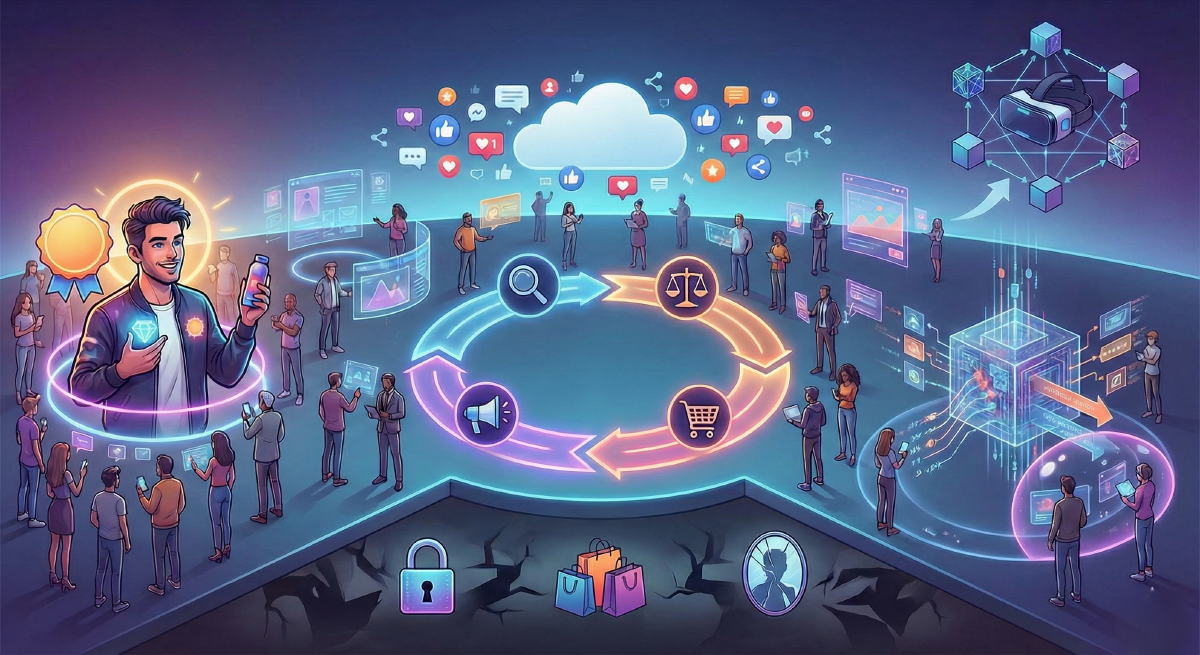
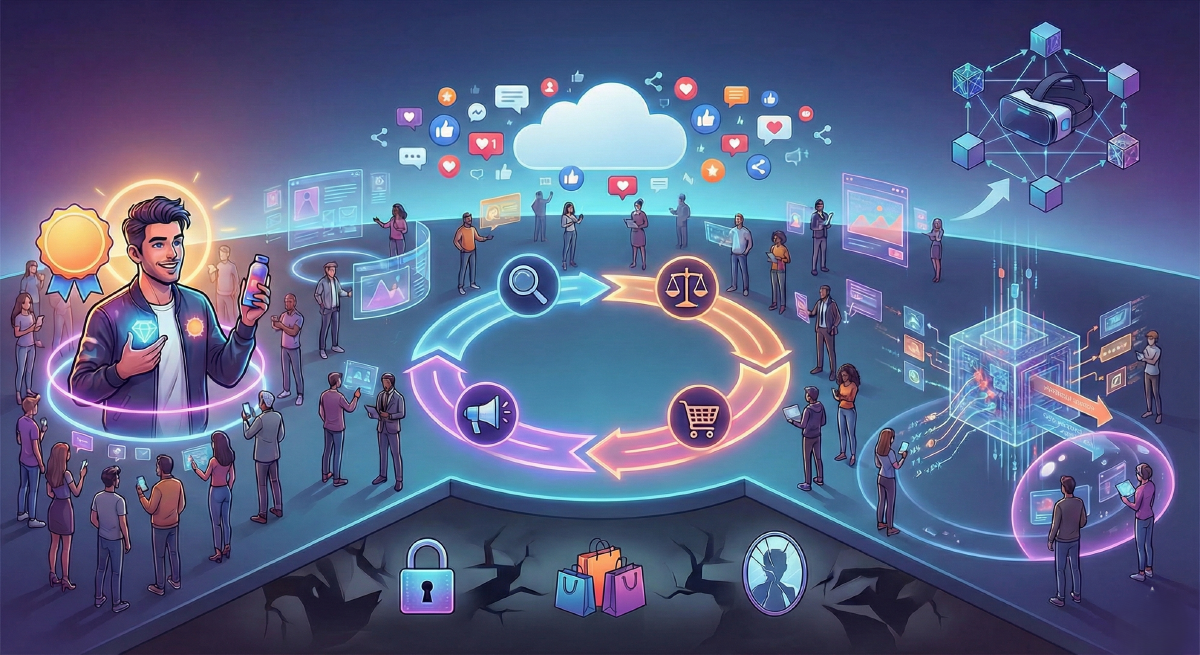
The structure of this work mirrors the layered complexity of its subject. We begin by excavating the theoretical and psychological foundations of digital influence, exploring how social media platforms activate fundamental drives for conformity, learning, and validation. Next, we chart the re-engineering of the consumer journey, demonstrating how the linear marketing funnel has fragmented into a non-linear, cyclical process where post-purchase advocacy directly fuels discovery. We then dissect the key modalities and technologies that operationalize this influence, from the tiered economy of influencers and the authentic power of user-generated content to the invisible hand of personalization algorithms.
Crucially, this examination does not shy away from the significant societal implications inherent in this system. The very mechanisms that drive commercial success, maximized engagement, data surveillance, and curated desire, generate serious ethical externalities, including threats to mental well-being, the promotion of overconsumption, and the erosion of informational integrity. Finally, we look toward the future trajectory of social commerce, considering how emerging technologies like AI, immersive media, and decentralized networks will further transform this landscape.
By synthesizing cross-disciplinary research and industry analysis, this article aims to provide a holistic map of the digital agora. It is designed for marketers seeking strategic clarity, for consumers navigating a manipulated landscape, and for policymakers confronting the governance challenges of a rapidly evolving digital public sphere. Ultimately, it contends that in the 21st century, consumer behavior cannot be understood apart from the social media platforms that shape it, a reality that demands not only comprehension but also conscientious navigation from all who participate within it.
The Theoretical and Psychological Foundations of Digital Influence#
Foundational Theories of Social Influence in a Networked Age#
The ascendancy of social media has not rendered classical theories of human behavior obsolete; instead, it has created a novel and potent environment in which these theories manifest with unprecedented scale and velocity. Understanding the contemporary consumer requires a re-examination of the foundational principles of social psychology and technology adoption, which together provide the theoretical bedrock for analyzing behavior in a digitally networked world. While the platforms are new, the underlying human tendencies toward social conformity, observational learning, and rational adoption remain the central drivers of action.
Re-contextualizing Classical Social Influence Theories#
At its core, the study of consumer behavior on social media is the study of social influence: how the presence, opinions, and actions of others affect an individual’s emotions, attitudes, and behaviors. The digital architecture of platforms like Facebook, Instagram, and TikTok has created a new channel of communication not only from brand to consumer but, more significantly, from consumer to consumer, making social influence a primary force in modern marketing.
Social Influence Theory and Social Impact Theory (SIT) provide a robust framework for this analysis. These theories posit that interpersonal interactions fundamentally shape individual attitudes and beliefs. In the context of social media, this influence is complex, originating not only from strong social ties but also from others’ “mere virtual presence” and the technology’s very format. Social Impact Theory further refines this by suggesting that different forms of immediacy, physical (proximity), temporal (recency), and social (status or number of connections), exert distinct pressures on individual behavior. A comment from a close friend (high social immediacy) may carry more weight than a “like” from a stranger. In contrast, a trending topic (high temporal immediacy) can create a powerful, albeit fleeting, behavioral norm.
Complementing this is Leon Festinger’s Social Comparison Theory, which posits that individuals have an innate drive to evaluate their own opinions and abilities by comparing themselves to others. Social media platforms serve as a powerful, always-on engine for social comparison. They provide users with a continuous, algorithmically curated stream of content showcasing the lives, possessions, and experiences of others. This constant exposure can lead individuals to question their relative standing on various traits, from socioeconomic status to physical attractiveness, often by observing others’ consumption patterns. This mechanism is a critical precursor to phenomena such as aspirational purchasing, influencer emulation, and the fear of missing out (FOMO), which will be discussed in subsequent sections. For instance, observing a counter-stereotypical product user can trigger a “comparison-driven self-evaluation and restoration” (CDSER) process, in which the observer feels threatened by their self-concept and, in response, becomes more interested in the product to restore their standing.
Behavioral Frameworks: Intention, Observation, and Action#
To understand how social influence translates into tangible consumer actions, it is necessary to examine frameworks that connect attitudes and observations to behavioral outcomes. Two theories are particularly salient in the social media context: the Theory of Planned Behavior and Social Learning Theory.
The Theory of Planned Behavior (TPB), proposed by Icek Ajzen, suggests that behavioral intentions, the most immediate predictor of behavior, are determined by three core components: the individual’s attitude toward the behavior, subjective norms (perceived social pressure), and perceived behavioral control (the perceived ease or difficulty of performing the behavior). Social media directly and powerfully shapes the first two components. A consumer’s attitude toward a brand or product is continually shaped by the content they encounter, including targeted advertisements, influencer endorsements, user reviews, and peer recommendations. Simultaneously, the visible consensus within a user’s network, the likes, shares, and positive comments from friends and influencers, establishes strong subjective norms, creating a perceived social pressure to conform to group preferences.
Albert Bandura’s Social Learning Theory provides a complementary perspective, arguing that learning is a cognitive process that occurs in a social context and can be purely observational or through direct instruction, even in the absence of direct reinforcement. The theory posits that individuals, particularly younger ones, tend to model the behaviors they observe in others. This concept is fundamental to understanding the potent influence of social media on younger consumers, who often emulate the consumption patterns, styles, and lifestyles they observe from influencers and peers. This mimicry is not arbitrary; it is frequently driven by the belief that adopting these behaviors will enhance their social status, align them with a desired social group, or help them construct a particular identity.
The Technology Acceptance Model (TAM): From Adoption to Habitual Use#
The influence of social media depends on its widespread adoption and integration into daily life. The Technology Acceptance Model (TAM), developed by Fred Davis, provides a parsimonious yet powerful explanation for why users accept or reject information technology. Derived from the Theory of Reasoned Action (TRA), TAM posits that a user’s behavioral intention to use a system is determined by two primary beliefs: Perceived Usefulness (PU) and Perceived Ease of Use (PEOU). PU is defined as “the degree to which a person believes that using a particular system would enhance his or her job performance.” At the same time, PEOU is “the degree to which a person believes that using a particular system would be free of effort”. These two factors influence one’s attitude toward using technology, which, in turn, determines the intention to use it and, ultimately, the actual usage behavior.
Initially tested in workplace settings, TAM has proven to be a robust and valid model for assessing the acceptance of a wide range of consumer technologies, including mobile banking, e-learning, and, critically, online shopping and social media platforms. The model’s explanatory power was enhanced in subsequent iterations, such as TAM2, which incorporated additional external variables, including subjective norms, image, and voluntariness, boosting its predictive accuracy by over 20% compared to the original.
When applied to social media, the core constructs of TAM require contextual adaptation. The “usefulness” of a platform like Facebook or Instagram is not merely about productivity in a traditional sense. Instead, PU represents the extent to which the platform helps individuals meet their goal-driven needs, which are often social and psychological in nature. These benefits can include maintaining social connections, seeking entertainment, engaging in professional networking, or expressing oneself. Consequently, researchers have extended TAM for the social media context by incorporating variables that capture these unique motivations. For instance, studies have found that factors such as Perceived Playfulness (PP), Trustworthiness (TW), and the presence of a Critical Mass (CM) of users are significant predictors of a user’s intention to engage with a social networking site. The inclusion of Critical Mass is particularly telling; it confirms that the perceived usefulness of a social platform is fundamentally dependent on the number of users, highlighting the inherently social nature of technology.
The very architecture of social media platforms is a testament to the convergence of these foundational theories. The reason people adopt and habitually use these technologies, as explained by TAM, is precisely because they are exceptionally efficient conduits for social influence, as described by Social Comparison and Social Learning theories. The “Perceived Usefulness” of a platform like Instagram is not an abstract utility; it is the tangible ability to engage in social comparison, to learn social norms from influencers, and to receive social validation from peers. Technology’s acceptance is predicated on its capacity to fulfill these deep-seated social needs. This creates a powerful, self-reinforcing cycle: as more individuals adopt the technology (driven by its ease of use and the innate need for social connection), the network grows, amplifying the power of its social influence mechanisms. This increased social influence, in turn, enhances the platform’s perceived usefulness, attracting even more users and further solidifying its role as the central arena for modern social interaction and, by extension, consumer behavior.
The Psychological Architecture of the Social Media Consumer#
While foundational theories provide a macro-level understanding of digital influence, a granular analysis reveals a complex architecture of specific psychological phenomena and cognitive biases that social media platforms activate and amplify. These mechanisms operate at a subconscious level, shaping perceptions, building trust, triggering emotions, and ultimately guiding consumer choices. Marketers, whether intentionally or intuitively, leverage this psychological architecture to make their messages more persuasive and their products more desirable.
Social Proof and the Power of the Crowd#
One of the most potent psychological forces at play on social media is social proof, also known as informational social influence. This phenomenon describes the human tendency to look to others’ actions and opinions to guide one’s own behavior, particularly in situations of uncertainty. The underlying assumption is that if many people are doing something, it must be the correct or valid course of action. This tendency is driven by two fundamental desires: normative conformity, the desire to be liked and accepted by the group, and informational conformity, the desire to be correct.
Social media platforms are engineered to be powerful engines of social proof. Metrics that are prominently displayed on every piece of content, follower counts, likes, comments, and shares, are not merely engagement data; they are quantifiable signals of social validation. A post with thousands of likes is perceived as more valuable and credible than one with only a few. A product recommended by an influencer with millions of followers is seen as more desirable than one recommended by an unknown user. These metrics function as trust signals that reassure potential buyers they are making the right choice, reducing perceived risk and buyer hesitation. In essence, a large and engaged following is social proof, signaling that a brand or creator is relevant and worthy of attention.
The bandwagon effect is a specific cognitive bias that emerges directly from social proof. It describes the phenomenon in which individuals adopt certain behaviors or beliefs simply because others do, regardless of their underlying principles. This mental shortcut, or heuristic, allows for rapid decision-making by outsourcing the cognitive load of evaluation to the “wisdom of the crowd”. The bandwagon effect is fueled by a combination of factors, including the desire for social belonging, the assumption that the majority is better informed (informational social influence), and the Fear of Missing Out (FOMO) on a popular trend or experience. Marketers actively leverage this bias by creating an illusion of popularity and scarcity, using phrases like “bestseller” or “only three left in stock” to signal high demand and prompt immediate purchase.
The Architecture of Trust: Credibility and Intimacy#
For social proof to be adequate, the source of the evidence must be perceived as trustworthy. The architecture of trust on social media is built on two interconnected pillars: the perceived credibility of the source and the intimacy the audience develops with it.
The Source Credibility Model, a long-standing framework in communication studies, posits that a source’s persuasiveness is determined by three key dimensions: expertise (knowledge and skill), trustworthiness (honesty and integrity), and attractiveness (physical appeal and likability). A source that is perceived as high in these dimensions is significantly more effective at influencing attitudes and behaviors. In the context of influencer marketing, an influencer’s credibility is a powerful predictor of positive brand attitudes, favorable word of mouth, and increased purchase intentions.
However, what makes social media unique is the mechanism through which this credibility is established. Unlike traditional celebrities, whose credibility is often based on fame and professional accomplishment, influencers build credibility through a sense of perceived intimacy and authenticity. This is achieved through the cultivation of Parasocial Relationships (PSRs). A PSR is a one-sided, nonreciprocal socio-emotional bond that an audience member forms with a media persona, such as an influencer. Social media platforms are described as “fertile ground” for these relationships because they provide an “illusion of friendship” through constant, seemingly unfiltered access to an influencer’s daily life, thoughts, and routines.
Several factors drive the development of these powerful bonds. Interpersonal attraction, including task attraction (admiring their skills), physical attraction, and social attraction (liking their personality), is a significant driver. Attitude homophily, the perceived similarity in values and beliefs between the influencer and the follower, also strengthens the connection. Perhaps most importantly, intimate self-disclosure, when an influencer shares personal stories, vulnerabilities, and behind-the-scenes content, creates a profound sense of closeness and authenticity, which in turn enhances the PSR. These relationships are not trivial; they have a direct positive influence on consumer trust, brand evaluations, and the intention to purchase endorsed products.
A clear causal pathway emerges from this interplay of psychological factors, forming what can be termed a “Trust Stack.” The process begins when an influencer engages in intimate self-disclosure, sharing personal anecdotes and creating a perception of authenticity. This behavior fosters a Parasocial Relationship, making the follower feel a genuine, albeit one-sided, connection. This sense of intimacy and friendship directly enhances the influencer’s source credibility, particularly along the trustworthiness dimension. Once this high level of trust is established, the influencer’s recommendations and endorsements function as powerful social proof. The consumer, now armed with a recommendation from a trusted friend, is far more likely to develop a positive attitude toward the endorsed brand and to exhibit a firm purchase intention. This entire sequence is then amplified by other emotional triggers, creating a potent and multi-layered psychological motivation to consume.
Emotional and Motivational Triggers#
Beyond trust and social conformity, social media platforms are adept at triggering more primal emotional and motivational responses that drive consumer behavior.
Emotional Contagion is the phenomenon where emotions and related behaviors spread spontaneously through a network. Seminal research on large-scale social networks like Facebook has demonstrated that emotional states can be transferred between users through purely text-based content, without the need for nonverbal cues such as facial expressions or tone of voice. When users are exposed to more positive posts in their feeds, they tend to produce more positive posts themselves, and the same holds for negativity. While positive emotions appear to be more contagious overall, negative emotions such as fear, anger, and disgust can also spread, with research showing these transfers can persist for up to 8 weeks and directly affect consumer spending patterns. When an influencer expresses genuine excitement about a product, that emotion can transfer to their audience, creating a shared positive effect that becomes associated with the brand.
Another powerful driver, particularly in e-commerce, is Anticipatory Utility. This concept refers to the happiness or utility a person derives not from consuming a product, but from anticipating its arrival. Research has found that the brain releases a significant amount of dopamine, the “happiness hormone,” while a consumer waits for a product they ordered online. In many cases, dopamine generated during the anticipation stage can be even greater than that experienced during the actual consumption of the product. This pre-enjoyment and excitement create a powerful feedback loop, motivating information acquisition (e.g., tracking the package, watching reviews) and reinforcing the initial purchase decision, making the entire process feel more rewarding.
Perhaps the most well-known motivational trigger in the social media lexicon is the Fear of Missing Out (FOMO). Defined as a “pervasive apprehension that others might be having rewarding experiences from which one is absent,” FOMO is a form of social anxiety that compels individuals to stay constantly connected. Social media platforms are powerful amplifiers of FOMO, presenting a continuous stream of curated highlights from others’ lives, vacations, parties, achievements, and purchases that can induce feelings of envy and inadequacy. This fear drives compulsive platform usage, as users constantly check for updates to avoid feeling left out. Marketers capitalize on this anxiety by creating a sense of urgency and scarcity. Limited-time offers, exclusive “drops,” and flash sales are designed to trigger FOMO, encouraging impulse purchases and immediate brand engagement by fear that the opportunity will be lost forever.
Cognitive Biases and the Algorithmic Funhouse Mirror#
The algorithmic nature of social media feeds creates an environment that not only leverages pre-existing cognitive biases but also actively reinforces and amplifies them, distorting reality and making it highly conducive to targeted marketing.
Confirmation Bias is the tendency for individuals to seek out, interpret, and recall information in ways that confirm or support their prior beliefs or values. When applied to consumerism, this means a shopper who already has a positive perception of a brand will be more likely to notice and give credence to positive reviews while dismissing or downplaying negative feedback. This bias is a powerful force for maintaining brand loyalty, as it creates a psychological barrier to considering competing options.
Social media algorithms create the perfect conditions for confirmation bias to flourish through the creation of Filter Bubbles and Echo Chambers. Coined by Eli Pariser, a filter bubble is a state of intellectual isolation that results from personalized search results and algorithmic content curation. The platform’s algorithms analyze a user’s past behavior, clicks, likes, shares, search history, and serve them content they predict will be engaging, typically content that aligns with their existing interests and viewpoints. This effectively isolates the user in their own “personal ecosystem of information,” separating them from diverse or conflicting perspectives. While an echo chamber can result from self-selection (e.g., choosing to follow only like-minded individuals), a filter bubble is algorithmically imposed, often without the user’s full awareness.
The business model of social media is not merely to exploit these biases but to systematically amplify them for profit. The process begins when a user shows a slight preference for a product or topic, an expression of their innate confirmation bias. The platform’s algorithm detects this engagement signal. To maximize the user’s time on the platform and, therefore, their exposure to advertisements, the algorithm then serves them more content related to that initial preference, constructing a filter bubble around them. This constant, targeted exposure reinforces the user’s original belief, strengthening their confirmation bias. It also creates the illusion that “everyone” is interested in this topic, triggering the bandwagon effect and making the belief feel like a social norm. At this point, the user has been algorithmically primed. They are now highly receptive and predictable targets for advertising and influence content within that specific bubble, dramatically increasing the efficiency of marketing efforts. The system does not just find biased individuals; it actively cultivates and deepens their biases, transforming them into more reliable consumers.
The Re-Engineering of the Consumer Journey#
Mapping the New Path to Purchase: From Funnel to Flywheel#
The advent of social media and digital technologies has not just added new touchpoints to the consumer’s path to purchase; it has fundamentally re-engineered the journey’s entire structure. The traditional, linear models that once guided marketing strategy are now largely obsolete, replaced by dynamic, cyclical frameworks that better reflect the complex, interactive, and consumer-driven nature of modern decision-making.
The Obsolescence of the Traditional Marketing Funnel#
For decades, marketing strategy was dominated by the “funnel” metaphor. This model depicted a linear, predictable process in which many potential customers at the top (Awareness) were progressively narrowed down through stages such as Interest, Desire, and Consideration, until a small fraction emerged at the bottom as purchasers (Action). The model assumed a one-way flow of communication, from marketers pushing messages to passive consumers, and it treated the purchase as the definitive end-point of the journey.
This model is now considered outdated because it fails to account for the profound shifts in consumer power and communication dynamics brought about by the digital age. Consumers are no longer passive recipients of information. They are active participants in a two-way conversation, armed with unprecedented access to information, peer opinions, and direct channels to brands. The journey is no longer a straightforward march towards a single purchase, but a complex, often non-linear exploration.
The Modern Consumer Decision Journey (CDJ): A Cyclical Model#
In response to the limitations of the funnel, new models have emerged that capture the iterative and interconnected nature of the modern consumer journey. These frameworks emphasize the cyclical flow of influence, in which the post-purchase experience becomes a critical input into future decisions.
McKinsey’s Consumer Decision Journey (CDJ) Framework was one of the first to challenge the funnel paradigm. It reframes the process as a circular journey with four primary phases: Initial Consideration, Active Evaluation, Closure (Purchase), and Post-purchase. A crucial distinction from the funnel is that, during the Active Evaluation phase, the set of brands a consumer considers can expand rather than narrow as they are exposed to new options through research and recommendations. The most significant innovation of the CDJ model is its emphasis on the post-purchase phase. This stage is not an endpoint but the beginning of a “loyalty loop,” where a consumer’s experience with a product and their subsequent interactions with the brand directly inform their next Initial Consideration set, either reinforcing loyalty or prompting them to consider alternatives.
Building on this, Google’s “Messy Middle” model provides a more granular view of the Active Evaluation phase. It describes this stage as a complex and chaotic space between the initial trigger (the recognition of a need) and the final purchase, where customers are ultimately won or lost. Within this “messy middle,” consumers are in a continuous loop, toggling between two distinct mental modes: Exploration, an expansive activity in which they gather information and discover new options, and Evaluation, a reductive activity in which they compare choices and narrow them down. Social media platforms, with their endless streams of reviews, influencer content, and brand communities, have become the primary battlefield where this exploration and evaluation takes place.
More recently, Google introduced the “4S” Framework in 2025 to capture the even more fragmented and concurrent nature of modern consumer behavior. This model moves beyond a sequential journey and defines the consumer experience through four simultaneous behaviors: Streaming (continuous, personalized media consumption on platforms like YouTube), Scrolling (passive discovery and window shopping on social feeds), Searching (multi-modal, intent-driven exploration using text, voice, and image), and Shopping (nonlinear, seamless transactions integrated into various touchpoints). This framework underscores that discovery, consideration, and purchase are no longer discrete stages but can occur in any order, at any time, across a web of interconnected digital touchpoints.
This fundamental shift from a linear funnel to a cyclical journey has profound implications for competitive strategy. The focus is no longer solely on pushing a consumer towards a single, final purchase decision. Instead, modern models reveal a continuous loop of evaluation, experience, and advocacy, in which the post-purchase phase of one journey directly seeds the initial consideration phase of the next. In this new paradigm, companies can leverage technology to “radically compress” the traditional journey, using capabilities like automation, proactive personalization, and contextual interaction to bypass lengthy evaluation stages and “catapult a consumer right to the loyalty phase”. This means that the series of interactions and touchpoints a consumer has with a brand, the journey itself, is no longer just a means to an end. It has become a core component of the product and a defining source of competitive advantage. A seamless, personalized, and value-adding journey is a product that builds lasting loyalty and transforms customers into advocates who fuel the next cycle of growth.
Social Media’s Intervention at Each Stage of the Journey#
Social media is not merely another channel within the consumer decision journey; it is an integrated environment that permeates and reshapes every stage. From the initial spark of awareness to the final act of advocacy, platforms provide a pervasive layer of social influence, information, and interaction that guides consumer behavior.
Awareness & Discovery: The Serendipitous Encounter#
In the traditional model, awareness was often generated through deliberate, top-down advertising campaigns. Social media has introduced a powerful new dynamic: passive, serendipitous discovery. As consumers engage in the behavior of “scrolling” through their feeds on platforms like Instagram and TikTok, they are exposed to a constant stream of content without a specific purchase intent. It is within this stream that they encounter new brands, products, and trends, often through influencer posts, user-generated content, or highly targeted ads that blend seamlessly with organic content.
Several factors drive social media’s effectiveness in this awareness stage. First is its massive reach, with platforms connecting businesses to a vast and diverse global audience. Second is the potential for viral content, where a single engaging post can be shared exponentially, rapidly expanding brand awareness at a low cost. Third, targeted advertising allows brands to place their message directly in front of demographics and interest groups most likely to be receptive, increasing the efficiency of awareness campaigns. The data confirms this impact: 61% of consumers reported discovering a new brand or product on social media in the past year. Furthermore, the experience at this stage has downstream effects: a positive social media experience makes consumers 71% more likely to recommend that brand to others, seeding future awareness through word of mouth.
Information Search & Evaluation: The New Search Engine#
Once awareness is triggered, consumers enter the “messy middle” of active evaluation, and social media has become a primary destination for this research. For many, especially younger consumers, social platforms are supplanting traditional search engines as the first port of call for information gathering. Research indicates that nearly half of young people now turn to TikTok or Instagram for information instead of Google Search or Maps.
Platforms are used to survey products, compare alternatives, and gather opinions. A study found that 92.5% of participants used social media to gather information before making a purchase decision. The content they seek is varied, ranging from descriptive posts and images to evaluative comments, discussions, and testimonials from other consumers. This user-generated content is often perceived as more credible and trustworthy than information provided directly by brands.
However, this shift introduces a significant challenge: information credibility. The social media environment largely lacks the professional gatekeepers (e.g., editors, journalists) who traditionally vetted information. This places a greater burden on consumers to assess the credibility of sources themselves. In response, users develop sophisticated, often subconscious, evaluative schemas. They assess content based not just on a binary of true versus false, but on a spectrum of cues including perceived falsity (general distrust), authenticity (alignment with a source’s inner self), resonance (felt relatedness to their own experience), and social assurance (the quantitative metrics of likes, shares, and follower counts). The recency of information also plays a role, with newer posts often perceived as more credible, a judgment that is mediated by the level of cognitive effort the user is willing to expend.
The Point of Purchase: The Rise of Social Commerce#
Social media’s role has evolved beyond influence to direct transactions through the rise of social commerce. This refers to integrating e-commerce functionality directly into social media platforms, creating a seamless, frictionless path from discovery to purchase. Features like Instagram Shopping, Facebook Marketplace, and TikTok Shop allow users to buy products without ever leaving the app, radically compressing the consumer journey.
The growth of this channel is explosive. Data shows that 42% of consumers have made direct purchases on a social media platform, a trend particularly strong among younger demographics. The global social commerce market, valued at approximately USD 475 billion in 2020, is projected to grow at a compound annual growth rate of 28.4% to reach an estimated USD 3.37 trillion by 2028.
The success of social commerce hinges on its ability to blend entertainment, community, and commerce. It leverages the psychological mechanisms of social proof and trust in a transactional context. Recommendations from peers and influencers influence consumers, and the interactive, community-driven environment reduces the uncertainty often associated with online shopping. Trust is the foundational element, facilitated by the perceived authenticity of user-generated content and the established rapport of influencers.
Post-Purchase Loyalty & Advocacy: Cultivating the Flywheel#
In the cyclical model of the consumer journey, the post-purchase phase is arguably the most critical, as it directly feeds the awareness and evaluation stages for future customers. Social media provides the infrastructure for brands to manage this phase and cultivate a “flywheel” of loyalty and advocacy.
Online Brand Communities (OBCs) are a key strategic tool. These are online groups, often on platforms like Facebook or dedicated forums, where users can interact with the brand and, more importantly, with each other. OBCs strengthen the connection between consumers and brands, fostering emotional ties and a sense of belonging. Research shows that active engagement in an OBC directly encourages continued community participation, a willingness to co-create with the brand (e.g., providing feedback on new products), and the generation of positive word of mouth. These outcomes, in turn, have a significant indirect positive influence on long-term brand loyalty.
The motivations for consumers to engage in eWOM are complex and multifaceted. They include positive drivers such as altruism (a desire to help other consumers make better choices), self-enhancement (demonstrating expertise or status), and product involvement (genuine excitement about a product). However, they also include negative drivers like anxiety reduction (venting frustration), seeking solutions to problems, and a desire for vengeance against a company for a poor experience.
This dark side of eWOM highlights the risks for brands in the post-purchase stage. The same network effects that can amplify positive advocacy can be weaponized to devastating impacts. Negative eWOM, which is often perceived as more diagnostic and given more weight by consumers, can spread virally and coalesce into organized brand boycotts. These social media-driven movements can have severe and immediate financial consequences, with studies showing they can cause sales to drop by up to 8% and lead to an average market value decline of 2.7% for targeted companies.
The interconnectedness of the modern consumer journey becomes starkly evident here. The public and permanent nature of eWOM and online brand communities means that one customer’s post-purchase experience, whether it results in glowing advocacy or a call for a boycott, becomes a primary and highly credible information source for another customer’s pre-purchase evaluation. The output of Customer A’s journey is a direct input for Customer B’s journey. This transforms the management of the post-purchase experience from a simple customer retention tactic into a critical, top-of-funnel customer acquisition strategy.
Key Modalities and Technologies of Influence#
The Influencer Economy: A Multi-Tiered Ecosystem of Persuasion#
At the heart of social media’s influence on consumer behavior lies the creator or “influencer” economy, a complex, multi-tiered ecosystem of individuals who have cultivated online audiences and monetized their ability to shape opinions and drive commercial activity. This section provides a deep dive into the structure of this economy, the psychological underpinnings of its effectiveness, and the significant practical and ethical challenges it presents.
Deconstructing the Influencer Hierarchy#
The term “influencer” is not monolithic; it encompasses a broad spectrum of creators, categorized primarily by audience size. Understanding the distinctions between these tiers is crucial for marketers seeking to develop effective strategies. The commonly accepted hierarchy includes:
- Mega-influencers: Typically, celebrities or public figures with over 1 million followers. They offer unparalleled reach and are used for large-scale brand awareness campaigns.
- Macro-influencers: Established content creators with audiences ranging from 100,000 to 1 million followers. They often have a professional quality to their content and a broad appeal within a specific vertical, such as fashion or technology.
- Micro-influencers: Individuals with followings between approximately 10,000 and 100,000. They are often seen as “everyday experts” with a dedicated and highly engaged community focused on a specific niche.
- Nano-influencers: Creators with fewer than 10,000-15,000 followers. These individuals boast the most personal and authentic relationships with their audience, who often perceive them as peers or friends.
While logic might suggest that a larger audience equates to greater influence, empirical data reveal a more nuanced reality. The data reveals a significant industry trend: a strategic shift away from expensive, low-engagement mega-influencers toward more cost-effective, authentic nano- and micro-influencers. Studies show that small-scale influencers can drive up to 60% higher campaign engagement rates than their macro counterparts. Marketers have recognized this efficiency, with one report indicating that marketers saw the most success with micro-influencers (47% in 2023) and that nearly 70% of brands planned to use nano or micro-influencers in 2024. This shift reflects a growing understanding that genuine connection and trust often trump sheer audience size in driving consumer action.
The Psychology of Influencer Effectiveness#
The persuasive power of influencers is not magical; it is a direct application of the psychological principles of trust and credibility discussed in Part I. Influencers are effective precisely because they master the Source Credibility Model and excel at cultivating Parasocial Relationships (PSRs).
Unlike traditional celebrities, who are often perceived as distant and inaccessible, influencers are seen as more relatable, authentic, and trustworthy. Their credibility is built on a foundation of perceived expertise within a specific niche (e.g., skincare, gaming), trustworthiness fostered through seemingly honest and transparent content, and attractiveness or likability that makes followers want to connect with them. This combination makes their product recommendations feel less like advertisements and more like advice from a knowledgeable and trusted friend. The strong rapport and credibility they build with their followers mean their endorsements carry significant weight, directly influencing brand perceptions and purchase decisions.
Challenges, Criticisms, and Regulation#
Despite its effectiveness, the influencer economy is fraught with challenges that brands must navigate carefully. A primary operational hurdle is simply finding the right influencer, a creator whose personal brand, audience demographics, and values align with the company’s. A mismatch can lead to ineffective campaigns and even brand damage.
A more pernicious problem is influencer fraud. With follower counts and engagement metrics directly tied to earning potential, a black market for fake followers, likes, and comments has emerged. Studies indicate that up to 20% of mid-tier influencers may have a significant number of fake followers. Brands must therefore conduct due diligence, analyzing engagement ratios (a large discrepancy between followers and interactions is a red flag), follower growth rates (sudden, unnatural spikes are suspicious), and the quality of comments (a preponderance of generic comments like “Wow dear” or “likeforlike” can indicate bots).
The high cost of working with macro- and mega-influencers is another significant barrier, with top-tier creators demanding anywhere from $30,000 to over $200,000 per post. This expense, combined with their lower engagement rates, makes it extremely difficult to measure a positive Return on Investment (ROI). Indeed, calculating ROI is a top challenge for over 26% of brands running influencer campaigns.
These issues of authenticity and commercialization have led to increased regulatory scrutiny. In the United States, the Federal Trade Commission (FTC) enforces truth-in-advertising laws that mandate the clear and conspicuous disclosure of any “material connection” between an influencer and a brand. A material connection is broadly defined to include not only direct payment but also free or discounted products, business or family relationships, or any other perk that could affect the credibility of the endorsement. The goal is transparency: consumers have a right to know when they are targeted with advertising. Common mistakes that violate these guidelines include using vague or ambiguous hashtags like #spon or #partner, burying disclosures at the end of a long caption or a string of hashtags, or relying solely on a platform’s built-in “Paid Partnership” tool without additional clear language.
The maturation of the influencer economy has given rise to an “Authenticity Paradox.” The very foundation of an influencer’s effectiveness is their perceived authenticity and the trust engendered through parasocial relationships; they are influential because they are seen as peers, not advertisers. However, as the industry professionalizes and becomes more transactional, this authenticity is threatened. Brands demand measurable ROI, and influencers operate as businesses with formal rate cards, leading to more sponsored content. This overt commercialization, especially when combined with stricter disclosure requirements, can erode the very trust that made the influencer effective in the first place and weaken the parasocial bonds that made them effective. Consumers are becoming more adept at spotting sponsored posts, and the explicit “#ad” label can break the illusion of a friendly recommendation. The paradox, therefore, is that for an influencer to succeed as a business, they must maintain the appearance of not being a business. This inherent tension is a driving force behind the industry’s pivot toward micro- and nano-influencers, who are perceived as more authentic precisely because they are less commercialized.
The Voice of the Consumer: The Dual Role of User-Generated Content (UGC)#
While influencer marketing represents a formalized and often compensated form of persuasion, an equally, if not more, powerful modality of influence comes directly from everyday consumers in the form of User-Generated Content (UGC). UGC encompasses any form of content, text, images, videos, or reviews created and shared by consumers rather than brands. As a cornerstone of the interactive Web 2.0 ecosystem, UGC has fundamentally shifted the balance of power, allowing consumers to become active participants and creators in brand narratives. This section explores the spectrum of UGC, its profound impact on consumer trust, and the credibility crisis posed by the proliferation of inauthentic content.
The Spectrum of User-Generated Content#
UGC manifests in several key forms, each playing a distinct role in the consumer journey.
Online Reviews and Ratings are arguably the most influential form of UGC. They function as a digital form of word of mouth, providing peer-to-peer insights that are widely perceived as more reliable and trustworthy than vendor-provided information. The impact is staggering: 93% of consumers report that online reviews influence their purchase decisions, and 85% trust them as much as personal recommendations. Quantitative research confirms their power, showing that positive reviews significantly increase consumer trust. In contrast, negative reviews are even more potent in building perceptions of risk and reducing purchase intentions. The sheer volume of reviews also serves as powerful social proof. The probability of a product with five reviews being purchased is 270% higher than a product with none, and conversion rates can increase by over 500% as the number of reviews grows from a handful to over 50.
User-Submitted Visuals, such as photos and videos of customers using a product in their daily lives, offer highly authentic, relatable social proof. When a potential buyer sees a product being used and enjoyed by someone who looks like them, it validates the product’s utility and appeal in a way that polished brand photography cannot. Brands often encourage and amplify this form of UGC by creating branded hashtags and featuring customer photos on their own social media feeds and product pages.
Unboxing Videos have emerged as a hugely popular UGC genre, particularly on platforms like YouTube. These videos feature creators, ranging from nano-influencers to mega-stars, who document the process of launching a new product and share their initial impressions. This format is compelling because it combines the vicarious thrill of receiving something new with a seemingly authentic, real-time product review. The influence of unboxing videos is substantial: 84% of viewers say these videos help them with their purchase decisions, and 52% have purchased a product after watching one. The effectiveness of this format is often mediated by the parasocial interaction (PSI) that viewers develop with the unboxer; the stronger the perceived bond, the more influential the review. This phenomenon taps into the psychology of anticipation, allowing viewers to experience a proxy of the “anticipatory utility” associated with a new purchase.
The Credibility Crisis: Fake Reviews and Negative Content#
The immense power of UGC has, unfortunately, given rise to a significant credibility crisis. The very authenticity that makes UGC so persuasive also makes it a target for manipulation.
The Threat of Fake Reviews has become a pervasive issue that erodes consumer trust in the entire digital ecosystem. It is estimated that up to 30% of all online reviews may be fake, and 82% of consumers encountered a fake review in the past year. These inauthentic reviews are created for a variety of reasons: some are incentivized by brands offering free products or payment; others are generated by businesses to artificially inflate their ratings; and others are created to sabotage competitors with malicious negative feedback. This practice distorts fair competition and makes it increasingly difficult for consumers to make informed decisions. In response, platforms and third-party services are deploying sophisticated detection methods, including content analysis and AI-powered algorithms that can identify suspicious patterns like overly generic language, unusual posting frequency, or coordinated review-bombing campaigns.
Even when genuine, Negative Content poses a significant challenge for brands. Due to negative bias, consumers tend to give more weight to negative information than to positive information. Research shows that negative eWOM has a disproportionately strong impact on consumer attitudes and evaluations. Just a few negative reviews can decrease sales by as much as 70%. The viral and permanent nature of social media means that a single negative customer experience, if shared publicly, can escalate rapidly and cause significant, lasting damage to a brand’s reputation.
This dynamic has forced consumers into a paradoxical position. They trust UGC more than any other source of product information, yet they are simultaneously and acutely aware of its potential for inauthenticity. This has led to the development of a sophisticated, subconscious “Trust-But-Verify” heuristic. Consumers no longer accept passive reviews at face value. Instead, they act as intuitive forensic analysts, actively searching for signals of authenticity to resolve the conflict between high trust and high skepticism. They have learned that a flawless, 5-star rating profile is often a red flag; research shows that 95% of consumers suspect censorship or fake reviews when there are no negative reviews. A more balanced and realistic distribution of ratings, including some critical feedback, is perceived as more trustworthy. Consumers also use other signals in their verification process: they look for a high volume of reviews, as a larger sample size is harder to manipulate; they check for recency, as 77% of users do not trust reviews that are more than three months old; and they value reviews that include specific details, photos, or videos, as these are harder to fabricate and provide richer context. This active, critical evaluation of social proof represents a significant evolution in consumer behavior, a necessary adaptation to navigate the credibility crisis of the digital age.
The Unseen Hand: Personalization Algorithms and Targeted Advertising#
Beneath the surface of user-generated content and influencer endorsements lies the technological engine that powers the entire social media ecosystem: a sophisticated infrastructure of personalization algorithms and targeted advertising. This “unseen hand” plays a decisive role in shaping the consumer experience, determining not only what content users see but also how commercial messages are tailored and delivered to them with unprecedented precision. Understanding these mechanics is essential to fully grasp social media’s influence on consumer behavior.
The Mechanics of Algorithmic Curation#
At its core, a social media algorithm is a complex set of rules, calculations, and machine learning models that sort and prioritize the vast sea of available content, curating a unique, personalized feed for each user. The primary objective of these algorithms is to maximize user engagement by keeping users on the platform for as long as possible by showing them content deemed most relevant and interesting to them.
To achieve this, algorithms analyze a multitude of “ranking signals” for every piece of content. These signals are data points that help the algorithm predict the likelihood that a user will interact with a post. Key ranking signals include:
- User Interactions: Past behavior is the strongest predictor of future interest. The algorithm tracks every like, comment, share, save, and click. It also measures “watch time” for videos and even “dwell time” on static posts.
- Relationship: The algorithm prioritizes content from accounts the user interacts with frequently, such as close friends, family, or favorite creators.
- Recency: Newer content is generally given priority to keep the feed fresh and timely.
- Content Type: The algorithm learns whether a user prefers videos, images, or text-based posts and adjusts the feed accordingly.
- Profile Authority: Content from accounts with a large, engaged following may be given more weight.
The continuous, large-scale collection of user data powers this entire system. Platforms gather not only the explicit data users provide (profile information, friends, follows), but also a vast trail of implicit data, often referred to as “data exhaust”. This includes every scroll, pause, search query, and interaction, both on and off the platform, via tracking pixels and cookies embedded across the web. This data is used to build incredibly detailed and dynamic user profiles that can predict individual interests, preferences, and behaviors with remarkable accuracy.
The Effectiveness and Psychology of Targeted Advertising#
The detailed user profiles generated by algorithmic data collection are the cornerstone of social media’s business model: targeted advertising. This practice involves using personal data to deliver highly personalized commercial messages to specific segments of the user base, defined by demographics, geographic location, interests, and past behaviors. This approach is widely considered far more effective than traditional, broad-based advertising, as it allows brands to reach consumers most likely to be interested in their products, reducing wasted ad spend and increasing relevance.
The impact of targeted advertising on consumer spending patterns is direct and consequential. By presenting the right product to the right person at the right time, these ads are highly effective at driving impulse purchases; they create a sense of immediate relevance and can trigger a purchase before the consumer has time for extensive deliberation. They can also lead to increased overall spending by showcasing complementary items (“upselling”) or more premium versions of a product a user has shown interest in. Over time, this personalized communication can foster brand loyalty, as consumers begin to feel that the brand truly “understands” their needs and preferences, creating a positive emotional connection.
A fascinating psychological layer is added when consumers become aware that they are being targeted. Research shows that a consumer’s knowledge that an advertisement has been explicitly personalized for them fundamentally changes their response. They no longer see it as just a generic broadcast message. Instead, they interpret the targeted ad as an “implicit recommendation” from the platform itself. This perception enhances their interest not only in the specific product being advertised but in the entire product category. For example, a user who has never considered buying a high-end coffee machine might, upon seeing a targeted ad for one, infer that their online behavior suggests they are the type of person who would benefit from such a product.
This phenomenon creates what researchers have termed the “spillover effect.” The targeted ad effectively “educates” the consumer about their own potential needs and introduces them to a new category of interest. However, this newfound interest does not automatically translate into a sale for the original advertiser. Instead, it often prompts the consumer to enter the “messy middle” of the purchase journey, where they begin actively exploring and evaluating all options within that category, including competitors. A competitor who has a strong presence in this evaluation phase can effectively “free-ride” on the awareness generated by the original targeted ad.
This creates a dual-edged sword for marketers. On one hand, hyper-personalization makes advertising more efficient by reaching the most receptive audiences. On the other hand, the consumer’s awareness of this target introduces a new strategic risk. The very mechanism that makes the ad effective, its personalization, also validates the consumer’s need for the product category, not necessarily the specific brand. This can trigger a competitive evaluation process that the original advertiser may not win. These dynamic underscores the critical importance for brands not just to run targeted ads for initial discovery, but also to maintain a strong, persuasive presence throughout the consumer journey, ensuring they can capture the interest generated by their own (and competitors’) advertising.
Societal Implications and the Future of Social Commerce#
The Broader Ethical and Societal Context#
The integration of social media into the fabric of consumerism has brought about profound societal shifts, extending far beyond marketing effectiveness. While these platforms have democratized communication and provided new avenues for connection and commerce, they have also introduced a host of complex ethical dilemmas and negative externalities. The very business model that makes social media so powerful for marketers, predicated on maximizing engagement to fuel surveillance advertising, has direct and often detrimental consequences for individual well-being, environmental sustainability, and the integrity of our information ecosystem.
The “Dark Side” of Social Consumerism#
The hyper-optimized, socially-driven environment of these platforms can foster and exacerbate negative consumption behaviors. The constant exposure to personalized advertising, influencer lifestyles, and the social proof of peer consumption creates a powerful impetus to buy. Research has established a significant link between high Social Media Intensity (SMI) and a trio of problematic behaviors: impulse buying, driven by a sense of urgency and FOMO; compulsive buying, a more pathological pattern linked to mood regulation; and conspicuous consumption, the act of purchasing goods to signal social status. These behaviors are not without consequence, often leading to adverse economic outcomes for individuals, including increased personal debt and overuse of credit cards.
Beyond financial health, the social media-consumerism nexus has a well-documented and troubling impact on mental health and body image. The endless scroll of curated, often digitally altered, images of “perfect” bodies and idealized lifestyles provides a fertile ground for social comparison. Extensive research shows that this constant comparison contributes significantly to body dissatisfaction, anxiety, and depression, particularly among younger users. When individuals continually compare their own reality to others’ highlight reels, it can lead to feelings of inadequacy, low self-esteem, and a distorted self-perception. This is not a fringe issue; it is a systemic outcome of exposure to an environment filled with unattainable standards of appearance and success.
The Sustainability Paradox#
Social media has emerged as a primary engine of overconsumption, a pattern of acquiring goods far beyond one’s needs, resulting in severe environmental consequences. The fashion industry, in particular, is a stark example. The rapid-fire trend cycles, the popularity of “haul” videos showcasing massive purchases, and the seamless integration of shopping functions all contribute to a culture of disposability and excessive consumption. The platform’s business model, which profits from user engagement, creates a structural bias that incentivizes amplifying content that promotes novelty and consumption, regardless of environmental costs. This digital consumerism directly fuels overproduction and waste, which lead to environmental degradation; the fashion industry alone generates over 92 million tons of waste annually.
Paradoxically, social media is also a vital platform for the sustainability movement itself. It is a powerful tool for raising awareness about environmental issues, promoting eco-friendly brands, building communities around practices like thrifting and repairing, and holding corporations accountable for their environmental impact. This creates a fundamental tension: the very medium that accelerates the problem of overconsumption is also seen as one of the most effective tools for addressing it.
The Ethical Minefield: Data, Manipulation, and Misinformation#
The business model of social media is built on the large-scale collection and monetization of user data, a practice that sits within a significant ethical minefield.
Data Privacy and Informed Consent remain paramount concerns. Users provide vast quantities of personal data, often without fully comprehending the extent of its collection or use. Privacy policies are notoriously long, complex, and written in dense legalese, making the notion of proper “informed consent” highly questionable, especially for minors who may lack the capacity to understand the long-term consequences of their data sharing. This model of “surveillance advertising” effectively transforms users into products and their online behaviors into assets to be sold to the highest bidder, leading some critics to label these platforms as “weapons of mass manipulation”.
This leads directly to the issue of Discrimination and Manipulation. The same targeting tools that allow a brand to show a sneaker ad to a basketball fan can also be used to exclude certain demographic groups from seeing advertisements for housing, employment, or credit, thereby perpetuating and amplifying societal biases. Furthermore, advertisers can employ manipulative psychological techniques and deceptive interface designs known as “dark patterns” to exploit consumer vulnerabilities and trick users into making purchases or sharing data they did not intend to.
Finally, the digital infrastructure built for marketing is also an incredibly efficient system for the Spread of Misinformation. False or misleading information can spread virally through the exact sharing mechanisms that create marketing buzz. This poses a direct threat to brands, as their advertisements can appear alongside harmful or false content, creating a negative brand association. A staggering 85% of consumers report they would stop using a brand if they saw its ads placed next to false or inflammatory content, underscoring the critical importance of brand safety in the digital information ecosystem.
These profound ethical challenges are not accidental flaws in the system; they are the direct and predictable consequences of a business model centered on maximizing engagement for surveillance advertising. The primary corporate goal is to generate revenue from advertisers. This is achieved by delivering highly effective targeted ads, which require two key inputs: vast amounts of personal data and high levels of user engagement. To maximize engagement, algorithms are designed to prioritize emotionally activating, aspirational, or even polarizing content that keeps users scrolling. This algorithmic imperative directly fuels the adverse outcomes: the constant stream of idealized content promotes social comparison and harms mental health; the relentless promotion of new trends drives overconsumption; and the “unquenchable thirst for data” necessitates invasive privacy practices. The ethical problems are not bugs to be fixed but are features inherent to the current design, creating a systemic conflict between platform profitability and public well-being.
The Future Trajectory: Emerging Technologies and Business Models#
The landscape of social media and consumer behavior is in a state of perpetual flux, driven by technological innovation, evolving business models, and shifting consumer expectations. Synthesizing forward-looking industry reports and analyzing emerging trends reveals a future that is simultaneously more immersive, more decentralized, and more intelligent. Navigating this future will require a deep understanding of the new forms of engagement and the technologies that underpin them.
The Evolution of the Creator Economy: From Gigs to Enterprises#
The creator economy is undergoing significant maturation. The model is rapidly evolving from a “gig economy” framework, where individuals engaged in transactional, one-off campaigns, to a more sophisticated ecosystem where top creators are building full-scale media companies and personal brands. These creator-led enterprises now manage teams, launch their own product lines, and attract serious investment from private equity, signaling a fundamental shift in their economic power and strategic importance.
This evolution is forcing a recalibration of the brand-creator relationship. Forward-thinking brands are moving beyond simple sponsorships to forge deeper, long-term partnerships that treat creators as co-builders and strategic collaborators. This includes offering equity stakes, establishing revenue-sharing models, and building dedicated platforms and networks that empower creators with tools and resources to grow their businesses. This model of creator empowerment fosters more authentic and sustainable relationships, moving from transactional influence to collaborative value creation.
The Next Wave of Engagement: Immersive and Real-Time Commerce#
The future of social commerce is poised to become more interactive and immersive, blurring the lines between content consumption and transaction.
Live-stream shopping represents a significant wave in this transition. This format combines the entertainment of live video with the immediacy of e-commerce, allowing hosts (often influencers) to demonstrate products, interact with viewers in real-time through Q&A sessions, and offer limited-time deals to drive instant purchases. It effectively digitizes the “home shopping network” experience, but with a crucial layer of social interaction and trust. The market is projected to grow exponentially, with some forecasts suggesting it could account for 10-20% of all e-commerce sales by 2026. The success of live commerce is rooted in its ability to leverage psychological triggers such as urgency (through flash sales), social proof (viewers can see others purchasing in real time), and the trust established by the influencer host.
Further on the horizon, Augmented Reality (AR), Virtual Reality (VR), and the Metaverse promise to create even more deeply immersive commercial experiences. AR is already being used for “virtual try-on” applications by brands like Sephora (for makeup) and IKEA (for furniture), allowing consumers to visualize products in their own environment before buying. VR and the broader concept of the Metaverse envision persistent, shared virtual spaces where consumers, as avatars, can attend branded events, explore virtual storefronts, and interact with products in a fully simulated 3D environment. These technologies aim to merge the richness of physical retail with the convenience of digital commerce, creating hyper-personalized and engaging brand experiences.
The Decentralization of Influence: Web3, NFTs, and Community Ownership#
While some technologies point toward more centralized, immersive worlds, another powerful trend is pushing in the opposite direction: decentralization. This movement, often associated with Web3, seeks to shift power away from large, centralized platforms and back into the hands of users and creators.
Decentralized Social Media platforms, such as Bluesky and Lens Protocol, are built on independent servers or blockchain technology. This architecture is designed to give users greater control and ownership over their personal data, their social graph (who they follow and who follows them), and the very algorithms that curate their content feeds. This paradigm challenges the “walled garden” model of current platforms, in which a single corporation controls the rules and monetizes data. For marketers, this potential shift would require moving away from traditional targeted advertising toward more organic, community-first strategies that build trust and engagement within user-controlled ecosystems.
Non-Fungible Tokens (NFTs) are another Web3 technology that brands are exploring as a novel tool for customer engagement. Moving beyond their initial hype as speculative digital art, brands are now using NFTs to create verifiable digital assets that can function as loyalty cards, tickets to exclusive events, or keys to “token-gated” communities. Starbucks’ “Odyssey” program, for example, used NFTs as digital stamps that rewarded customers with access to unique experiences. While NFTs offer a powerful way to create a sense of ownership and exclusivity, research suggests that current engagement in these communities is often driven more by financial speculation and motivation than by pure, emotional brand loyalty.
Industry Outlook: Synthesizing Expert Predictions#
Leading industry analysis firms provide a composite, albeit sometimes conflicting, view of the near future. Synthesizing reports from Gartner, McKinsey & Company, and Deloitte reveals several key themes that will shape the landscape leading into 2025 and beyond.
A careful analysis of these future-facing trends reveals a fundamental tension shaping the next era of digital consumerism. On one hand, there is a powerful push toward decentralization and unbundling. The rise of the creator economy as a collection of independent businesses, the nascent movement toward decentralized social media, and the concept of community ownership via Web3 technologies all point to a future where influence is more distributed, and users have greater agency over their data and digital experiences. In this vision, power shifts from monolithic platforms to a fragmented landscape of sovereign creators and niche communities.
Simultaneously, an equally strong force is pushing toward hyper-centralization and rebundling. The drive toward an all-encompassing Metaverse, powered by AI and AR/VR, suggests a future of intensely immersive, proprietary digital worlds controlled by a handful of major tech corporations. The increasing reliance on Generative AI for search and AI-powered curiosity centralizes information and discovery, placing immense power in the hands of those who control the algorithms.
The most probable future is not one or the other, but a hybrid reality where these opposing forces coexist. Brands and marketers will need to develop a dual strategy to navigate this tension. They will have to master the art of decentralized engagement, forging authentic, long-term partnerships with empowered creators to earn trust within niche communities. At the same time, they must leverage centralized technologies, harnessing AI, AR, and immersive platforms, to deliver seamless, personalized, and compelling experiences at scale. Success in the coming decade will be defined by a brand’s ability to manage this strategic duality.
Conclusion and Strategic Recommendations#
Synthesis and Concluding Remarks#
This analysis has demonstrated that social media is not merely a marketing channel but a comprehensive ecosystem that has fundamentally rewired the psychological and behavioral pathways of modern consumption. It has transformed the consumer journey from a linear, brand-controlled funnel into a continuous, socially-embedded cycle of discovery, evaluation, and advocacy. The digital agora is governed by a complex interplay of foundational social theories and advanced technologies, in which classical principles of social influence are amplified at an unprecedented scale by personalization algorithms.
The core of social media’s power lies in its ability to activate a potent stack of psychological mechanisms. It builds an architecture of trust by cultivating parasocial relationships with influencers, whose perceived authenticity makes their endorsements powerful social proof. This is supercharged by emotional triggers like FOMO and emotional contagion, all while users are enclosed within algorithmically generated filter bubbles that reinforce their pre-existing biases.
This has created a new consumer journey, a “messy middle” where one individual’s post-purchase experience, shared as permanent, searchable eWOM, becomes a primary information source for another’s pre-purchase evaluation. The journey itself has become a key competitive differentiator, with brands now competing with the quality of the omnichannel experience as much as on the product itself.
However, this powerful new paradigm is fraught with a systemic ethical conflict. The negative externalities, the erosion of mental well-being, the promotion of unsustainable overconsumption, the violation of data privacy, and the proliferation of misinformation are not accidental byproducts. They are the logical and predictable outcomes of a business model predicated on maximizing user engagement for surveillance advertising. This creates a fundamental tension between platform profitability and societal well-being, a tension that will define the regulatory and cultural battles of the coming years. As we look toward a future shaped by AI, immersive realities, and decentralization, navigating this complex and often contradictory landscape will require a new level of strategic sophistication and ethical responsibility from all stakeholders.
Multi-Stakeholder Recommendations#
The profound and multifaceted impact of social media on consumer behavior necessitates a coordinated and strategic response from all participants in the digital ecosystem. The following recommendations are offered for marketers, consumers, and policymakers to foster a more transparent, ethical, and empowering environment.
For Marketers#
- Embrace the Journey, Not the Funnel: Marketing strategies must evolve beyond a focus on single, transactional conversions. The primary objective should be to design and manage a seamless, value-adding end-to-end customer journey. This requires investing heavily in the post-purchase experience, through community management, responsive customer service, and encouraging authentic feedback, recognizing that this phase is now a critical driver of top-of-funnel acquisition for new customers.
- Balance Scale with Authenticity: A sophisticated influencer marketing strategy should be hybrid. Utilize macro-influencers for broad-reach awareness campaigns, but allocate significant resources to building long-term, collaborative partnerships with micro- and nano-influencers. These smaller creators offer higher engagement, greater niche credibility, and an authenticity essential to driving consideration and conversion in the “messy middle.”
- Prioritize Ethical Transparency: In an environment of increasing consumer skepticism, trust is a brand’s most valuable asset. Adhere rigorously to FTC disclosure guidelines for all sponsored content, ensuring transparency is clear and conspicuous. Be equally transparent with consumers about data collection and usage practices. Proactively embracing ethical standards is not just a compliance issue; it is becoming a key brand differentiator that fosters long-term customer loyalty.
- Prepare for a Post-Search World: The rise of Generative AI-powered search and the increasing use of social platforms for discovery signals a coming decline in the dominance of traditional organic SEO. Marketers must diversify their strategies, investing more in creating high-quality, engaging content for social discovery, building strong brand communities, and optimizing for conversational and multi-modal search queries to ensure visibility in the next generation of information seeking.
For Consumers#
- Cultivate Digital Literacy: Users must develop a critical awareness of the digital environment they inhabit. This includes understanding the psychological tactics being used (e.g., social proof, FOMO, scarcity), recognizing the mechanics of algorithmic filter bubbles, and developing heuristics to identify potential misinformation and inauthentic content, such as fake reviews.
- Curate Feeds Mindfully: The user’s feed is a personal information environment that has a direct impact on mental well-being and purchasing habits. Consumers should take an active role in curating this space by regularly auditing the accounts they follow, unfollowing those that consistently trigger negative emotions like envy or anxiety, and actively seeking out content that is genuinely informative, inspiring, or uplifting.
- Champion Data Privacy: Users should make full use of the privacy settings available on social media platforms to limit unnecessary data collection. Beyond individual action, consumers should support and advocate for stronger data protection legislation and policies that grant individuals greater control and ownership over their personal information.
For Platforms & Policymakers#
- Realign Incentives: Policymakers and platform designers should explore regulatory and structural changes that shift the core incentives of the social media business model. This could include regulations that limit certain types of data collection for advertising, create liability for amplifying harmful content, or promote alternative revenue models that are not solely dependent on maximizing engagement time.
- Enforce Radical Transparency: Regulation should mandate far greater transparency from platforms regarding their algorithmic curation and advertising systems. Users should have a clear, understandable view of why they are seeing specific content and ads, and researchers should have audited access to data to independently study the societal impacts of these systems.
- Combat Inauthenticity at Scale: Platforms must be held to a higher standard of accountability for the integrity of their ecosystems. This requires massive and sustained investment in advanced technologies (e.g., AI-driven detection) and human moderation to proactively identify and remove fake accounts, bots, fraudulent reviews, and harmful misinformation. The current approach, which often places the burden of reporting on users, is insufficient. A combination of stricter enforcement and significant penalties for platforms that fail to curb the spread of inauthentic and harmful content is necessary to restore trust in the digital public sphere.
References#
- Ampornklinkaew, C. (2025). The role of social media influencers in influencing consumers’ imitation intentions. Digital Business, 5(2), Article 100143. https://doi.org/10.1016/j.digbus.2025.100143
- Appel, G., Grewal, L., Hadi, R., & Stephen, A. T. (2020). The future of social media in marketing. Journal of the Academy of Marketing Science, 48(1), 79–95. https://doi.org/10.1007/s11747-019-00695-1
- Araujo, T., Neijens, P., & Vliegenthart, R. (2017). Getting the word out on Twitter: The role of influentials, information brokers and strong ties in building word-of-mouth for brands. International Journal of Advertising, 36(3), 496–513. https://doi.org/10.1080/02650487.2016.1173765
- Baccarella, C. V., Wagner, T. F., Kietzmann, J. H., & McCarthy, I. P. (2018). Social media? It’s serious! Understanding the dark side of social media. European Management Journal, 36(4), 431–438. https://doi.org/10.1016/j.emj.2018.07.002
- Berger, J. (2013). Contagious: Why things catch on. Simon & Schuster.
- Breves, P. L., Liebers, N., Abt, M., & Kunze, A. (2019). The perceived fit between Instagram influencers and the endorsed brand: How influencer–brand fit affects source credibility and persuasive effectiveness. Journal of Advertising Research, 59(4), 440–454. https://doi.org/10.2501/jar-2019-030
- Casaló, L. V., Flavián, C., & Ibáñez-Sánchez, S. (2020). Influencers on Instagram: Antecedents and consequences of opinion leadership. Journal of Business Research, 117, 510–519. https://doi.org/10.1016/j.jbusres.2018.07.005
- De Veirman, M., Cauberghe, V., & Hudders, L. (2017). Marketing through Instagram influencers: The impact of number of followers and product divergence on brand attitude. International Journal of Advertising, 36(5), 798–828. https://doi.org/10.1080/02650487.2017.1348035
- Dhanesh, G. S., & Duthler, G. (2019). Relationship management through social media influencers: Effects of followers’ awareness of paid endorsement. Public Relations Review, 45(3), Article 101765. https://doi.org/10.1016/j.pubrev.2019.03.002
- Djafarova, E., & Rushworth, C. (2017). Exploring the credibility of online celebrities’ Instagram profiles in influencing the purchase decisions of young female users. Computers in Human Behavior, 68, 1–7. https://doi.org/10.1016/j.chb.2016.11.009
- Fossen, B. L., & Schweidel, D. A. (2019). Social TV, advertising, and sales: Are social shows good for advertisers? Marketing Science, 38(2), 274–295. https://doi.org/10.1287/mksc.2018.1139
- Haleem, A., Javaid, M., Asim Qadri, M., Pratap Singh, R., & Suman, R. (2022). Artificial intelligence (AI) applications for marketing: A literature-based study. International Journal of Intelligent Networks, 3, 119–132. https://doi.org/10.1016/j.ijin.2022.08.005
- Harrigan, P., Evers, U., Miles, M., & Daly, T. (2017). Customer engagement with tourism social media brands. Tourism Management, 59, 597–609. https://doi.org/10.1016/j.tourman.2016.09.015
- Hudders, L., De Jans, S., & De Veirman, M. (2021). The commercialization of social media stars: A literature review and conceptual framework on the strategic use of social media influencers. International Journal of Advertising, 40(3), 327–375. https://doi.org/10.1080/02650487.2020.1836925
- John, L. K., Kim, T., & Barasz, K. (2018, January–February). Ads that don’t overstep. Harvard Business Review.
- Kapitan, S., & Silvera, D. H. (2016). From digital media influencers to celebrity endorsers: Attributions drive endorser effectiveness. Marketing Letters, 27(3), 553–567. https://doi.org/10.1007/s11002-015-9363-0
- Kim, D. Y., & Kim, H.-Y. (2021). Trust me, trust me not: A nuanced view of influencer marketing on social media. Journal of Business Research, 134, 223–232. https://doi.org/10.1016/j.jbusres.2021.05.024
- Kumar, V., & Pansari, A. (2016). Competitive advantage through engagement. Journal of Marketing Research, 53(4), 497–514. https://doi.org/10.1509/jmr.15.0044
- Lee, D., Hosanagar, K., & Nair, H. S. (2018). Advertising content and consumer engagement on social media: Evidence from Facebook. Management Science, 64(11), 5105–5131. https://doi.org/10.1287/mnsc.2017.2902
- Lemon, K. N., & Verhoef, P. C. (2016). Understanding customer experience throughout the customer journey. Journal of Marketing, 80(6), 69–96. https://doi.org/10.1509/jm.15.0420
- Marder, B., Slade, E., Houghton, D., & Archer-Brown, C. (2016). “I like them, but won’t ‘Like’ them”: An examination of impression management associated with visible political party affiliation on Facebook. Computers in Human Behavior, 61, 280–287. https://doi.org/10.1016/j.chb.2016.03.047
- Martínez-López, F. J., Anaya-Sánchez, R., Esteban-Millat, I., Torrez-Meruvia, H., D’Alessandro, S., & Miles, M. (2020). Influencer marketing: Brand control, commercial orientation and post credibility. Journal of Marketing Management, 36(17–18), 1805–1831. https://doi.org/10.1080/0267257x.2020.1806906
- Pellegrino, A., Abe, M., & Shannon, R. (2022). The dark side of social media: Content effects on the relationship between materialism and consumption behaviors. Frontiers in Psychology, 13, Article 870614. https://doi.org/10.3389/fpsyg.2022.870614
- Pittman, M., & Reich, B. (2016). Social media and loneliness: Why an Instagram picture may be worth more than a thousand Twitter words. Computers in Human Behavior, 62, 155–167. https://doi.org/10.1016/j.chb.2016.03.084
- Sindhuja, P., Panda, A., & Krishna, S. V. S. P. P. J. S. (2023). Influence of social media on consumer buying behavior. International Journal of Scientific Research in Engineering and Management, 7(8). https://doi.org/10.55041/ijsrem25382
- Tafesse, W., & Wood, B. P. (2021). Followers’ engagement with Instagram influencers: The role of influencers’ content and engagement strategy. Journal of Retailing and Consumer Services, 58, Article 102303. https://doi.org/10.1016/j.jretconser.2020.102303
- Valsesia, F., Proserpio, D., & Nunes, J. C. (2020). The positive effect of not following others on social media. Journal of Marketing Research, 57(6), 1152–1168. https://doi.org/10.1177/0022243720915467
- Vrontis, D., Makrides, A., Christofi, M., & Thrassou, A. (2021). Social media influencer marketing: A systematic review, integrative framework and future research agenda. International Journal of Consumer Studies, 45(4), 617–644. https://doi.org/10.1111/ijcs.12647
- Wongkitrungrueng, A., & Assarut, N. (2020). The role of live streaming in building consumer trust and engagement with social commerce sellers. Journal of Business Research, 117, 543–556. https://doi.org/10.1016/j.jbusres.2018.08.032
- Xue, J., Liang, X., Xie, T., & Wang, H. (2020). See now, act now: How to interact with customers to enhance social commerce engagement? Information & Management, 57(6), Article 103324. https://doi.org/10.1016/j.im.2020.103324
- Zhang, Y., Trusov, M., Stephen, A. T., & Jamal, Z. (2017). Online shopping and social media: Friends or foes? Journal of Marketing, 81(6), 24–41. https://doi.org/10.1509/jm.14.0344