


Introduction: The Unseen Forces Shaping Our Choices#
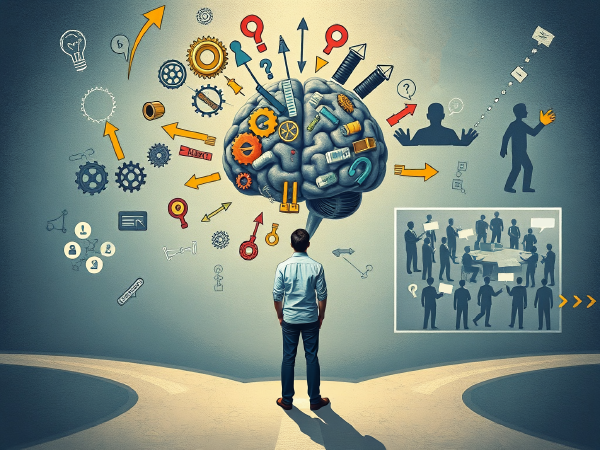
The modern world presents a paradox. From the seemingly infinite libraries of streaming services to the intricate customization options for a new vehicle, individuals are confronted with an unprecedented volume of choices. Classical economic theory posits that more choice inherently leads to greater utility and welfare, as it increases the probability that an individual can find an option that perfectly matches their preferences. Yet, the lived experience often contradicts this assumption. Faced with an endless scroll of movie titles, many find themselves spending more time choosing than watching, frequently defaulting to a familiar option or abandoning the search altogether. This phenomenon, where an abundance of options leads not to liberation but to paralysis and dissatisfaction, highlights a fundamental tension between the environment of choice and the finite cognitive capacity of the human mind.
This article examines the complex relationship between the external world of choice design and the internal world of mental resilience. It explores two foundational concepts from behavioral science: choice architecture and decision fatigue. Choice architecture, a term coined by Richard H. Thaler and Cass R. Sunstein, refers to the deliberate practice of “organizing the context in which people make decisions”. It recognizes that the way options are presented, their number, order, and default settings, subtly but powerfully influence the outcome. Decision fatigue, conversely, refers to the deterioration in the quality of our judgments that occurs after prolonged choice-making. It is a state of cognitive exhaustion that renders us susceptible to impulsive behavior, irrational trade-offs, and a preference for the path of least resistance.
The central thesis of this analysis is that decision fatigue is not an isolated, purely internal psychological state. Still, it is, in fact, systematically and profoundly modulated by the external choice architecture. The design of our decision-making environment can either conserve or deplete our limited mental energy with alarming speed. Consequently, choice architecture emerges as a critical, and often overlooked, instrument for managing individuals’, communities’, and entire societies’ cognitive resources. By understanding the mechanisms through which environmental design influences mental effort, we can begin to construct contexts that not only guide people toward better outcomes but also preserve their ability to make informed choices.
To build this argument, this article will first establish the theoretical foundations of choice architecture, including its guiding philosophy, libertarian paternalism, and its primary tools. It will then provide a comprehensive primer on decision fatigue, tracing its origins from the theory of ego depletion and examining its behavioral consequences. The subsequent section will introduce dual-process theory, which distinguishes between fast, intuitive System 1 thinking and slow, deliberative System 2 thinking, as the core explanatory framework that connects the external environment to internal cognitive states. By synthesizing these concepts, the analysis will demonstrate precisely how specific architectural principles, such as defaults and framing, can either mitigate or exacerbate cognitive strain. Finally, the article will explore the practical applications, profound ethical implications, and future directions of this field, particularly in an era of emerging algorithmic and AI-driven personalization.
The Foundations of Choice Architecture: Designing the Decision Context#
The study of choice architecture begins with a radical and powerful premise: that decisions are never made in a vacuum. Every choice, from selecting a meal in a cafeteria to enrolling in a retirement plan, occurs within a structured environment that another party has consciously or unconsciously designed. This section provides a comprehensive overview of choice architecture, establishing its theoretical and philosophical underpinnings and introducing the tools used to construct these influential environments.
Defining the “Choice Architect”#
The term “choice architecture” was formally introduced by Richard Thaler and Cass Sunstein to describe the practice of influencing choices by “organizing the context in which people make decisions.” A “choice architect,” therefore, is anyone responsible for organizing this context. This definition is intentionally broad, encompassing a vast range of roles. A doctor presenting treatment options is a choice architect. A human resources manager designing a benefits enrollment form is a choice architect. The software engineer who determines the layout of a website’s settings page is a choice architect. In many instances, individuals become choice architects without even realizing it.
The fundamental insight of this field, and its most critical principle, is that there is no such thing as neutral choice architecture. Every design element, the number of choices presented, the order in which they appear, the presence or absence of a default option, and the way attributes are described will inevitably influence the decisions people make. A cafeteria manager must decide where to place the fruit versus the desserts; this decision will affect what people eat. A government must decide what the default rule is for organ donation; this decision will have a massive impact on donation rates. Because some form of influence is unavoidable, the relevant question for the choice architect is not whether to influence, but how to influence. This realization that influence is an inherent feature of any decision context serves as the primary justification for the ethical framework that underpins choice architecture: libertarian paternalism. If a neutral design is impossible, then the moral imperative shifts toward designing the inevitable influence in a way that is beneficial rather than random, haphazard, or, worse, exploitative.
Libertarian Paternalism: The Guiding Philosophy#
The term “libertarian paternalism” appears, at first glance, to be a contradiction in terms. Libertarianism is a political philosophy that champions individual freedom and opposes paternalism, which is viewed as an infringement on personal autonomy. Paternalists, conversely, are often skeptical of an individual’s ability to make choices in their own best interest and believe intervention is justified. Thaler and Sunstein proposed this hybrid philosophy as a middle way: an approach that aims to “nudge” individuals toward choices in their best interest without forbidding any options or significantly altering their economic incentives.
The philosophy can be broken down into its two components:
- Libertarian: This aspect underscores the commitment to preserving freedom of choice. A nudge, the primary tool of a libertarian paternalist, must be “easy and cheap to avoid”. For example, placing healthy food at eye level in a cafeteria nudges people toward healthier eating, but it does not ban junk food. Enrolling employees into a retirement savings plan by default nudges them to save, but they are always free to opt out. This preservation of choice is what distinguishes the approach from more coercive, “hard” paternalism.
- Paternalistic: This component acknowledges that choice architects are not neutral observers. They are “self-consciously attempting to move people in directions that will promote their welfare”. Paternalism lies in the explicit goal of improving people’s lives, as judged by themselves, by designing choice environments that account for known human biases and limitations.
This philosophy, however, is not without significant ethical debate. Critics have raised several powerful objections that challenge its legitimacy and application. One of the most common critiques centers on the potential for manipulation and the erosion of autonomy. Even if freedom of choice is technically preserved, critics argue that subtle, often unconscious nudges can be manipulative, particularly when the individual is unaware of the influence being exerted upon them. This raises the question of whether a choice is truly free if an outside party has systematically engineered it.
A second, more profound critique is known as the epistemic problem. This argument questions the ability of any planner or choice architect to understand what is truly in another person’s best interest. Human interests are deeply subjective, complex, and often opaque even to the individuals themselves. A regulator who nudges people away from sugary snacks, for instance, may be substituting their own value judgment about health for the individual’s legitimate, if different, preference for momentary pleasure or cultural tradition. This critique posits that in the absence of perfect knowledge, paternalistic interventions risk imposing the planner’s values on the populace.
Finally, some critics argue that libertarian paternalism, by shielding people from the consequences of poor choices, may inadvertently stifle character development. Virtues such as self-control, prudence, and resilience are often forged in the crucible of making mistakes and learning from them. A world filled with well-designed nudges might make life easier and more efficient. Still, it could also create a population that is more passive and less able to exercise its own judgment when faced with a truly novel or challenging decision.
The Toolkit of the Choice Architect#
To implement the philosophy of libertarian paternalism, choice architects utilize a range of tools developed through decades of research in behavioral economics and psychology. These tools are designed to work with, rather than against, the predictable patterns of human thought. The primary instruments in this toolkit include:
- Defaults: The option that a chooser receives if they do nothing. Due to human inertia and the implicit assumption that defaults carry implicit endorsement, they are among the most powerful nudges available.
- Framing: The presentation of choices can dramatically affect the outcome, even when the underlying information is identical. The classic example is framing a medical procedure in terms of a 90% survival rate versus a 10% mortality rate.
- Anchoring: People tend to rely heavily on the first piece of information they receive (the “anchor”) when making decisions. This initial value influences all subsequent judgments.
- Salience and Ordering: Making certain information more prominent or visible (salience) or changing the order in which options are presented can guide attention and influence choice. For instance, the first item on a list often receives disproportionate attention.
- Partitioning and Structuring Complex Choices: The way a set of options is categorized or “partitioned” can alter preferences. Grouping healthy foods into separate “fruit” and “vegetable” categories, for example, can increase their selection compared to grouping them into a single “fruits & vegetables” category. Similarly, simplifying complex choices by breaking them down into smaller, more manageable parts can reduce cognitive strain.
- Social Norms and Feedback: Providing information about what other people are doing (descriptive social norms) can be a powerful motivator for behavior change, such as telling households how their energy consumption compares to their neighbors’. Providing clear and timely feedback on past choices helps people learn and adjust their future behavior.
These tools form the building blocks of choice architecture. By understanding how they function, one can begin to analyze how the design of any given environment systematically influences not just the choices people make, but also the mental effort required to make them.
The Cognitive Cost of Choice: A Primer on Decision Fatigue and Ego Depletion#
The central premise of choice architecture, that environmental design matters, rests on a foundational psychological principle: the human capacity for deliberate, conscious decision-making is finite and exhaustible. Making choices, tough ones, is not a cognitively free activity; it imposes a mental cost. Over time, this cumulative cost leads to a state of mental exhaustion known as decision fatigue. This section delves into the theoretical origins of decision fatigue, its observable behavioral consequences, and the ongoing scientific debate surrounding its underlying mechanisms.
From Ego Depletion to Decision Fatigue#
The intellectual lineage of decision fatigue begins with the work of social psychologist Roy Baumeister and his colleagues on the theory of ego depletion. Baumeister proposed a “strength” or “resource” model of self-regulation, positing that all acts of volition: making decisions, exerting self-control (e.g., resisting temptation), taking responsibility, and initiating behavior, draw upon a single limited pool of mental energy. This resource functions much like a muscle; it becomes fatigued after exertion, leading to a temporary reduction in the self’s capacity for further volitional action. Baumeister loosely named this effect “ego depletion,” borrowing from Freud’s concept of the ego as the part of the self involved in logical reasoning and self-regulation.
Baumeister’s pioneering experiments provided initial evidence for this model. In a famous 1998 study, participants who were required to exert self-control by resisting the temptation to eat freshly baked chocolate chip cookies subsequently gave up on a problematic, frustrating puzzle task much faster than participants who were allowed to eat the cookies or were in a no-food control group. The conclusion was that the initial act of self-control had depleted the mental resource needed for persistence in the second task.
Decision fatigue is now understood as a specific and highly prevalent form of ego depletion. It is the mental exhaustion and subsequent decline in decision-making quality that occurs after an individual has made many choices. The key insight is that this fatigue is cumulative; every decision, whether monumental or trivial, imposes a cognitive cost and draws from the same limited resource. As this resource dwindles, the brain begins to look for shortcuts. It may seek to avoid the decision altogether (procrastination) or make an impulsive choice to conserve energy, leading to a deterioration in judgment quality over time.
Behavioral Consequences of a Depleted Mind#
When an individual enters a state of decision fatigue, their behavior changes in predictable and systematic ways. This mental exhaustion compromises the brain’s executive functions, leading to a range of observable consequences documented in both laboratory experiments and real-world settings.
One of the most common effects is a shift toward passivity and a preference for the status quo. As mental resources are depleted, the effort required to evaluate options, weigh trade-offs, and make an active choice becomes increasingly taxing. To conserve energy, the brain defaults to the easiest path, which is often to do nothing or to stick with the preselected option. This phenomenon is powerfully illustrated by a seminal study of judicial parole decisions conducted by Danziger, Levav, and Avnaim-Pesso. The researchers analyzed over 1,100 parole hearings. They found a startling pattern: the likelihood of a judge granting parole (a complex, effortful, and risky decision) was highest at the beginning of the day (around 65%) and steadily declined to nearly zero by the end of a session. However, after a food break, the parole grant rate would immediately jump back up to around 65% before declining again. The most straightforward explanation was not a legal nuance, but rather decision fatigue; as the judges’ mental resources were drained by making repeated decisions, they defaulted to the safer, less effortful choice of denying parole.
A second significant consequence is an increase in impulsivity and a reduction in self-control. The same mental resource used for careful deliberation is also used to inhibit impulses and resist temptations. When this resource is exhausted from making numerous choices, self-control begins to falter. Deprived individuals are more likely to opt for immediate gratification over long-term rewards. This helps explain why consumers are more susceptible to impulse purchases of candy and magazines at the checkout counter after an hour-long shopping trip filled with countless product and price decisions. The mental energy expended throughout the store has depleted the willpower needed to resist that final, tempting offer.
Ultimately, decision fatigue results in impaired trade-offs and an increased reliance on heuristics. Making a good decision often involves carefully weighing the pros and cons of different options, a cognitively demanding process known as trade-off analysis. A mentally depleted person becomes reluctant to engage in this effortful analysis. Instead, their brain looks for shortcuts, oversimplifying the problem and focusing on a single dimension (e.g., price) while ignoring other relevant attributes. This can lead to poor, short-sighted choices, as a fatigued mind is no longer capable of the complex reasoning required for optimal decision-making.
The Replication Crisis and a Refined Understanding#
No expert-level discussion of ego depletion and decision fatigue would be complete without addressing the significant scientific controversy surrounding the theory. In recent years, the field has faced a “replication crisis,” with several large-scale, pre-registered studies failing to reproduce the original ego-depletion effect. A high-profile Registered Replication Report involving 23 laboratories found an overall effect size that was not significantly different from zero, casting serious doubt on the robustness of the phenomenon.
Critics have also pointed to several conceptual weaknesses in the original theory. A primary issue is the lack of a clear, consistent operational definition of “self-control.” Research studies have used a vast and sometimes contradictory array of tasks to induce depletion, ranging from resisting temptations to solving math problems to suppressing emotions, often with circular justifications for their use. Furthermore, the underlying “resource” itself remains a vague metaphor. Is it a neurobiological substance like glucose? Is it a measure of cognitive capacity? The lack of a precise, falsifiable model has made the theory difficult to test rigorously.
However, dismissing the entire concept of decision fatigue because of replication issues with the “ego depletion” metaphor would be a mistake. A more nuanced interpretation separates the underlying mechanism from the observable phenomenon. While the simple “strength” or “muscle” model of willpower has not held up well to scrutiny, the behavioral outcomes associated with sustained decision-making, namely, degraded performance, increased reliance on defaults, and a preference for cognitive shortcuts, remain well-documented in many contexts, particularly in field studies like the judicial parole case.
Therefore, one can proceed with a refined understanding. The idea that a single, general-purpose “ego” resource gets literally “used up” is likely an oversimplification. The underlying neurobiological and cognitive processes are undoubtedly more complex, perhaps involving shifts in motivation, attention, and cognitive control rather than the depletion of a substance. Nevertheless, the observable phenomenon of decision fatigue, characterized by the degradation of judgment quality and a shift toward low-effort strategies after extensive cognitive exertion, remains a valid and powerful concept for understanding human behavior. The impact of choice architecture on cognitive load and decision quality is real, regardless of whether the “ego” is a depletable resource in the literal sense. This refined perspective enables us to move forward and examine how environmental factors influence our demonstrably finite capacity for effortful thought.
The Mind’s Two Systems: A Framework for Understanding Influence#
To understand why choice architecture has such a profound impact on decision-making and cognitive load, it is necessary to examine the inner workings of the human mind. The bridge connecting the external environment of choice to the internal state of decision fatigue is provided by dual-process theory. Popularized by the Nobel laureate Daniel Kahneman in his seminal work, Thinking, Fast and Slow, this theory posits that human cognition operates via two distinct systems, each with its own characteristics, capabilities, and limitations. This framework is indispensable for explaining the mechanisms through which nudges work and how the design of a choice environment can either conserve or deplete our mental resources.
Introducing Dual-Process Theory#
Kahneman’s model divides the mind’s operations into two metaphorical systems, which he labels System 1 and System 2.
System 1 operates automatically and quickly, with little or no effort and no sense of voluntary control. It is the mind’s fast, intuitive, and emotional engine. System 1 is responsible for a vast array of mental activities, such as detecting that one object is more distant than another, completing the phrase “war and…”, displaying disgust at a gruesome image, or solving simple arithmetic problems like 2 + 2. It is a legacy of our evolutionary past, honed to enable rapid judgments and swift reactions to threats and opportunities. It functions by creating a coherent narrative from the available information, relying on learned associations and pattern recognition. System 1 is always on, generating a constant stream of impressions, intuitions, intentions, and feelings.
System 2, in contrast, is the mind’s slow, deliberate, and logical mode of thought. It allocates attention to effortful mental activities that demand it, including complex computations, logical reasoning, and self-control. Activities that engage System 2 include preparing for the start of a race, locating a specific person in a crowd, parking in a tight space, or evaluating the validity of a complex logical argument. System 2 is who we think we are, the conscious, reasoning self that has beliefs, makes choices, and decides what to think about and what to do. However, a defining characteristic of System 2 is its limited capacity and inherent “laziness.” Its operations are effortful, and it is easily overloaded.
The two systems work in concert. System 1 runs continuously, generating suggestions for System 2. For the most part, System 2 adopts these suggestions with little or no modification. This division of labor is highly efficient; it minimizes effort and optimizes performance. However, when System 1 encounters difficulty, it calls on System 2 to support it with more detailed and specific processing that may solve the problem at hand. System 2 is also mobilized to exert self-control and override the automatic impulses and intuitions of System 1. This act of overriding, however, requires significant cognitive effort and draws upon the limited resources of System 2.
Bounded Rationality and the Role of Heuristics#
The dual-process model provides a psychological mechanism for the economic concept of bounded rationality, first proposed by Herbert Simon. Classical economics was built on the assumption of a perfectly rational agent with well-ordered preferences and unlimited computational power. Simon argued that this model was psychologically unrealistic. Real human beings are “bounded” by cognitive limitations, incomplete information, and finite time. We cannot possibly analyze every piece of information to find the single optimal solution. Instead, we “satisfice”; we seek a solution that is “good enough.”
System 1’s method for dealing with this complexity is to employ heuristics, mental shortcuts, or simple “rules of thumb” that allow for fast, frugal judgments. For example, the availability heuristic refers to the tendency to judge the frequency of an event based on the ease with which instances come to mind. The representativeness heuristic is the tendency to judge the probability of an event based on how closely it matches a stereotype or prototype. These heuristics are often highly efficient and lead to correct judgments. However, they can also lead to systematic, predictable errors in judgment known as cognitive biases. For example, relying on the availability heuristic can cause people to overestimate the risk of rare but vivid events, such as plane crashes, that are heavily reported in the media.
The Central Insight: Choice Architecture as System 1’s Guide#
The synthesis of dual-process theory, bounded rationality, and decision fatigue provides the central explanatory mechanism for the effectiveness of choice architecture. This synthesis reveals a crucial bidirectional relationship between environmental design and the allocation of cognitive resources.
First, System 2’s limited budget is the very reason decision fatigue occurs. Effortful activities, such as making complex trade-offs, exercising self-control, and overriding System 1’s impulses, directly draw down this finite resource. As System 2 becomes fatigued, its ability to perform these functions degrades.
Second, choice architecture principles or “nudges” are practical precisely because
They are designed to appeal to the automatic, low-effort, and heuristic-driven processes of System 1. A well-designed choice architecture creates a “path of least resistance” that the intuitive System 1 will naturally follow. For example, setting a beneficial default option leverages System 1’s inherent preference for the status quo and its aversion to the effort required to make an active change. By aligning the easiest choice with the wisest choice, the choice architect allows the “lazy” System 2 to conserve its precious energy.
This leads to a powerful conclusion about the function of choice architecture: it is fundamentally a tool for managing the allocation of cognitive effort between System 1 and System 2. A poorly designed environment, such as one with an overwhelming number of complex options, forces constant engagement from the energy-intensive System 2, leading to rapid cognitive exhaustion. A well-designed environment, in contrast, offloads as much mental work as possible onto the efficient, automatic System 1, preserving System 2’s resources for decisions that truly require its attention.
This relationship is also reciprocal. Just as good choice architecture can prevent or delay the onset of decision fatigue, a state of decision fatigue makes an individual more susceptible to its influence. When System 2 is depleted, it has less capacity to question and override System 1’s suggestions. In this state, the individual is more likely to accept the default, be swayed by how an option is framed, or follow a social norm without critical reflection. The architect’s design becomes most powerful precisely when the decision-maker’s internal capacity for deliberation is at its weakest.
The Synthesis: How Choice Architecture Modulates Decision Fatigue#
This section serves as the analytical core of the article, systematically examining how specific tools from the choice architect’s toolkit directly influence an individual’s cognitive load and accelerate or mitigate the onset of decision fatigue. By integrating the foundational theories of choice architecture, decision fatigue, and dual-process cognition, it becomes possible to map the causal pathways from environmental design to mental exhaustion.
Choice Overload: The Primary Cognitive Stressor#
The phenomenon of choice overload, also known as the “paradox of choice,” is perhaps the most direct way in which a choice environment can induce cognitive strain. While classical economics assumes more options are always better, behavioral research has shown that an overabundance of choices can be demotivating, lead to poorer decisions, and decrease satisfaction.
The iconic demonstration of this effect is the 1995 “jam study” conducted by psychologists Sheena Iyengar and Mark Lepper. The researchers set up a tasting booth in an upscale grocery store, alternating between offering a large assortment of 24 exotic jams and a small variety of just six. The results were striking. The large display attracted more shoppers (60% of passersby stopped, compared to 40% for the small display), suggesting that the prospect of extensive choice is initially appealing. However, when it came to actual purchasing behavior, the pattern reversed dramatically. Of the shoppers who stopped at the small display, 30% went on to purchase a jar of jam. In contrast, only 3% of those who stopped at the large display made a purchase. The extensive choice set, while attractive, ultimately paralyzed the decision-makers, leading to a tenfold decrease in sales.
This finding, however, has been the subject of considerable academic debate. Subsequent research has often failed to replicate the choice overload effect. A major 2010 meta-analysis by Benjamin Scheibehenne and colleagues, which reviewed 50 different experiments, found an average effect size of virtually zero. This does not mean the paradox of choice is not fundamental; rather, it is a context-dependent phenomenon. Further research has identified the specific conditions under which choice overload is most likely to occur. These are precisely the conditions that a choice architect can control:
- High Task Difficulty: When the decision is complex and requires significant effort to evaluate options.
- Complex Choice Set: When the options are difficult to compare because they differ on many attributes, or the information is not presented clearly.
- High Uncertainty: When the decision-maker lacks pre-existing preferences or expertise in the domain, it makes it difficult to know what to look for.
From a dual-process perspective, choice overload is a direct assault on System 2’s limited capacity. Faced with dozens of options, each with multiple attributes, System 2 is compelled to undertake an exhaustive, effortful process of comparison and trade-off analysis. This rapidly consumes its finite cognitive resources, leading directly to feelings of cognitive overwhelm, anxiety, and decision fatigue. When System 2 becomes exhausted, it may simply give up, leading to decision avoidance (as seen in the jam study), or it may default to an overly simplistic heuristic, leading to a suboptimal choice.
Defaults: The Ultimate Cognitive Shield#
In stark contrast to choice overload, the use of defaults stands as one of the most powerful tools for mitigating decision fatigue. A default is the option that is automatically selected if a person makes no active choice. By providing a path of no resistance, defaults effectively offload the cognitive work of a decision from the effortful System 2 to the automatic System 1.
The immense power of defaults stems from their ability to leverage a confluence of potent psychological biases. First is the simple power of inertia and the minimization of effort. Making an active choice requires cognitive effort; sticking with the default requires none. For a lazy System 2, especially one already fatigued, the effort needed to opt out can be a significant barrier, even if it is as minimal as unchecking a box.28 Second, there is the status quo bias, our inherent preference for the current situation. The default option is often perceived as the status quo, making any deviation feel riskier. Third, defaults frequently carry an implicit endorsement. People may assume, rightly or wrongly, that the choice architect has set the default to the recommended or most common option, a powerful social cue that System 1 readily accepts. Finally, the principle of loss aversion suggests that once an option is framed as the default, giving it up is perceived as a loss, which is psychologically more painful than an equivalent gain.
The real-world impact of defaults as a cognitive shield is most evident in public policy. Two classic case studies are organ donation and retirement savings:
- Organ Donation: European countries with “opt-in” systems, where being a donor is not the default, have historically had very low consent rates (e.g., Germany at 12%, Denmark at 4.25%). In contrast, neighboring countries with culturally similar populations but “opt-out” systems, where everyone is a donor by default unless they actively register not to be, have near-universal consent rates (e.g., Austria at 99.9%, France at 99.91%). The default eliminates a complex and emotionally charged decision, allowing the vast majority of people to align with the pro-social outcome without expending mental energy.
- Retirement Savings: When companies require employees to actively “opt-in” to a 401(k) savings plan, participation rates are often low. However, when they switch to automatic enrollment (an “opt-out” system), participation rates skyrocket. Studies have shown increases from around 50% under opt-in to over 85% under opt-out. The default spares employees the complex and intimidating task of deciding whether and how much to save, a process that can easily induce decision fatigue and procrastination.
Framing and Anchoring: Directing the Mind’s Starting Point#
The way information is presented can dramatically alter the cognitive effort required to process it, thereby influencing decision fatigue. Framing and anchoring are two key principles that choice architects use to set the initial context for a decision, effectively directing the starting point for a person’s thought process.
The framing effect demonstrates that our choices are influenced by how information is presented, even when the underlying facts remain constant. A particularly potent distinction is between gain and loss frames. A gain frame emphasizes the positive outcomes of an action (e.g., “90% of patients who undergo this surgery survive”). In contrast, a loss frame emphasizes the adverse consequences of inaction (e.g., “10% of patients who undergo this surgery die”). Due to the powerful cognitive bias of loss aversion, the principle that losses loom larger than equivalent gains, loss-framed messages are often more persuasive. A clear, emotionally resonant frame can make a decision feel intuitive and obvious to System 1, requiring minimal deliberation. Conversely, a message that presents conflicting frames or complex probabilistic information forces System 2 to engage in effortful analysis, contributing to cognitive load. While this suggests a clear link, it is worth noting that at least one laboratory study found no evidence that willpower depletion increased susceptibility to framing effects, indicating the relationship may be more complex than a simple resource model would predict.
Anchoring describes our tendency to be influenced by an initial piece of information, which then serves as a reference point for all subsequent judgments and decisions. This anchor can be entirely arbitrary. In a classic experiment, participants were asked to estimate the percentage of African nations in the UN, but only after a wheel of fortune was spun in front of them. The average estimate from participants who saw the wheel land on 10 was 25%, while those who saw it land on 65 averaged 45%. The random number served as an anchor from which their System 2 made insufficient adjustments. In consumer and negotiation contexts, the first price quoted becomes a powerful anchor. A high, and perhaps irrelevant, anchor forces System 2 to expend significant cognitive energy arguing or adjusting away from that starting point, draining mental resources that could be used for other aspects of the decision. A choice architect can therefore exacerbate cognitive strain by setting an extreme anchor or mitigate it by providing a reasonable, relevant one.
Future Directions: Algorithmic Architects and Ethical Frontiers#
The synthesis of choice architecture, decision fatigue, and dual-process theory provides a robust framework for understanding and influencing human behavior. As this understanding deepens, its application expands beyond academic inquiry into public policy, commercial strategy, and emerging technologies. This concluding section explores the practical methods for designing more sustainable choice environments, examines the profound challenges and opportunities presented by artificial intelligence as an “algorithmic choice architect,” and reflects on the enduring ethical responsibilities inherent in shaping the context of human decision-making.
Designing for Cognitive Sustainability#
The insights gleaned from behavioral science offer a clear directive for choice architects: design for cognitive sustainability. This means creating environments that respect the limits of human attention and mental stamina, making it easier for people to make choices that align with their long-term interests. Several evidence-based strategies can help achieve this goal:
- Simplify and Curate: The most direct way to combat choice overload is to reduce the number of options presented, especially for individuals who are novices in a particular domain. This does not mean eliminating choice, but rather curating it. Techniques such as categorization (grouping similar options) and progressive disclosure (revealing more complex options only when needed) can make large choice sets feel more manageable and less overwhelming.
- Set Thoughtful Defaults: Given their immense power, defaults should be designed with extreme care. The default option should reflect the choice that would benefit the majority of users, particularly those who are unlikely to make an active choice. For example, setting retirement plan defaults to an age-appropriate target-date fund is generally more beneficial than setting them to a low-return money market fund. Crucially, the ability to opt out must always be simple, straightforward, and respected.
- Make Information Intelligible: Choice architects should focus on “understanding mappings,” which involves translating complex information into a format that is intuitive and useful for decision-making. A prime example is the shift in fuel economy labels from the non-linear “miles per gallon” (MPG) to more intuitive metrics such as “gallons per 100 miles” or total fuel cost over the vehicle’s lifetime. This reduces the cognitive load on System 2 by performing the complex calculation on behalf of the consumer, allowing them to more easily compare options and make a choice aligned with their goal of saving money.
The Rise of the Algorithmic Choice Architect#
The principles of choice architecture were developed in a world of static environments, cafeteria layouts, paper forms, and website designs. However, the advent of artificial intelligence and machine learning is ushering in an era of dynamic, personalized choice architecture, presenting both unprecedented opportunities and profound ethical challenges.
An AI-driven system can move beyond one-size-fits-all nudges to create hyper-personalized choice environments in real-time. An algorithm can learn an individual’s unique preferences, knowledge level, and behavioral patterns. More significantly, it could potentially infer an individual’s current cognitive state. By analyzing signals such as deliberation time, mouse movements, scroll speed, or a tendency to revert to simple options, an algorithm can detect the onset of decision fatigue. This capability creates a mighty dual-edged sword.
From a utopian perspective, AI could function as a personalized cognitive shield. When a user becomes overwhelmed while shopping online, the system could dynamically simplify the interface, reduce the number of options displayed, and highlight a recommendation based on the user’s previously expressed preferences. In this scenario, the algorithmic architect acts as a benevolent guide, conserving the user’s mental energy and helping them achieve their goals more effectively.
From a dystopian perspective, the same technology could be used for exploitation. An algorithm designed to maximize profit could identify the precise moment a user’s decision fatigue peaks and their self-control is at its lowest. At that moment of maximum vulnerability, it could present a high-margin, impulsive “special offer” or a complex add-on service, knowing the user’s depleted System 2 lacks the capacity to evaluate it critically. This transforms the ethical debate about libertarian paternalism from a static question of design to a dynamic, real-time challenge of algorithmic governance. The choice architect is no longer a human planner making a single decision for a large group, but a constantly learning algorithm making millions of individualized decisions per second, often with goals that prioritize corporate profit over consumer welfare.
Conclusion: The Enduring Responsibility of the Architect#
The evidence is clear: the environment in which we make decisions is not a neutral stage but an active participant in the process. The principles of choice architecture, operating on the predictable mechanics of our dual-process minds, can systematically shape our choices by either conserving or depleting our finite mental energy reserves. A poorly designed choice environment, saturated with an overwhelming number of complex options, directly contributes to decision fatigue, which can lead to paralysis, impulsivity, and dissatisfaction. A thoughtfully designed environment, in contrast, can simplify complexity, leverage defaults to promote well-being, and frame information to facilitate clarity, thereby preserving our cognitive capacity for the choices that matter most.
The central takeaway of this analysis is that the design of our decision-making contexts is a profound responsibility. In an increasingly complex world, the ability to make wise and deliberate choices is essential for individual and societal flourishing. As our environments become more saturated with information and our choices are increasingly mediated by intelligent algorithms, a deep understanding of the interplay between architecture and fatigue is no longer merely an academic pursuit. It is an essential prerequisite for building systems, policies, and products that genuinely serve human interests. The challenge for policymakers, designers, technologists, and all choice architects is to wield their influence with wisdom, transparency, and a fundamental respect for the cognitive limits of the minds they seek to guide. The ultimate question we must ask ourselves is not whether we should shape choices, but what kind of choice environments we wish to build and inhabit.
References#
- Kneeland, Timothy. (2022). Averting Catastrophe: Decision Theory for COVID‐19, Climate Change, and Potential Disasters of All Kinds by Cass R. Sunstein. New York, New York University Press, 2021.
- Garcia-Gibson, Francisco. (2022). Cass R. Sunstein, Averting Catastrophe: Decision Theory for COVID-19, Climate Change, and Potential Disasters of All Kinds. Environmental Values. 31.
- Thaler, Richard. (2018). From Cashews to Nudges: The Evolution of Behavioral Economics. American Economic Review.
- Sunstein C. R. (2019). How Change Happens. Cambridge, MA: The MIT Press.
- Mukherjee, Payal. (2021). Cass Sunstein, How Change Happens. NHRD Network Journal. 14. 274-276. 10.1177/2631454120974470.
- Hagman, W., Andersson, D., Västfjäll, D., & Tinghög, G. (2015). Public views on policies involving nudges. Review of Philosophy and Psychology, 6(3), 439-453.
- Mols, Frank & Haslam, S. & Jetten, Jolanda & Steffens, Niklas K. (2014). Why a Nudge is Not Enough: A Social Identity Critique of Governance by Stealth. European Journal of Political Research. 54. 10.1111/1475-6765.12073.
- Esposito, Fabrizio. (2015). Nudge and the Law: A European Perspective by Alberto Alemanno and Anne-Lise Sibony (Eds) Oxford: Hart Publishing, 2015, 336 pp. € 50; Hardcover. European Journal of Risk Regulation. 6. 331-340. 10.1017/S1867299X00004669.
- Vohs, K. D., Baumeister, R. F., & Schmeichel, B. J. (2021). Motivation and the Self-Regulation of Behavior: A Case for a New Paradigm. Social and Personality Psychology Compass, 15(6), e12612.
- Dang J. (2018). An updated meta-analysis of the ego depletion effect. Psychological research, 82(4), 645-651.
- Friese, M., Frankenbach, J., Job, V., & Loschelder, D. D. (2017). Does Self-Control Training Improve Self-Control? A Meta-Analysis. Perspectives on psychological science: a journal of the Association for Psychological Science, 12(6), 1077-1099.
- Inzlicht, Michael & Werner, Kaitlyn & Briskin, Julia & Roberts, Brent. (2020). Integrating Models of Self-Regulation. Annual review of psychology.
- Koval, C. Z., vanDellen, M. R., Fitzsimons, G. M., & Ranby, K. W. (2015). The burden of responsibility: Interpersonal costs of high self-control. Journal of Personality and Social Psychology, 108(5), 750-766.
- Kahneman, D., & Egan, P. (2011). Thinking, Fast and Slow. Farrar, Straus and Giroux.
- Evans, J. S., & Stanovich, K. E. (2013). Dual-Process Theories of Higher Cognition: Advancing the Debate. Perspectives on psychological science: a journal of the Association for Psychological Science, 8(3), 223-241.
- Gigerenzer, G. (2018). The bias in behavioral economics. Review of Behavioral Economics, 5(3-4), 303-336.
- Chernev, A., Böckenholt, U., & Goodman, J. (2015). Choice overload: A conceptual review and meta-analysis. Journal of Consumer Psychology, 25(2), 333-358.
- Davidai, S., & Gilovich, T. (2016). The headwinds/tailwinds asymmetry: An availability bias in assessments of barriers and blessings. Journal of Personality and Social Psychology, 111(6), 835-851.
- JACHIMOWICZ, J. M., DUNCAN, S., WEBER, E. U., & JOHNSON, E. J. (2019). When and why defaults influence decisions: a meta-analysis of default effects. Behavioural Public Policy, 3(2), 159-186.
- Beshears, John & Kosowsky, Harry. (2020). Nudging: Progress to Date and Future Directions. Organizational Behavior and Human Decision Processes. 161. 3-19. 10.1016/j.obhdp.2020.09.001.
- Yeung, K. (2016). ‘Hypernudge’: Big Data as a mode of regulation by design. Information, Communication & Society, 20(1), 118-136.
- Samson, Olaitan. (2025). Algorithmic Governance and the Redefinition of Bureaucratic Accountability in Digital States.
- Lorenz-Spreen, P., Lewandowsky, S., Sunstein, C. R., & Hertwig, R. (2020). How behavioural sciences can promote truth, autonomy and democratic discourse online. Nature Human Behaviour, 4(11), 1102-1109.
- MILLS, STUART. (2020). Personalized nudging. Behavioural Public Policy. 6. 1-10. 10.1017/bpp.2020.7.
- Rosa, P. M. (2022). Nudging is the architecture of choice in the world of banking. Revista de Administração Contemporânea, 26(5), e220073.
- Wachner, J., Adriaanse, M., & Ridder, D. (2020). The influence of nudge transparency on the experience of autonomy. Comprehensive Results in Social Psychology.
- Phillips-Wren, Gloria & Adya, Monica. (2020). Decision-making under stress: The role of information overload, time pressure, complexity, and uncertainty. Journal of Decision Systems. 29. 1-13. 10.1080/12460125.2020.1768680.
- Susser, D., Roessler, B., & Nissenbaum, H. (2019). Technology, autonomy, and manipulation. Internet Policy Review, 8(2).
- Acquisti, Alessandro & Brandimarte, Laura. (2020). Secrets and Likes: The Drive for Privacy and the Difficulty of Achieving It in the Digital Age. Journal of Consumer Psychology. 30. 736-758.