

Vision
To be the global reference on the application of behavioral economics and consumer psychology, driving behavioral economics-driven innovation that benefits individuals, organizations, and society as a whole.
Loading...

How psychological, cognitive, and emotional factors shape economic decisions and consumer behavior.
To be the global reference on the application of behavioral economics and consumer psychology, driving behavioral economics-driven innovation that benefits individuals, organizations, and society as a whole.
To leverage behavioral science insights to inform decision-making frameworks, product design, and marketing strategies, and apply behavioral economics principles to understand and influence consumer behavior, developing evidence-based strategies that promote healthy choices, sustainable consumption, and informed decision-making.
The questions and outcomes this division concentrates on, drawn directly from its vision and mission.
Applying behavioral economics to understand and influence consumer behavior.
Insights that inform decision-making frameworks, product design, and marketing strategies.
Evidence-based strategies that promote healthy choices and sustainable consumption.
Behavioral economics that benefits individuals, organizations, and society as a whole.
Themes our contributors explore, summarized from the division's published articles.
Because no way of presenting options is neutral, designers can use defaults, framing, and simplified choices to guide people toward better decisions while preserving freedom.
Mental shortcuts like anchoring on first numbers, status quo bias, and processing ease systematically skew judgments, often unconsciously, in negotiations, valuations, and change.
Sludge is friction that makes worthwhile actions harder, taxing time and attention. Audits and a subtraction mindset help organizations remove needless barriers and reclaim productivity.
People copy what peers do, especially when uncertain. Likes, reviews, influencers, and visible norms drive consumer choices online and spread behaviors across teams and cultures.
Online buyers rely on security, reviews, vendor reputation, and processing ease to judge trust. A single weak link, like a breach, can override every other positive signal.
Temporal landmarks like a new year or a Monday reset motivation and ease change. In giving, identifiable victims, concrete impact, and reduced friction overcome donor hesitation.
 The Role of Choice Architecture in an Age of Decision Fatigue
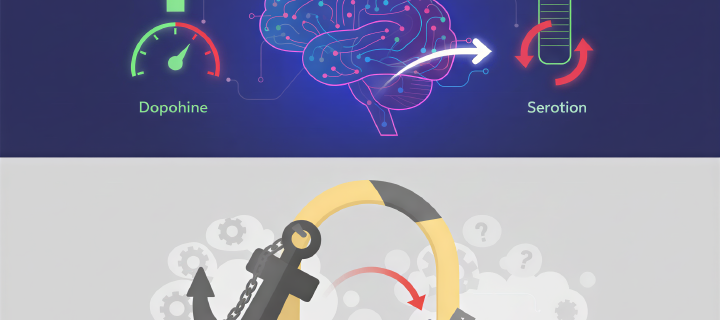 The Architecture of Initial Influence: A Comprehensive Analysis of the Anchoring Effect in Cognitive, Neurological, and Organizational Frameworks
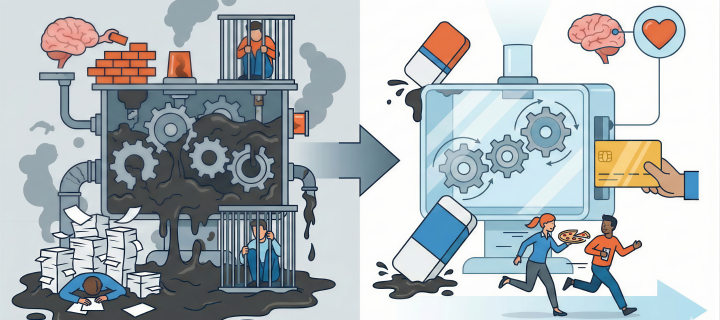 The Architecture of Obstacles: Procedural Friction, Organizational Drag, and the Science of Workflow Optimization
 Resonance Across Borders: Leveraging Social Proof for Global Cultural Alignment